Short Bob Haircuts: 14 Cuts by Face Shape, Hair Texture and Maintenance Level
February 11, 2026·Olivia Nyssa·8 min read
Why a bob deserves its own guide
A general short haircut can include pixies, crops, shags and layered cuts. A bob has a more specific structure: the hair usually follows a deliberate perimeter around the jaw, chin or neck, while layers, bangs and texture change the character of the cut. That structure makes small changes in length important. A chin bob and a jaw-length bob may look similar in a photograph but behave differently on thick, fine, straight or curly hair.
Before booking an appointment, save one or two reference images and identify what you actually like: the length, the outline, the fringe, the texture or the styling finish. A useful consultation is more specific than asking for “the same bob.”
How to choose the right bob length and shape
Start with your natural texture and the amount of time you want to spend styling. A blunt perimeter can make fine hair appear visually fuller, while layers can remove weight from dense hair and create movement. If your hair is strongly wavy or curly, ask how much shrinkage the stylist expects before deciding on the final length.
Think about your daily routine too. A shorter bob may be easy to refresh but require more frequent trims to keep its outline. A slightly longer bob offers more flexibility for tying back the front sections. Neither choice is universally better; the useful choice is the one that matches your habits.
1. Classic chin-length bob
A chin-length bob creates a clean frame around the lower face. It works especially well for straight or lightly wavy hair and can be worn with a center part for symmetry or a side part for softness. Ask for the perimeter to be adjusted to your natural texture so the finished length does not rise unexpectedly after drying.
2. Jaw-length bob
A jaw-length bob is shorter and more graphic than a traditional chin bob. It can highlight the jawline and create a crisp silhouette. This option suits people who enjoy a defined shape and do not mind regular trims. A small amount of invisible internal texture can prevent the ends from feeling too heavy.
3. Layered short bob
Soft layers add movement and can help dense hair feel lighter. On fine hair, too many layers may reduce the appearance of fullness, so ask for carefully placed rather than excessive layering. A layered bob is a good option when you want shape that still moves naturally.
4. Blunt-cut bob
A blunt bob has a strong, even edge and often makes the ends look denser. It is especially effective on straight or fine hair, although wavy hair can give it a relaxed finish. The trade-off is that the clean line becomes noticeable as it grows out, so regular maintenance matters.
5. Textured wavy bob
A wavy bob relies on movement rather than a perfectly smooth outline. Use a lightweight styling cream or mousse and let the hair dry with its natural pattern whenever possible. Ask the stylist to account for how your wave behaves instead of copying a cut designed for straight hair.
6. French bob
A French bob is often shorter around the jaw and paired with a fringe or softly curved front pieces. It has a compact, distinctive shape but is not automatically low maintenance. The fringe and perimeter may need regular shaping, especially if you prefer a precise finish.
7. Bob with curtain bangs
Curtain bangs soften the front of a bob and can be parted in the middle or swept to the sides. They offer more flexibility than a heavy straight fringe, but they still require learning how to dry and direct them. Discuss the shortest point and the grow-out plan before cutting.
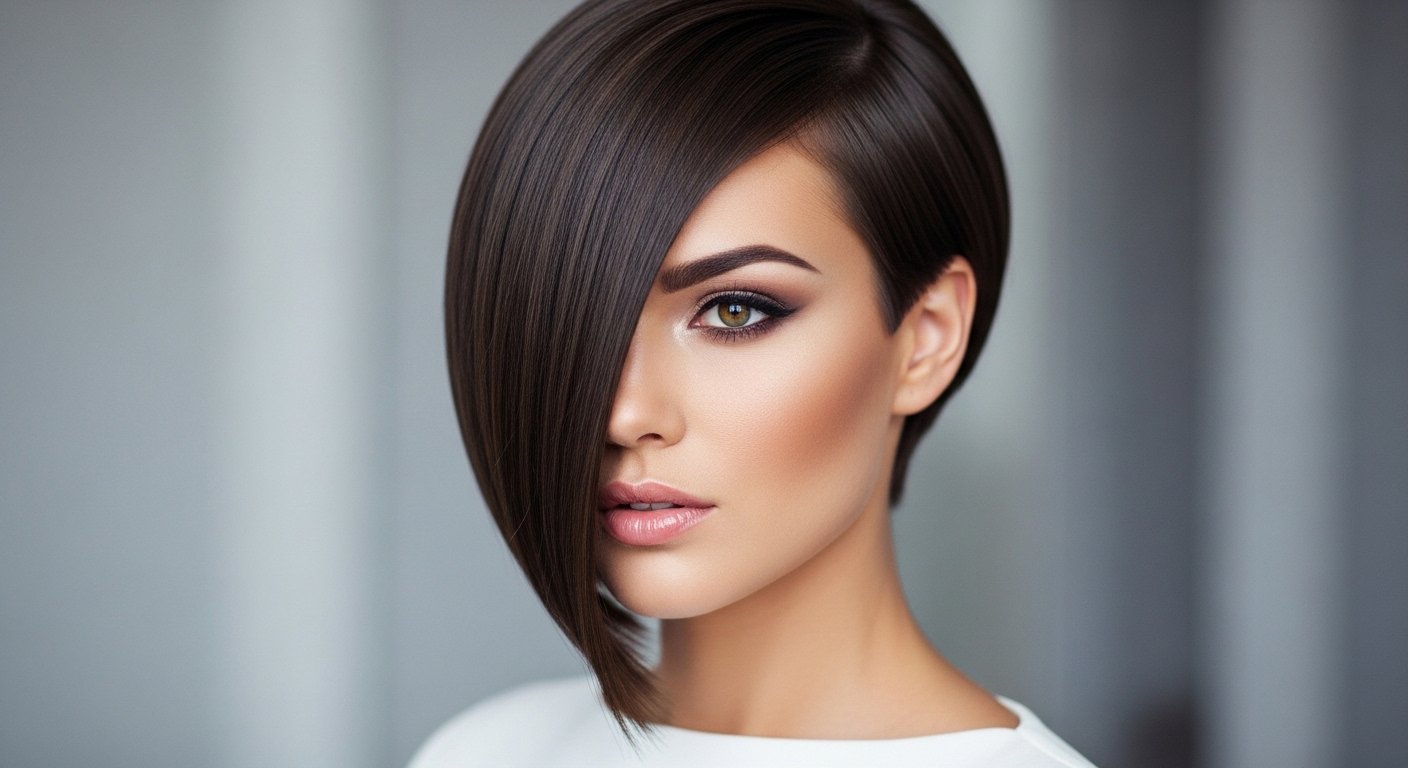
8. Asymmetrical bob
An asymmetrical bob has one side slightly longer than the other. The difference can be subtle or dramatic. This shape creates interest without relying on heavy color, but it needs accurate cutting and may be harder to maintain at home if you want the imbalance to stay precise.
9. Inverted bob
An inverted bob is shorter at the back and longer toward the front. It can create the appearance of lift at the back while keeping face-framing length. On thick hair, the stylist may need to remove internal weight so the back does not expand too much.
10. Curly short bob
A curly bob should be designed around the curl pattern, not measured only when the hair is wet. The final shape depends on shrinkage, density and the direction of the curls. Ask for a curl-aware consultation and avoid assuming that a straight-hair reference will produce the same outline.
11. A-line bob
An A-line bob gradually lengthens toward the front and gives a clear, angled profile. It is a useful choice when you want structure without a completely even perimeter. The angle can be mild for a wearable result or sharper for a more graphic look.
12. Messy short bob
A messy bob uses texture, uneven movement and a less formal finish. It can be styled with a small amount of texturizing product, but “messy” should not mean damaged or neglected ends. Ask for movement that works with your hair rather than relying on constant heat styling.
13. Shaggy bob
A shaggy bob combines a bob outline with more visible layers and piecey movement. It suits people who prefer a relaxed finish and are comfortable with some natural irregularity. The cut should be adapted to density so the layers do not make fine hair look sparse.
14. Stacked bob
A stacked bob uses shorter layers at the back to create shape and lift. It can be effective for thick hair when weight is managed carefully, but the stacked area may require more frequent maintenance than a simple one-length bob. Ask how the back will look as it grows out.
Choosing a bob by hair texture
Fine hair often benefits from a stronger perimeter, moderate layering and careful product use. Thick hair may need internal weight removal so the silhouette remains balanced. Wavy hair can look beautiful with a textured or softly layered shape, while curly hair needs a stylist who understands shrinkage and curl-by-curl behavior.
Choosing by face shape without rigid rules
Face-shape guidance should be treated as a starting point, not a rulebook. A longer front section can create a framing effect, a fringe can change the visual balance of the forehead, and layers can add movement around the cheek or jaw area. Your hairline, texture and personal preference matter just as much as a general face-shape category.
Styling and heat-protection basics
Use the lightest product that gives the control you need. Apply heat protectant before blow-drying or using hot tools, keep the tool moving and avoid repeatedly applying high heat to already dry ends. A round brush can polish a straight bob, while a diffuser or air-drying routine may better preserve natural waves and curls.
Maintenance and salon-consultation checklist
Ask how often the shape will need a trim, where the weight will be removed and how the cut will change as it grows. Bring photos showing the front, side and back when possible. Mention whether you usually air-dry, tie your hair back, wear glasses or need the style to work for exercise and workdays.
Common bob-request mistakes
The most common mistake is choosing a reference based only on the model’s styling. Other problems include ignoring shrinkage, asking for too many layers in fine hair, failing to discuss fringe grow-out and choosing a highly precise shape when you do not want regular trims.
Frequently asked questions
Is a short bob low maintenance?
It can be simple to style, but a precise perimeter or fringe may require regular trims. Maintenance depends on the shape, texture and finish you want.
Can a bob make fine hair look fuller?
A clean perimeter can create the appearance of density. Excessive layering may do the opposite, so discuss the amount of internal texture with your stylist.
Is a bob suitable for curly hair?
Yes, but the cut should be designed around the curl pattern and expected shrinkage. A curly-hair consultation is more useful than copying a straight-hair reference.
How do I choose between a bob and a lob?
Choose a bob if you want a shorter, more defined shape. Choose a lob if you want additional tying-back options and a softer grow-out period.
Final selection checklist
Choose the length you can maintain, match the shape to your natural texture, bring realistic reference images and ask how the cut will behave between appointments. A good bob should look intentional on the day of the appointment and manageable during ordinary weeks.





Leave a Reply