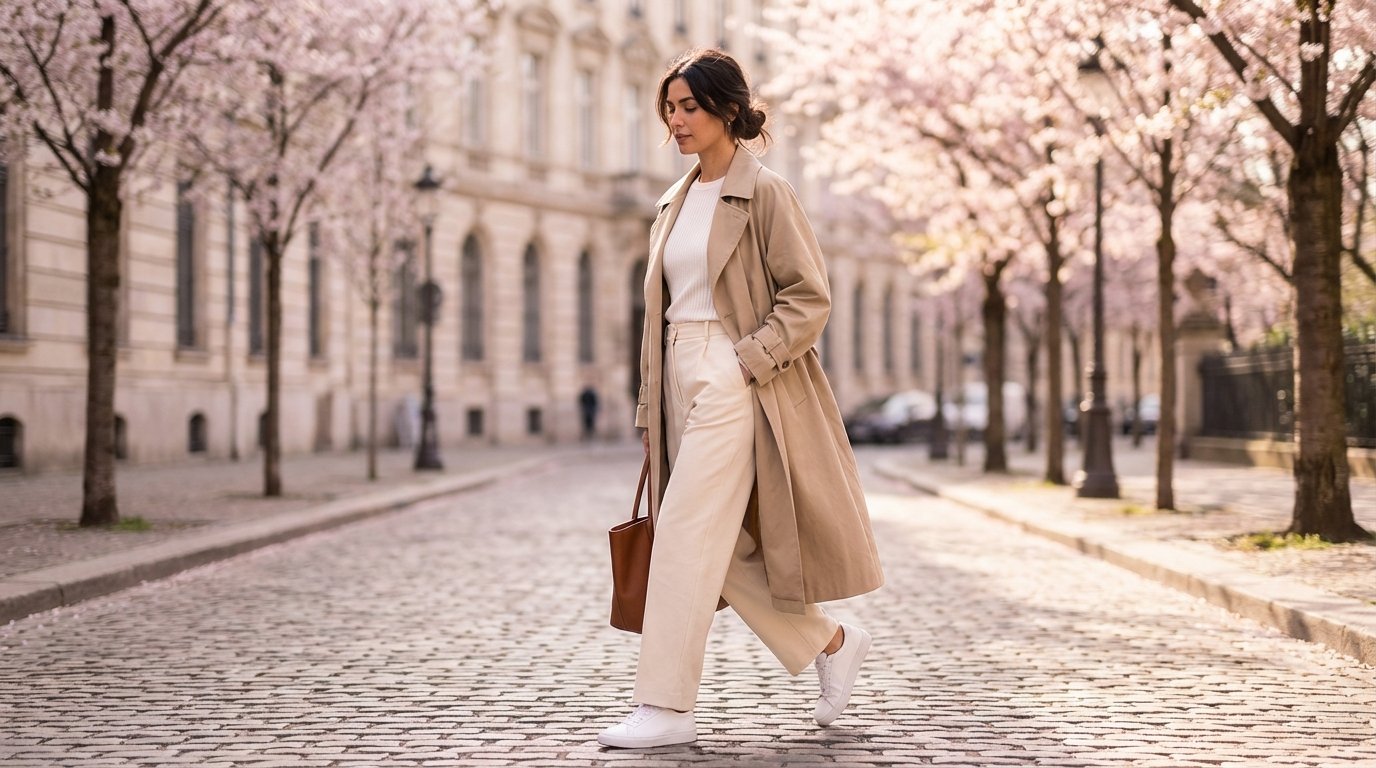
Early spring is a transition season, so the best outfits need to handle cool mornings, warmer afternoons, and unpredictable rain without feeling like leftover winter clothes. The solution is not a larger wardrobe. It is a small set of breathable layers that can be added, removed, and recombined.
This guide focuses on practical early-spring outfits for work, weekends, errands, travel, lunches, and dressier daytime plans. Each formula includes a base, a layer, and a finishing choice so you can adapt it to your weather and routine.
How to dress for early-spring weather
Begin with a light base rather than a heavy sweater. Add a layer that protects against wind or rain, then choose shoes that match the ground conditions. A cotton shirt, fine knit, or long-sleeve tee gives you more flexibility than a thick winter knit.
Before leaving, check three things: the coldest part of your commute, whether you will spend time outdoors, and whether you can remove a layer once you are indoors. A compact scarf, cardigan, trench, or light jacket can make the same outfit work across several temperatures.
Build an early-spring color palette
Keep a few winter neutrals—navy, black, camel, gray, and denim—then introduce one lighter or softer accent such as cream, sage, pale blue, blush, lavender, or butter yellow. This makes the wardrobe feel seasonal without requiring a complete reset.
For an easy polished effect, repeat one color in two details: a scarf and shoe, a bag and sweater, or jewelry and belt. If your outer layer is colorful, keep the base neutral so the outfit remains easy to combine.
Early-spring outfit formulas
Trench coat, knit, and straight-leg jeans
A light trench over a fine knit and straight-leg jeans is a dependable early-spring uniform. Choose a camel, stone, navy, or olive trench and add loafers or clean sneakers. A scarf gives extra warmth without the bulk of a heavy coat.
Linen-blend blazer with a long-sleeve tee
Use a linen-blend or lightweight blazer over a fitted or softly relaxed long-sleeve tee. Pair it with straight trousers, dark denim, or a midi skirt. The blazer gives structure while the tee keeps the outfit comfortable.
Midi dress with a cardigan and boots
A printed or solid midi dress can move into early spring with a fine cardigan and ankle boots. Add tights if the morning is cold, then remove the cardigan indoors. Choose a dress with enough room for the layers underneath.
Striped shirt with a quilted jacket
A striped cotton shirt, straight jeans, and a lightweight quilted jacket create a practical weekend outfit. Add a crossbody bag and walking shoes. This formula works especially well for markets, errands, and casual travel.
Wide-leg trousers with a fitted knit
Balance wide-leg trousers with a fine fitted knit, tucked shirt, or shorter cardigan. Add a belt and a shoe with enough visual weight to meet the hem. A longer open coat can create a vertical line when temperatures are cooler.
Denim jacket over a knit dress
A denim jacket makes a knit dress feel more casual and protects against a light breeze. Use loafers, sneakers, or low boots depending on the weather. Roll the sleeves once to show the wrist and keep the outfit from feeling heavy.
White shirt, sweater vest, and trousers
Layer a sweater vest over a crisp white shirt and add tailored or relaxed trousers. This combination provides warmth without covering the shirt completely. Keep the vest and trousers in related tones for a calm, modern finish.
Monochrome neutral layers
Wear cream, taupe, gray, or navy in several textures rather than one exact shade. A fine knit, tailored trouser, suede or leather shoe, and light coat create depth while keeping the outfit simple.
Casual jumpsuit with a light jacket
A jumpsuit can be an easy one-piece base for early spring. Choose a fabric that allows a long-sleeve tee underneath, then add a utility jacket, trench, or cardigan. Check the fastening and restroom practicality before committing to it for a long day.
Work outfits for early spring
For business casual, try straight trousers, a polished blouse, a light blazer, and loafers. For a relaxed office, dark jeans with a refined knit and structured jacket may work. For a client-facing setting, choose a dress, tailored trousers, or a coordinated set with a clean shoe.
Keep a removable layer at your desk or in your bag. Indoor heating and outdoor temperatures often differ, so the most useful work outfit is one you can adjust without losing its shape.
Weekend and everyday outfits
For errands
Wear relaxed trousers or jeans, a cotton tee or knit, a light jacket, and supportive sneakers. A crossbody bag keeps your hands free and makes the outfit feel more finished.
For lunch
Try a midi dress with a cardigan, a satin blouse with jeans, or a skirt with a fine knit. Add one refined detail—such as a small bag, scarf, or low heel—rather than making every element dressy.
For travel
Choose wrinkle-resistant layers, a soft waistband, and shoes that can handle walking. A long-sleeve tee, relaxed trousers, cardigan, scarf, and light coat can adapt to airports, trains, and changing temperatures.
For a garden or daytime event
Use a midi dress, jumpsuit, or coordinated separates with a light wrap or jacket. Choose flats, block heels, or wedges according to the surface. Comfort matters especially when the event involves standing or grass.
Early-spring capsule checklist
- One trench, quilted jacket, or lightweight coat.
- One denim, utility, or casual jacket.
- One blazer or structured cardigan.
- Two fine knits.
- Two long-sleeve tees or cotton shirts.
- One white or striped button-down.
- One pair of straight-leg jeans.
- One pair of relaxed or wide-leg trousers.
- One midi dress or skirt.
- Loafers or supportive flats.
- Clean sneakers and low boots.
- One warm scarf and one practical bag.
Choose pieces that work across indoor and outdoor settings. Before buying something new, identify at least three outfits you can create with it and check whether the fabric suits your local weather.
Layering and proportion tips
Keep the base light
A fine knit, tee, or shirt makes it easier to add a cardigan or coat. Bulky bases can make every outer layer feel tight and reduce your options.
Balance volume
If the coat or jacket is oversized, use a cleaner base underneath. If the trousers are wide, tuck or shorten the top. The goal is not a particular silhouette; it is a clear one.
Check the sleeve and hem combination
A visible cuff or hem can make layers look intentional. Avoid several sleeves ending at the same awkward point, and test the coat over the thickest layer you plan to wear.
Use accessories for warmth and finish
A scarf, belt, structured bag, or simple jewelry can make a practical outfit look complete. Choose accessories that fit your actual day rather than adding items you will need to carry.
Shoes for unpredictable ground
Loafers, ankle boots, clean sneakers, low block heels, and weather-resistant flats can all be useful. For wet days, choose materials that can handle moisture and soles that provide traction. For long walking days, prioritize support over a delicate silhouette.
Match the visual weight of the shoe to the trouser or skirt. Wide trousers may need a stronger shoe, while a light dress may suit a slimmer flat or low boot.
Common early-spring mistakes
- Removing every layer at once and leaving no option for temperature changes.
- Wearing heavy winter fabrics when a lighter combination would be more comfortable.
- Choosing a beautiful shoe that cannot handle the commute or weather.
- Combining too many bulky layers.
- Buying spring colors that do not work with your existing neutrals.
- Ignoring rain, wind, or the surface you will walk on.
- Using age-based rules instead of choosing fit and comfort for your own life.
Early-spring outfit FAQs
What do you wear in early spring when it is still cold?
Use a light base, a fine knit or cardigan, and a protective outer layer such as a trench, quilted jacket, or light coat. Add a scarf and weather-appropriate shoes rather than relying on one very heavy garment.
Can you wear spring clothes before the weather is warm?
Yes. Bring in spring through color, lighter textures, and breathable layers while keeping boots, denim, tights, or a warm coat available for cold conditions.
What jacket is best for early spring?
The best choice depends on your climate. A trench works for wind and light rain, a quilted jacket adds warmth without winter weight, and a blazer works well for indoor-to-outdoor days.
How do I avoid looking bulky when layering?
Keep the base thin, use no more than two substantial layers, and balance an oversized outer layer with a cleaner silhouette underneath. Leave some wrist, ankle, or neckline visible where the weather allows.
Final checklist
Start with a light base, add a removable layer, protect yourself from wind or rain, check the shoes, and use one seasonal color or accessory. Early-spring style works best when it is flexible enough for the weather and easy enough to repeat.

Leave a Reply