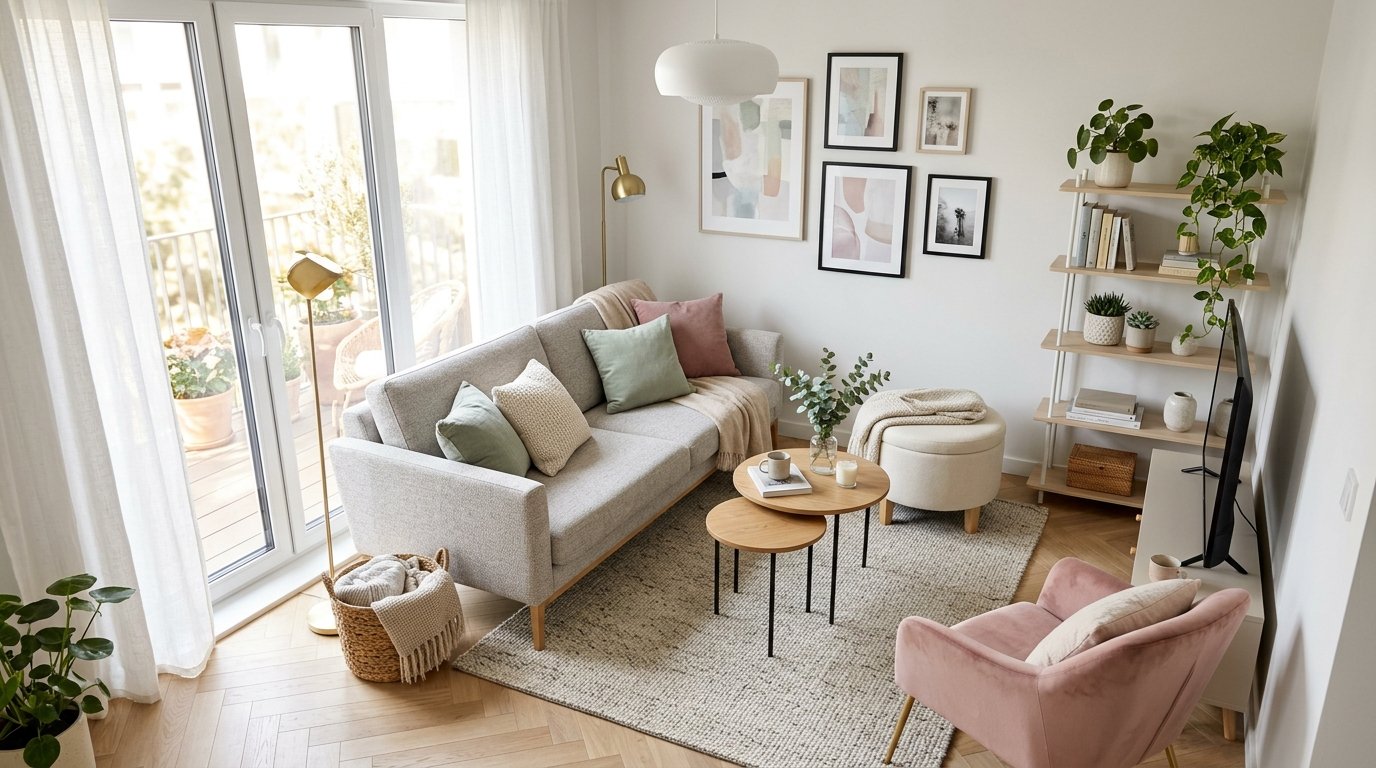
A small living room can feel comfortable, useful, and finished without looking crowded. The most successful rooms usually begin with a clear layout, furniture that fits the scale of the space, and a limited palette that lets the eye move around the room. Instead of trying to make a compact room imitate a large one, treat its size as a design advantage: every piece can have a purpose, and every view can feel intentional.
This guide focuses on practical small living room ideas for apartments, older homes, and open-plan spaces. You will find layout options, furniture measurements to consider, storage solutions, lighting advice, and decorating formulas that make a room feel calm while still reflecting your personality.
Start with the room’s real constraints
Measure the length and width of the room, but also record door swings, windows, radiators, outlets, vents, and the path people naturally take through the space. Mark those elements on paper before shopping. A beautiful sofa that blocks a doorway or forces the television into a glare-prone corner will make the room frustrating no matter how attractive it looks.
Decide what the room must do. If it is mainly for conversation, seating should face one another. If it is a television room, prioritize viewing angles and cable access. If it also functions as a work or dining area, define that second use with lighting, a rug, or a change in furniture orientation rather than filling the room with separate bulky zones.
Choose a layout before choosing decor
The conversation layout
Place the sofa on the longest practical wall and add one or two lighter chairs opposite or at an angle. A small round coffee table keeps the center approachable and avoids sharp corners in a tight circulation path. This arrangement works well when conversation matters more than a single focal screen.
The television layout
Start with the viewing position, then place the sofa where the screen can be seen without turning the neck. A narrow console, wall-mounted screen, or shallow media unit can preserve floor space. Keep the area beneath the screen visually quiet so the room does not feel dominated by electronics.
The corner layout
Use an L-shaped sofa or a compact chaise to occupy a corner efficiently, but measure the return carefully. The chaise should not interrupt the main path into the room. Balance the larger form with a slim side table, a floor lamp, or an open-legged accent chair rather than another heavy piece.
The open-plan layout
Float the sofa with its back facing the adjoining zone to create a subtle boundary. A rug beneath the seating area makes the living room read as a complete zone without adding a wall. Keep the back of the sofa tidy because it becomes part of the view from the kitchen or entry.
Select furniture that earns its space
Scale matters more than style labels
Look for a sofa with a moderate depth, slim arms, and enough clearance to move around it. A low-profile piece can make the ceiling feel taller, while exposed legs allow more floor to remain visible. Do not choose the smallest sofa automatically; a sofa that is too short may force you to add extra chairs and create more visual clutter.
Use flexible pieces
A storage ottoman can act as a footrest, extra seat, and coffee table. Nesting tables can separate when guests arrive and stack when the room needs open floor. A lightweight stool can serve as seating, a plant stand, or a side table. Multifunctional furniture is most useful when it is easy to move and simple to access.
Keep the center visually light
Choose a round, oval, glass, or open-shelf coffee table when a solid rectangular table would interrupt the room. If children or pets use the space, prioritize stable edges and durable finishes over delicate materials. The goal is not to make every object transparent; it is to prevent the middle of the room from becoming a visual wall.
Create storage without making the room feel full
Begin by giving everyday items a home close to where they are used. Use a lidded basket for throws, a tray for remotes, and a narrow cabinet for games or electronics. Closed storage is valuable for visual calm, while one or two open shelves can display books and objects with personality.
Use vertical space
Wall-mounted shelves, tall bookcases, and artwork arranged upward draw attention toward the ceiling. Leave some breathing room around the objects; a completely filled wall feels heavier than a smaller, edited display. If the room is narrow, choose shelving with a shallow depth so it does not reduce the walking path.
Make awkward corners useful
A corner can hold a reading chair, a narrow lamp, a small cabinet, or a vertical plant. Avoid filling every unused corner simply because it is available. One purposeful element is usually better than several small objects that make the space feel unfinished.
Use color and pattern to create visual room
A compact living room does not have to be white. A related family of wall, upholstery, and textile colors creates continuity, which helps the room feel less fragmented. Soft neutrals, muted greens, warm clay, dusty blue, or gentle taupe can all work when the undertones are consistent.
Use contrast where it helps define the room: a darker lamp, a framed print, or a patterned cushion can create a focal point. Keep large patterns limited to one major surface and repeat one or two of their colors elsewhere. This gives the eye a clear path instead of making every object compete.
Layer lighting instead of relying on one fixture
Small rooms often feel cramped when the only light comes from a bright ceiling fixture. Combine ambient light with task and accent light. A floor lamp beside the sofa, a table lamp on a console, and a small picture light or wall light can create depth at night.
Place lamps where they support real activities: reading, conversation, or entry storage. Use warm, comfortable light in the evening and avoid placing a lamp where its reflection creates glare on the television. During the day, keep window areas as open as possible and use lightweight curtains when privacy allows.
Decorate with a simple three-layer formula
A useful starting formula is foundation, function, and character. The foundation includes the sofa, rug, and main table. Function includes lighting, storage, and the surfaces you use daily. Character includes art, plants, books, textiles, and objects that tell your story. Add them in that order so decoration supports the room rather than hiding layout problems.
Choose the rug carefully
A rug that is too small can make the seating look scattered. When possible, place at least the front legs of the sofa and chairs on the rug so the group reads as one zone. In a narrow room, a runner can define the path while a smaller rug anchors the seating area.
Use mirrors with a purpose
A mirror can reflect daylight or a pleasant view, but it should not be placed where it doubles visual clutter. Check what it will reflect from the seated position. A tall mirror near a window or a slim mirror above a console can add light without needing another decorative object.
Add plants and textiles thoughtfully
One larger plant can provide more impact than many small pots. Choose a location with suitable light and leave enough clearance around the leaves. Layer a throw and a few cushions for comfort, but repeat colors so the textiles look collected rather than random.
Small apartment living room solutions
In an apartment, the living room may need to serve as lounge, office, dining area, and guest space. A drop-leaf table, compact desk, nesting stools, or sofa bed can support those changes. Use a curtain, open bookcase, or lighting shift to distinguish the work zone without making the room feel divided.
Renters can improve the space with removable hooks, plug-in sconces, freestanding storage, and large-scale art leaned on a shelf. Before buying, check the elevator, stairwell, doorway width, and building rules. A piece that cannot enter the apartment is an expensive design lesson.
Cozy does not mean cluttered
Warmth comes from texture, light, and comfortable proportions, not from filling every surface. Combine a soft rug, tactile upholstery, a woven basket, and one or two personal objects. Leave some empty surface and floor area so the room can breathe.
Use a quick reset routine: return remotes to a tray, fold throws, clear the coffee table, and place stray items in their assigned storage. Small rooms look dramatically better when everyday clutter has a repeatable destination.
Common small-room mistakes
- Buying furniture before measuring doorways, clearances, and traffic routes.
- Using several tiny rugs that break the room into disconnected pieces.
- Placing every item against a wall and leaving an unusable empty center.
- Choosing storage that is difficult to reach, so clutter simply moves elsewhere.
- Using one harsh ceiling light instead of several comfortable light sources.
- Adding decor before deciding how the room will actually be used.
A practical shopping checklist
Before purchasing, write down the room’s measurements, the furniture footprint you can accommodate, the colors already present, and the job each new piece must perform. Confirm return policies, measure packaged dimensions, and save photos of the room in different lighting. Prioritize the sofa, rug, and lighting first; accessories can be added gradually as you learn what the room needs.
Small living room FAQs
What furniture is best for a very small living room?
Choose appropriately scaled seating, an easy-to-move table, and at least one piece with useful storage. Slim arms, exposed legs, and flexible pieces can preserve both comfort and visual space.
Should a small living room sofa always be against a wall?
No. Floating a sofa can improve zoning and circulation, especially in an open plan. It should only be done after measuring the paths around it and keeping the back visually finished.
How can I make a small living room look more expensive?
Use a cohesive palette, consistent lighting, fewer but better-chosen accessories, and correctly sized art and rugs. Editing often creates a more considered look than adding more decoration.
How do I make a small living room cozy without clutter?
Layer soft textures, warm lighting, and a few personal objects while giving everyday items closed or designated storage. Comfort comes from what the room supports, not from how many items it contains.
Final takeaway
The strongest small living room design is a plan that respects the room’s dimensions and the way you live. Measure first, choose furniture with a clear job, preserve comfortable circulation, and build atmosphere through lighting, texture, and edited personal details. With those decisions in place, even a compact room can feel generous, welcoming, and distinctly yours.

Leave a Reply