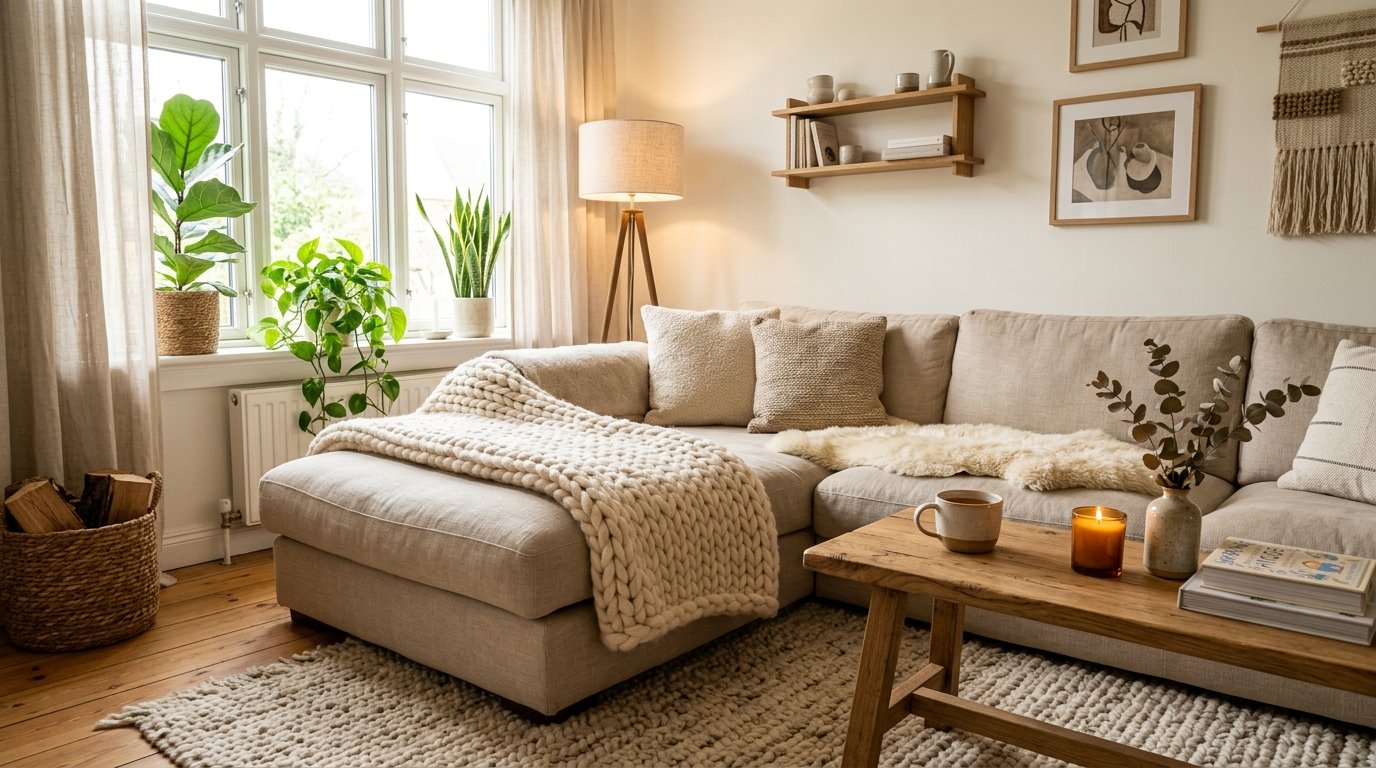
Use the following guide to improve those foundations before adding decorative details.
Cozy does not mean cluttered
Coziness comes from comfort and atmosphere, not from filling every empty surface. A room can feel warm with a restrained palette, a clear walking route, comfortable seating and lighting that becomes softer in the evening.
Start by observing how the room is used. Does it need to support conversation, television, reading, children, pets, working from home or several of these activities? A good layout begins with real routines rather than a furniture arrangement copied from a photograph.
1. Fix the furniture layout first
Create a clear conversation zone by placing seating close enough for people to speak comfortably without shouting across the room. A sofa and two chairs can work better than one oversized sectional when the room needs flexible seating, while a sectional may be the most efficient choice for a family room.
Leave a comfortable route between the main entrance, windows and adjacent rooms. Do not push every piece against the wall if the room is large enough to float furniture. In a small room, however, keeping the perimeter open may create more usable floor space.
Choose one focal point. It may be a fireplace, a window, a media unit, a large artwork or a view. Arrange the furniture so the focal point is visible but does not force every seat into the same direction.
2. Choose a warm, flexible color palette
A cozy palette does not have to be dark. Start with a base color that works with the flooring and natural light, then add warmth through wood, textiles and smaller accents. Cream, sand, clay, muted green, warm gray and soft brown can all support a comfortable atmosphere when their undertones work together.
Use the sixty-thirty-ten approach as a loose guide: most of the room in a base color, a secondary color across upholstery or larger textiles, and a smaller accent in cushions, art or accessories. The numbers are not a rule; the purpose is to prevent every color from competing equally.
If the room already has a strong sofa or rug, let it lead the palette. Replacing too many elements at once often creates a less personal result than building around what you already own.
3. Layer textiles and tactile materials
Texture gives a cozy room physical depth. Combine a smooth sofa with a woven throw, a nubby cushion, a soft rug and a wood or rattan accent. Repeating one texture in several places can make the room feel connected, while mixing too many similar patterns can make it feel busy.
Choose a rug large enough to anchor the seating zone. At minimum, the front legs of the main seating should sit on the rug. A small rug floating in the center of a large seating arrangement can make the furniture look disconnected.
Use curtains to soften hard window lines and control glare. If the room is dark, choose a fabric and lining that preserve daylight rather than relying only on heavy materials.
4. Create layered lighting
Comfort changes dramatically when the room is lit at several levels. Plan for:
- Ambient light from the main ceiling fixture or general room lighting.
- Task light for reading, crafts, games or working.
- Accent light from table lamps, floor lamps, picture lights or a softly lit cabinet.
Place lamps beside the seats that are used most often. A floor lamp can define a reading corner, while a pair of table lamps can make a long console or media unit feel balanced. Use separate controls where possible so the room can shift from bright daytime use to a lower evening setting.
Avoid relying on very bright, exposed bulbs. Shades, diffusers and warmer evening settings can make the same room feel more relaxed without changing the furniture.
5. Make seating genuinely comfortable
A beautiful sofa is not automatically a comfortable one. Consider seat depth, back support, arm height and the way people actually sit. If household members have different preferences, combine a deeper sofa with a supportive chair or a firm accent seat.
Keep a small table within reach of the main seating. It does not need to be large; it needs to hold a drink, book, remote or lamp without forcing people to stretch across the room.
For homes with children or pets, choose washable covers, durable textures and furniture with enough clearance for cleaning. Practical choices can still look refined when the colors and shapes are consistent.
6. Add storage so the room stays calm
Open display works best when it is edited. Use baskets, drawers, cabinets or an ottoman with storage for items that need to be put away quickly. Keep everyday objects close to where they are used, such as a basket for throws or a drawer for remotes and charging cables.
If the room has open shelving, group books and objects by height and leave visible breathing space. A shelf that is filled from end to end may hold more items but often looks less intentional.
A simple evening reset—returning throws, clearing tables and placing loose objects in one basket—can preserve the cozy feeling more effectively than buying more decor.
7. Use natural elements carefully
Wood, woven fibers, stone, plants and paper or linen textiles can soften a room with many hard surfaces. Use them where they add contrast or function. A wooden side table, a woven basket and one suitable plant may be enough; a collection of unrelated natural accessories can become another form of clutter.
Choose plants based on the available light and your maintenance routine. If the room is dark or frequently unattended, a low-maintenance option may be more realistic than a plant that needs daily care.
8. Choose a modern cozy direction
Warm minimalism combines a limited palette, simple shapes and tactile materials. Modern farmhouse can use practical furniture, wood, woven pieces and a small amount of pattern without becoming themed. Earthy contemporary rooms often pair muted color with sculptural lighting and natural finishes. An eclectic room can feel cozy when the collected objects share a color, material or scale relationship.
Treat these as design directions rather than shopping lists. The goal is to create a room that feels like yours and remains easy to live with.
9. Cozy solutions for a small living room
Use furniture that performs more than one job, such as an ottoman with storage, nesting tables or a compact desk that can close away. Keep the largest pieces proportional to the room and use vertical storage where floor space is limited.
Do not fill every corner simply because it is available. A small amount of open floor can make the room feel calmer and easier to use. Mirrors can help reflect light, but they should reflect a pleasant view rather than a cluttered storage area.
10. Budget upgrades with the highest impact
If the budget is limited, improve the room in this order:
- Correct the layout and remove items that are not serving the room.
- Add or reposition lighting so seating areas are usable after dark.
- Choose one appropriately sized rug or improve the textile layers.
- Add practical storage for visible everyday clutter.
- Introduce one piece of art, a plant or a meaningful object that gives the room character.
This sequence improves both appearance and function without requiring a complete redesign.
Common cozy-living-room mistakes
Too many small decorations can make a room feel crowded rather than cozy. Other common problems include a rug that is too small, furniture that blocks a walkway, harsh overhead lighting, seating that looks good but lacks support, and a palette with too many unrelated accent colors.
Avoid designing only for one photograph. Test the room at different times of day, with the lights on and off, and during the activities the household actually performs.
Frequently asked questions
Can a modern living room still feel cozy?
Yes. Comfort comes from layout, seating, lighting and texture rather than from a particular style label. Clean-lined furniture can feel warm when it is paired with suitable textiles, natural materials and softer light.
How can I make a living room cozy without buying new furniture?
Rework the layout, remove visual clutter, improve lamp placement, add or reposition textiles and group existing objects more deliberately. These changes often reveal that the room needs editing more than shopping.
What is the most important cozy-living-room purchase?
There is no universal answer. In many rooms, the largest improvement comes from an appropriately sized rug or better layered lighting. Choose based on the room’s current weakness.
How do I keep a cozy room from looking messy?
Use closed storage for everyday items, leave breathing space on shelves and tables, limit the number of visible patterns and establish a quick daily reset routine.
Final room checklist
A cozy living room should support conversation, rest and the activities that matter to the people who use it. Confirm that the furniture layout leaves a clear route, the seating is comfortable, the lighting works at night, the rug anchors the zone, the palette is connected and daily clutter has a home. Once those foundations are in place, decorative details can make the room warmer without making it harder to live in.


Leave a Reply