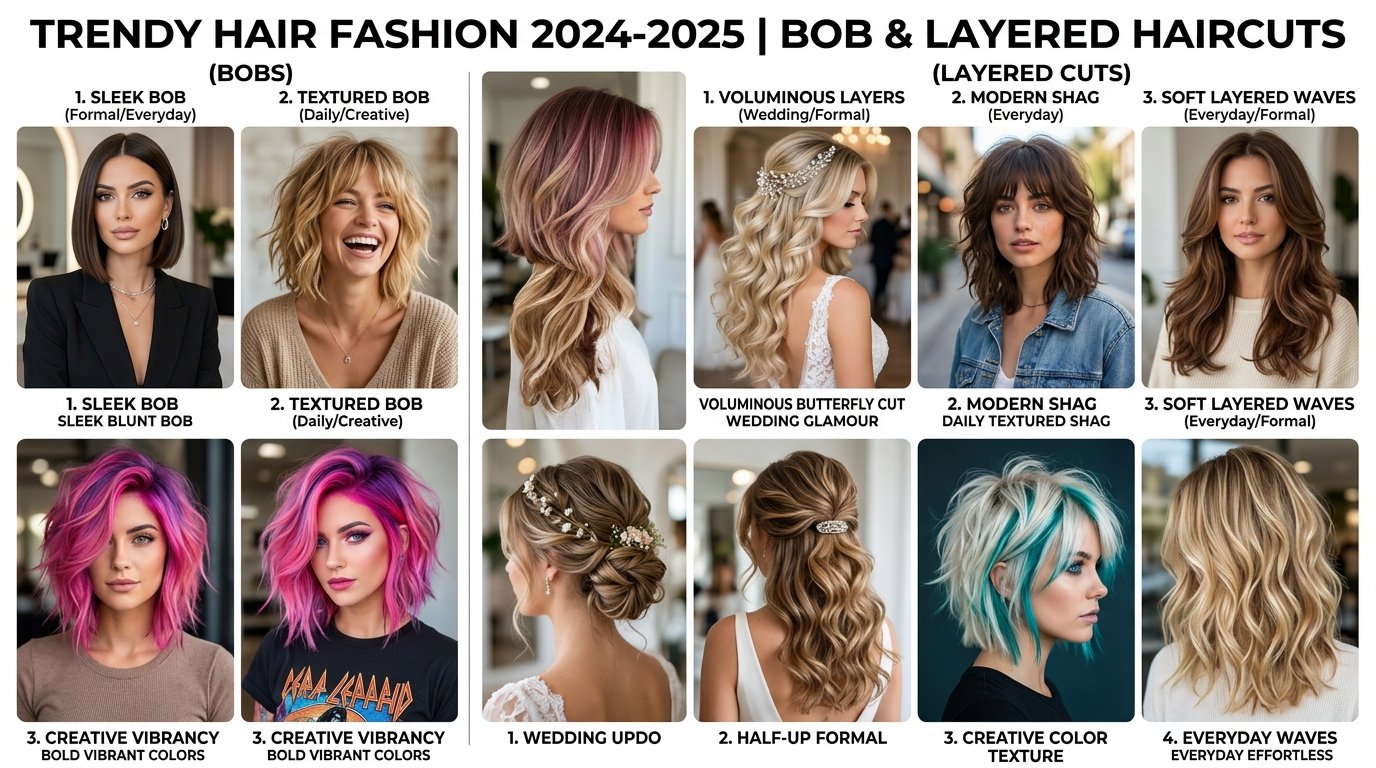
Choosing a formal hairstyle is easier when you start with the occasion, your hair’s natural behavior, and the amount of time you can realistically spend styling. A wedding guest may want movement and comfort, while a bride or member of the wedding party may need a more structured style that lasts through photographs, weather, and a long reception. This guide organizes elegant options by hair length and styling effort so you can choose a look that feels polished without forcing your hair into a style it cannot comfortably support.
Before saving a reference photo, consider your neckline, accessories, venue, hair texture, and whether you will have professional help. The best formal hairstyle is not simply the most elaborate one; it is the one that suits the outfit, frames your face, and remains wearable for the entire event.
Quick chooser: find a style by length and effort
| Hair length | Lower-effort choices | Higher-structure choices | Best for |
|---|---|---|---|
| Short | Polished waves, side-swept texture, embellished headband | Finger waves, pinned twists, braided crown detail | Guests, cocktail events, modern formalwear |
| Medium | Soft waves, half-up twist, textured ponytail | Low chignon, pinned curls, braided updo | Weddings, evening events, photographs |
| Long | Hollywood waves, sleek ponytail, half-up volume | Chignon, braided updo, sculpted bun | Bridal parties, galas, formal ceremonies |
For a do-it-yourself style, choose a look with forgiving texture and a simple backup plan. If the style requires unfamiliar tools, extensions, or intricate pinning, book a trial rather than testing it for the first time on the event day.
Short formal and wedding hairstyles
Short hair can look exceptionally formal when the finish is intentional. Smooth the surface of a bob for a clean evening look, add controlled waves for softness, or use a side part and one striking accessory to create a clear focal point.
Polished bob waves
Use a defined part and consistent waves around the face, then brush them lightly so the pattern looks soft rather than stiff. This works well with dresses that already have visual detail because the hairstyle adds movement without competing with the neckline.
Textured pixie with a side sweep
Work a small amount of styling product through the crown, direct the front toward one side, and keep the edges neat. A pearl clip, metallic barrette, or slim headband can make the look feel event-ready without adding bulk.
Finger waves and pinned twists
Finger waves suit a vintage-inspired outfit and are most effective when the pattern is deliberate from the part through the front section. For a softer alternative, twist two front sections toward the back and pin them below the crown, leaving the rest lightly textured.
Medium-length formal hairstyles
Medium hair offers a useful balance: it can be worn down, partially pinned, or gathered into a compact updo. Choose the shape according to how much movement you want and where the dress draws attention.
Soft waves for a wedding guest
Loose waves pair well with romantic, floral, or relaxed formalwear. Keep the ends touchable and vary the direction of a few sections so the finish does not look overly uniform. A deep side part adds polish without requiring a full updo.
Half-up twist with face-framing pieces
Gather the top section at the point where the crown naturally lifts, twist it back, and secure it with pins or a small accessory. Leave a few controlled pieces near the cheekbones only if they stay clear of the eyes and will not need constant adjustment.
Low textured chignon
A low chignon can work on shoulder-length hair with pins, padding, or a small amount of added texture. Keep the bun close to the nape for a classic finish, and test the placement with the dress neckline before the event.
Curly or wavy pinned-back style
Enhance the natural pattern instead of brushing it flat. Pin one side back, define the front, and let the remaining texture create volume. This approach is often more comfortable than trying to force naturally curly hair into a sleek style in humid conditions.
Long-hair formal hairstyles
Long hair gives you more styling choices, but extra length also creates weight. A trial helps you identify whether the style stays secure and whether the pins remain comfortable after several hours.
Low chignon
A low chignon is a dependable choice for formal dresses and high necklines because it keeps the hair controlled at the nape. Smooth the front, twist or coil the length, and place pins in a crossed pattern. Add a delicate comb only after the foundation feels secure.
Hollywood waves
Large, connected waves create a glamorous silhouette when the hair is worn over one shoulder. The key is consistency: define the part, shape the wave direction, and brush carefully so the ridges connect instead of separating into individual curls.
Sleek ponytail
A low or mid-height ponytail can look formal when the base is clean and the length is finished. Wrap a small section of hair around the elastic, smooth flyaways with a light product, and check that the ponytail does not pull uncomfortably at the scalp.
Braided updo
A braid adds structure and visual interest to an updo. A simple Dutch, French, or rope braid can frame the crown before joining a bun, while a loose braid through the length creates a softer look. Keep the tension comfortable, especially for a long ceremony.
Wedding-specific choices
Bridal hair
Bridal styling usually needs to coordinate with a veil, jewelry, neckline, and photography from multiple angles. Bring the actual accessories to the trial and test how the style looks from the front, side, and back. A secure foundation matters more than adding one more decorative detail.
Bridesmaid hair
Bridesmaid hairstyles can reflect the wedding palette while still allowing each person’s texture and length to look natural. A shared detail, such as a low bun, soft wave, or small accessory, creates cohesion without requiring identical hair.
Wedding guest hair
As a guest, choose a polished style that supports the outfit without intentionally copying the bridal look. Comfortable waves, a half-up style, or a neat low ponytail are flexible choices. Avoid accessories that are so prominent they become the main statement of the ceremony.
Choose by texture and hair condition
Straight hair often benefits from grip before curling or pinning, while fine hair may need lightweight texture rather than heavy oils. Thick hair usually needs sectioning and a stronger foundation so the style does not loosen under its own weight. Wavy, curly, and coily hair can be shaped by defining the natural pattern and securing only the areas that need control.
Color-treated, dry, or fragile hair deserves extra care. Use heat protection, avoid repeatedly passing over the same section, and do not introduce a harsh product immediately before an important event. For humidity-sensitive hair, test the finish in similar weather and carry a small touch-up kit.
DIY or salon: how to decide
A DIY style is realistic when you can reproduce it calmly, have the necessary tools, and can finish it with time to spare. Waves, half-up twists, and low ponytails are usually easier to practice than a detailed updo. A salon appointment is worthwhile when the event is high-stakes, the style includes extensions or a veil, or your hair behaves differently from the reference image.
Book a trial early enough to change direction if needed. Take photos in natural light, sit and move while wearing the style, and note any pins that feel tight. Prepare clean, fully dry hair according to the stylist’s instructions, but do not assume every style requires freshly washed hair.
How to make the style last
Start with a stable foundation, use products sparingly, and allow each layer to set before adding the next. Place pins against the direction of the twist, cross them where possible, and keep a few essentials nearby: small pins, a comb, blotting tissue, a travel-size finishing product, and any accessory used in the original style.
At the end of the event, remove pins slowly and detangle from the ends upward. Avoid sleeping in a heavily pinned style or pulling accessories through knots, especially when the hair is fine, curly, or chemically treated.
Common mistakes to avoid
- Choosing a style that fights the dress neckline or competes with statement jewelry.
- Skipping a trial for a style that requires complex pinning or unfamiliar tools.
- Using too much product on fine hair and losing natural movement.
- Ignoring venue conditions such as humidity, wind, heat, or outdoor travel.
- Forgetting to test the hairstyle while sitting, turning, and wearing the planned accessories.
Formal hairstyle FAQs
What is the best formal hairstyle for short hair?
Polished bob waves, side-swept texture, finger waves, and pinned twists are strong choices. Select the finish that matches the neckline and the amount of styling time available.
Should wedding guest hair be different from bridal hair?
It does not have to be completely different, but guests should choose a polished style that does not intentionally imitate the bride’s full look or accessories.
How can curly hair stay defined at a wedding?
Work with the natural pattern, test products beforehand, secure only the sections that need control, and plan for the weather. A trial is especially helpful in humid conditions.
How far in advance should I test a formal hairstyle?
Practice a DIY look at least once before the event. For a salon style, schedule a trial early enough to adjust the length, accessory placement, or overall shape.
Final checklist
Save one or two reference images, confirm the hairstyle works with the neckline, test it with the real accessories, and choose a finish you can comfortably wear for several hours. Elegant formal hair is less about chasing every trend and more about creating a secure, intentional shape that still feels like you.
Leave a Reply