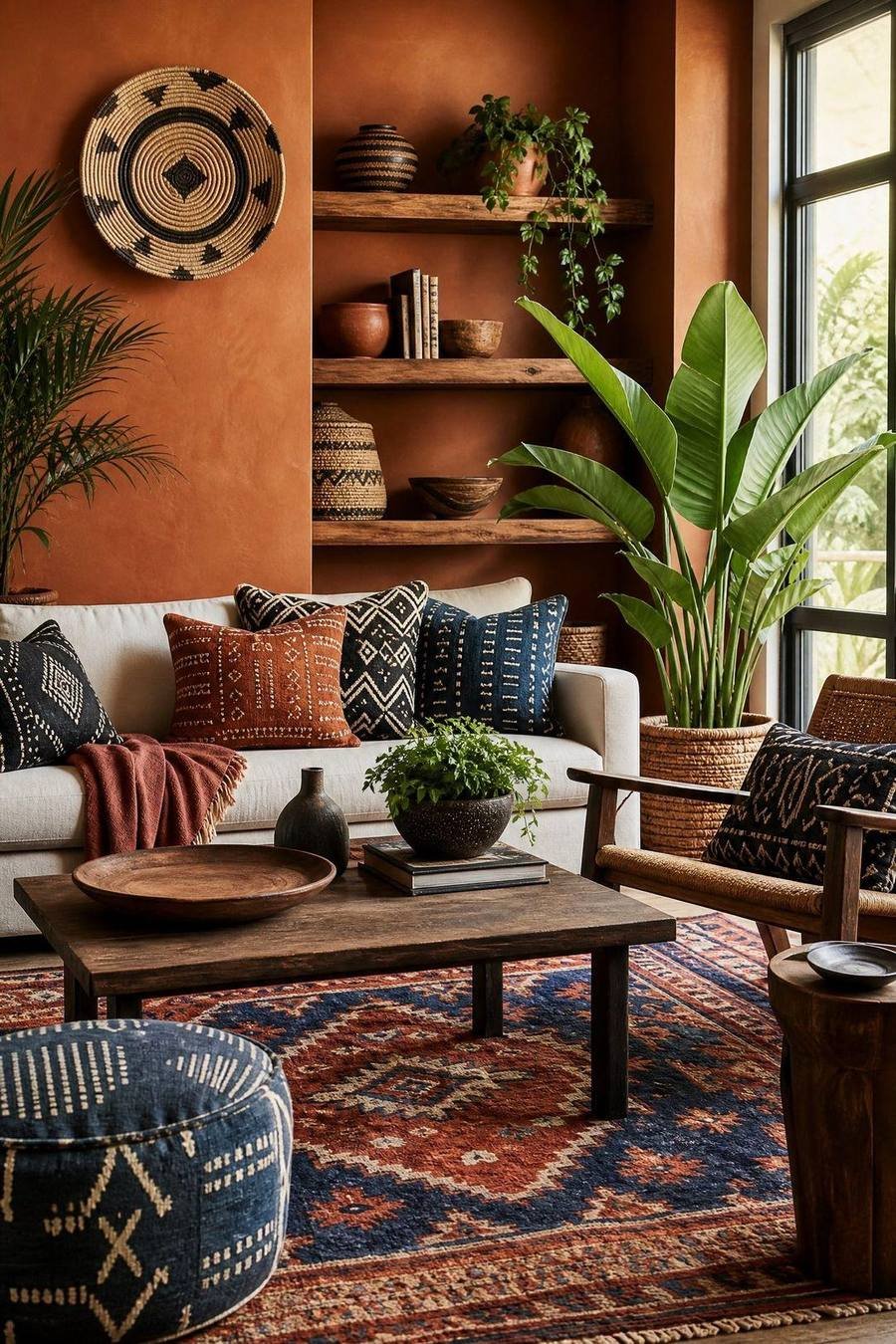
Save this vertical image as a Pinterest Pin for a quick visual summary.
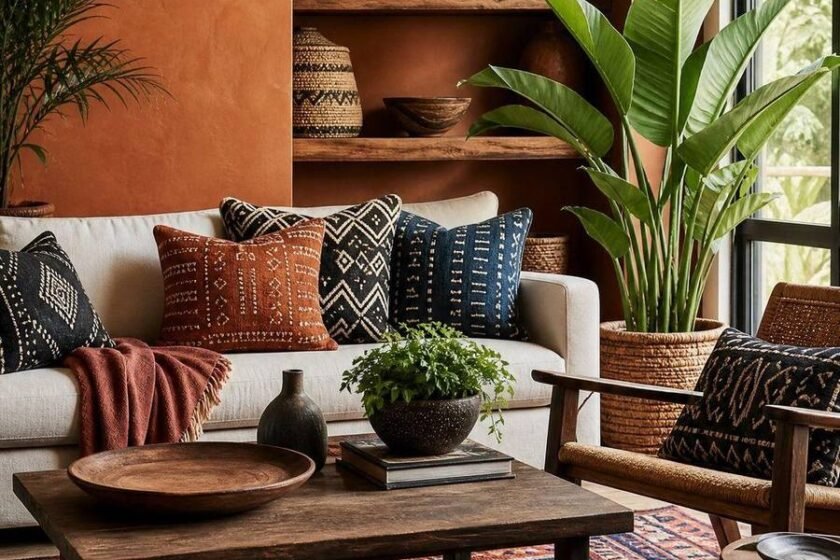
Afrohemian decor combines African-inspired materials with relaxed bohemian layering. The goal is a collected, tactile room—not a pile of unrelated patterns. The difference between a room that feels curated and one that feels cluttered usually comes down to three decisions: the base color, the order in which layers are added, and how patterns are balanced by scale.
Start with a calm base
Use warm white, clay, camel, charcoal, or deep olive as the foundation. Then choose one base, two supporting colors, and one accent, repeating them in at least three places.
Choose the grounding base before adding any pattern. A neutral sofa, simple wall color, or natural-wood floor gives patterned textiles somewhere to breathe. If the room already has strong tile, wallpaper, or flooring, use that as the base instead of adding another competing pattern.
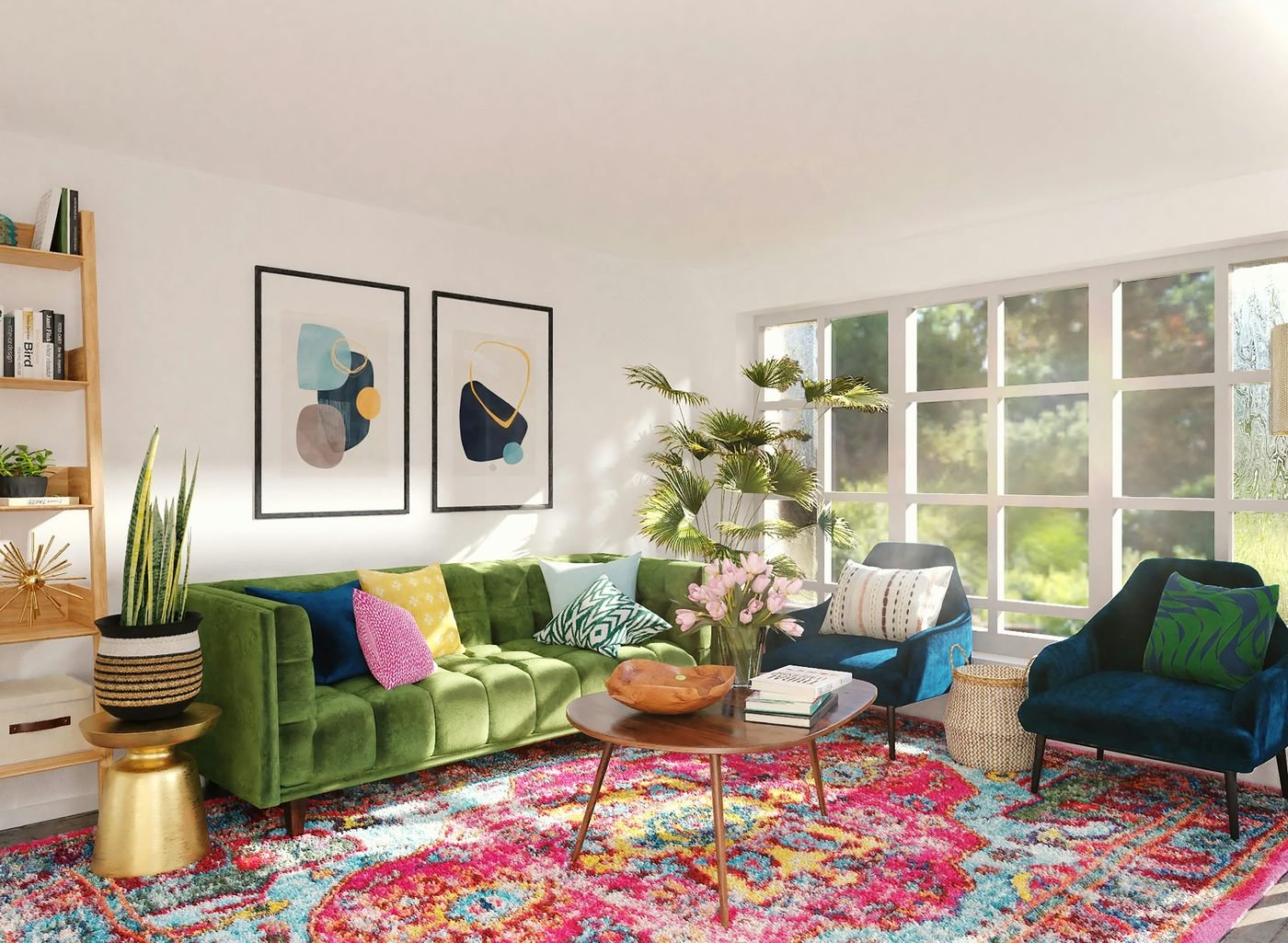
A useful working rule is one base, two supporting colors, and one accent. For example, warm white as the base, terracotta and ink blue as supporting colors, and brass as the accent. Repeating those colors across textiles, frames, and ceramics is what makes the room feel intentional rather than random.
Build texture before quantity
Begin with a woven basket, natural-fiber rug, carved wood, linen, or a nubby throw. Add patterned cushions only after the room has tactile depth. If the room feels busy, remove one small object before adding another.
The most convincing Afrohemian rooms use texture before they use quantity. Mixing matte, rough, and soft surfaces creates depth without requiring a crowded gallery wall. If the room feels flat, add one of these: a low wood stool, a woven pendant, a carved bowl, a linen curtain, or a large leafy plant.
Choose patterns by scale
Let one large geometric pattern anchor the room while smaller stripes support it. Keep some fabric solid so the eye can rest. When buying culturally inspired pieces, learn their origin, credit makers, and look for fair-trade or artisan-produced work.
Combine patterns by varying scale rather than by matching. One large geometric pattern anchors the room; smaller stripes or dots support it. Keep at least one-third of visible fabric solid so the eye has a resting point. Mudcloth-inspired graphics, indigo motifs, raffia texture, and earthy geometric rugs work together when their colors overlap. A smaller number of well-chosen objects feels more authentic than a room filled with generic prints.
Five easy formulas
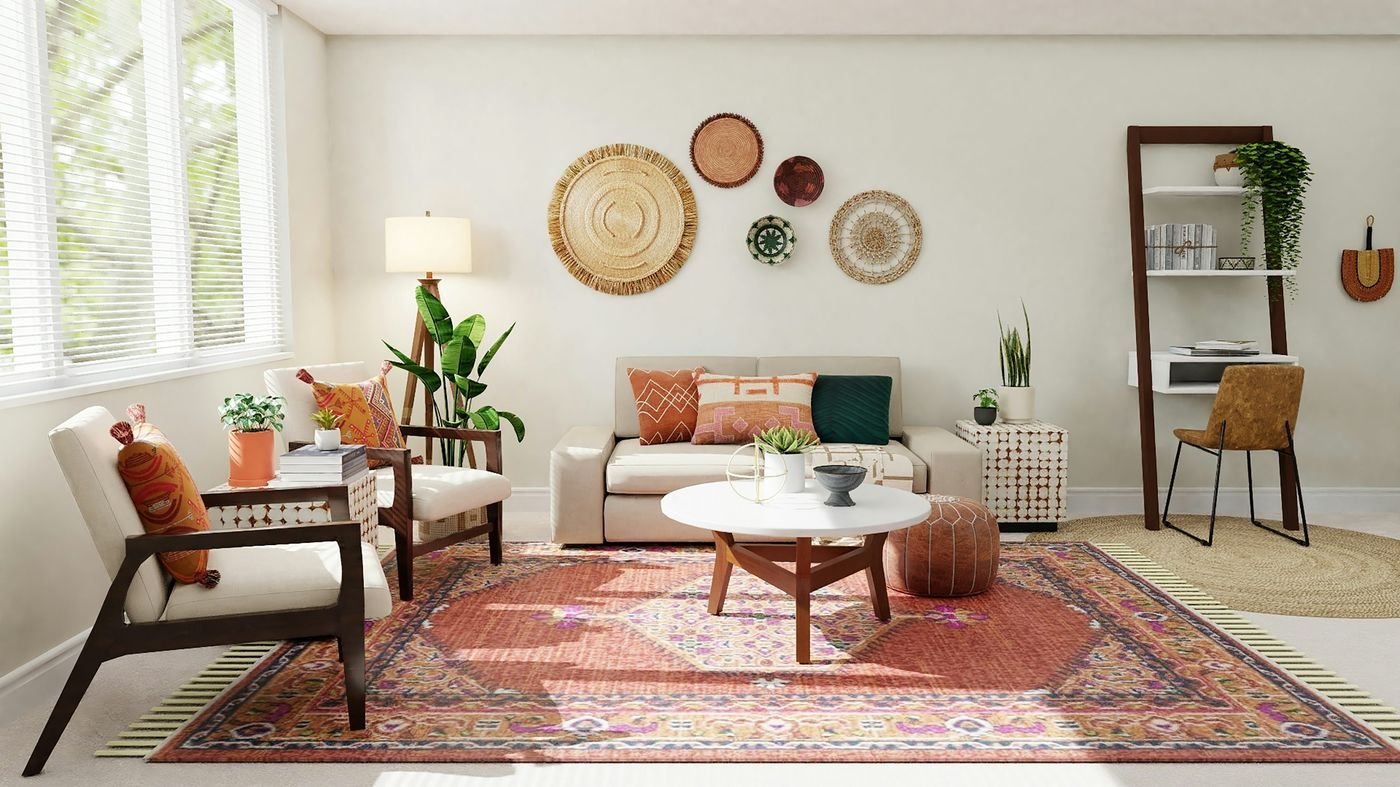
- Warm minimal: cream sofa, dark wood, indigo pillow, baskets, and one large plant.
- Earthy color: clay art, rust textiles, navy rug, cane seating, and brass light.
- Black and natural: black accents, pale wood, cream linen, and one high-contrast textile.
- Small-space: neutral walls, one statement rug, vertical baskets, narrow console, and layered plants.
- Collected maximalism: colorful art, mixed cushions, an antique-style cabinet, and one repeated motif.
Shopping checklist
Measure the wall, check the largest textile’s scale, confirm cleaning needs, and choose a focal piece first. For rentals, use removable hooks and freestanding shelving. In high-traffic rooms, prioritize durable rugs and closed storage.
Before buying, decide which color will repeat across the room, then choose one meaningful focal piece first. Supporting pieces should make that piece easier to see rather than compete with it.
Common mistakes to avoid
The most common mistake is treating Afrohemian decor as a color explosion. Another is mixing too many small accessories instead of choosing one large anchor. Rooms also lose coherence when every surface has a different pattern or when plants are used as filler rather than as part of the composition.
FAQ
Is Afrohemian the same as boho?
No. It can use bohemian layering, but it should thoughtfully reflect African-inspired materials, craft, and color. Afrohemian styling shows attention to craft traditions and color stories rather than relying on generic global motifs.
How can I try it without redecorating?
Start with one textile, basket, plant, and wood accent while keeping large furniture. Change only the soft layers first; the effect is visible immediately and reversible.
What colors work best?
Earth tones are the easiest starting point, but indigo, emerald, black, cream, rust, and ochre all work when repeated deliberately across at least three objects in the room.

Leave a Reply