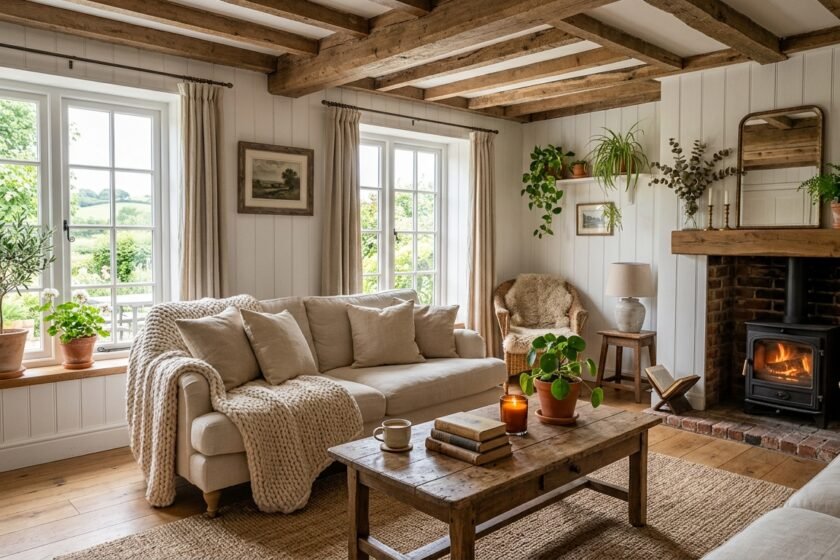
A farmhouse living room can feel warm and collected without requiring a complete renovation or an expensive shopping list. The most convincing rooms combine a few recognizable elements—natural wood, simple textiles, practical storage, and comfortable seating—with a restrained palette.
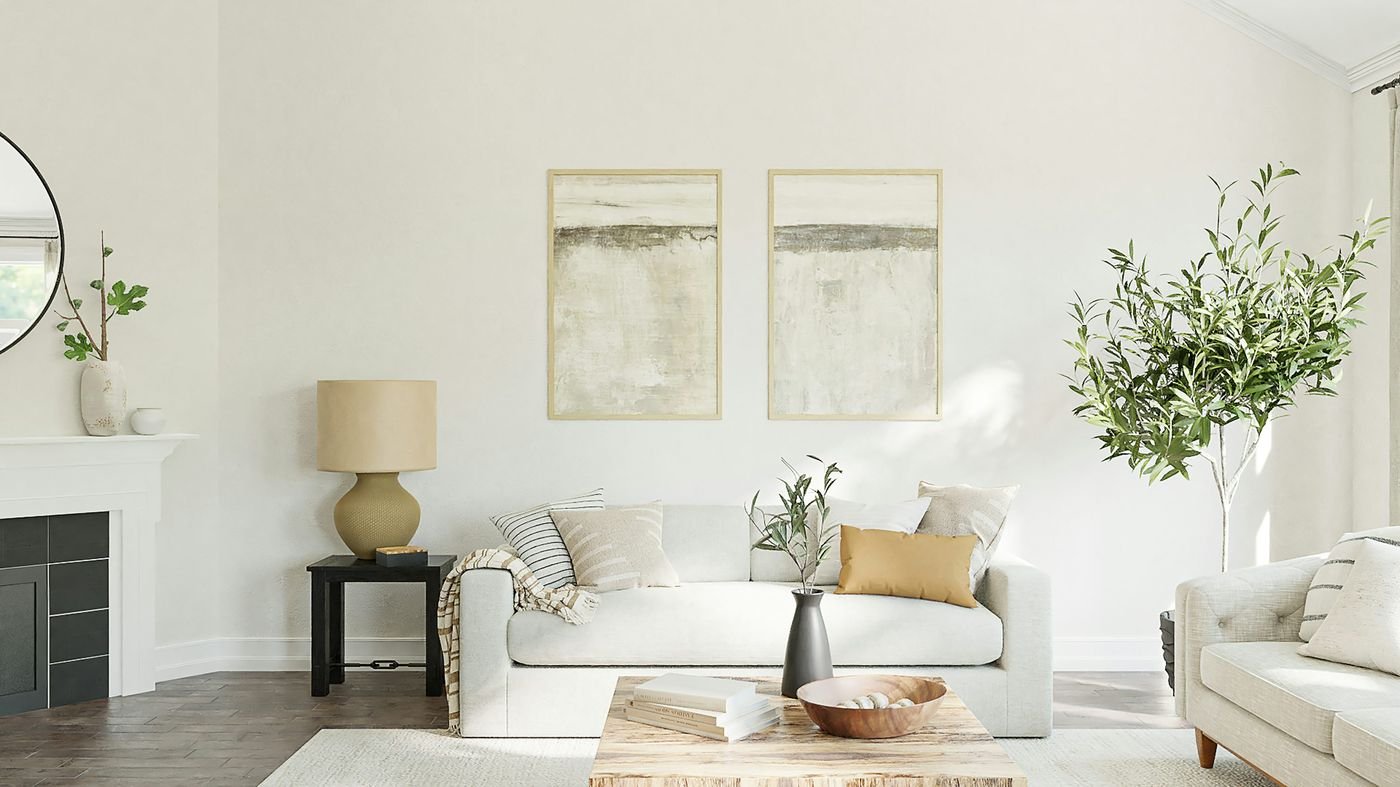
This guide focuses on how to get the look at different budgets. Start with the structure of the room, then choose the pieces that create the biggest visual change.
What makes a living room feel farmhouse-inspired?
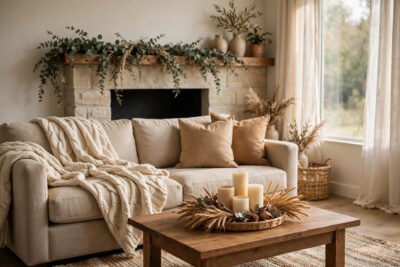
Farmhouse style is less about a checklist of distressed signs and more about useful materials used honestly. Look for wood grain, linen or cotton, woven texture, simple metal, ceramic, and colors drawn from nature. Modern farmhouse rooms often balance these rustic textures with cleaner silhouettes so the result feels comfortable rather than themed.
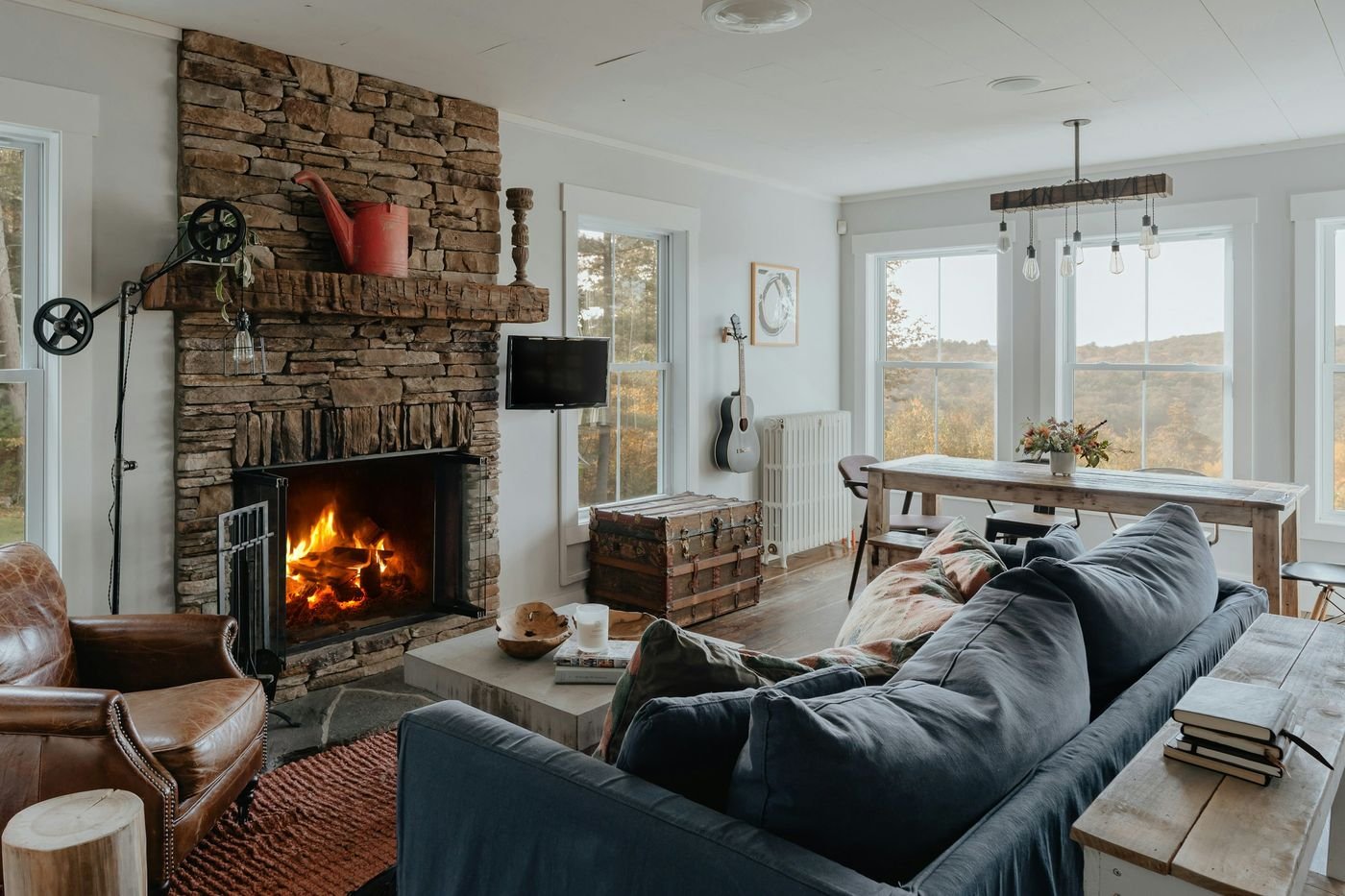
Choose your budget tier
| Budget level | Best investment | How to save |
|---|---|---|
| Refresh | Textiles, paint, lighting | Rearrange existing furniture and shop secondhand |
| Mid-range | Rug, sofa cover, coffee table | Buy one anchor piece and keep accessories simple |
| Full update | Seating, storage, flooring or built-ins | Use a phased plan and avoid matching everything at once |
Build the foundation
Use a warm, livable palette
Warm white, cream, taupe, clay, muted sage, charcoal, and natural wood create a farmhouse base. Use one darker shade for definition and repeat it in a lamp, frame, curtain rod, or hardware.
Choose comfort before appearance
A beautiful sofa that is too shallow, too firm, or difficult to clean will not make the room feel luxurious. Check seat depth, cushion construction, fabric cleaning instructions, and delivery access before ordering.
Anchor the seating with the right rug
Choose the largest rug the room can accommodate while keeping a clear path around it. At minimum, the front legs of the main seating should connect to the rug. Natural fibers add texture, but a washable synthetic blend may be better for pets and children.
Budget-friendly farmhouse living room ideas
1. Paint one architectural wall
A warm white or muted taupe can make trim, wood, and artwork stand out. Test the color in morning and evening light before committing.
2. Refinish one wood piece
A secondhand console or coffee table can become an anchor with cleaning, light sanding, and a suitable finish. Preserve useful character instead of distressing every surface.
3. Add a washable slipcover
Slipcovers change the visual weight of a sofa and make everyday maintenance easier. Check the fit around arms, cushions, and skirt details.
4. Layer woven baskets
Use baskets for throws, toys, magazines, or firewood where appropriate. Choose two related shapes rather than filling every corner.
5. Swap in aged-looking hardware
Replacing pulls on a console or cabinet can add consistency. Measure the existing hole spacing before buying replacements.
6. Use a simple curtain fabric
Linen-look panels soften windows and add vertical height. Hang them high and wide enough to frame the window without covering useful light.
7. Style with books and ceramics
Books, a small bowl, a pitcher, or a handmade-looking vase add personality without requiring a full gallery of accessories. Vary height and leave negative space.
8. Install a picture light or wall sconce
Lighting art or a console creates a focal point. If hardwiring is not practical, choose a rechargeable or plug-in option and route the cable safely.
9. Create a practical entry drop zone
A narrow bench, peg rail, or tray can keep shoes, keys, and bags from spreading into the living room. Farmhouse style works best when it supports real routines.
10. Use one large statement textile
A striped throw, checked cushion, or textured blanket can introduce the pattern. Repeat its color once elsewhere and keep the remaining textiles quieter.
How to avoid a staged or overly rustic result
Do not combine every farmhouse symbol in one room. Reclaimed wood, shiplap, galvanized metal, mason jars, signs, and checked fabric can become visual noise when all used together. Pick two or three cues and balance them with modern upholstery, clean-lined lighting, and open space.
Room plans for different homes
Apartment living room
Use freestanding storage, removable lighting, a compact sofa, and a washable rug. A movable bench can act as a coffee table seat without permanent changes.
Family room
Prioritize durable upholstery, rounded corners, closed toy storage, and washable textiles. Keep the most fragile accessories above reach.
Open-plan living area
Use a rug and lighting to define the living zone. A console or open shelf can separate the area without blocking sightlines.
Small cottage room
Choose furniture that respects the architecture. A narrow sofa, wall-mounted shelves, and a single freestanding cabinet may provide more charm and function than built-ins.
Farmhouse shopping checklist
- Does the piece solve a storage, seating, lighting, or comfort need?
- Can the fabric handle the household’s cleaning routine?
- Will the wood tone work with the existing floor and trim?
- Is the scale right for the room and doorway?
- Can the item be used in another room if your style changes?
FAQ
Can farmhouse style look expensive on a budget?
Yes. Spend selectively on comfort and scale, then use paint, lighting, secondhand wood, and restrained styling to create cohesion.
What colors work best with farmhouse decor?
Warm whites, creams, taupes, muted greens, soft blues, charcoal, and natural wood are flexible choices. Add contrast through one darker tone.
Is modern farmhouse the same as rustic farmhouse?
No. Modern farmhouse usually uses cleaner lines, fewer decorative objects, and a more controlled palette. Rustic farmhouse leans more heavily into aged materials and visible texture.

Leave a Reply