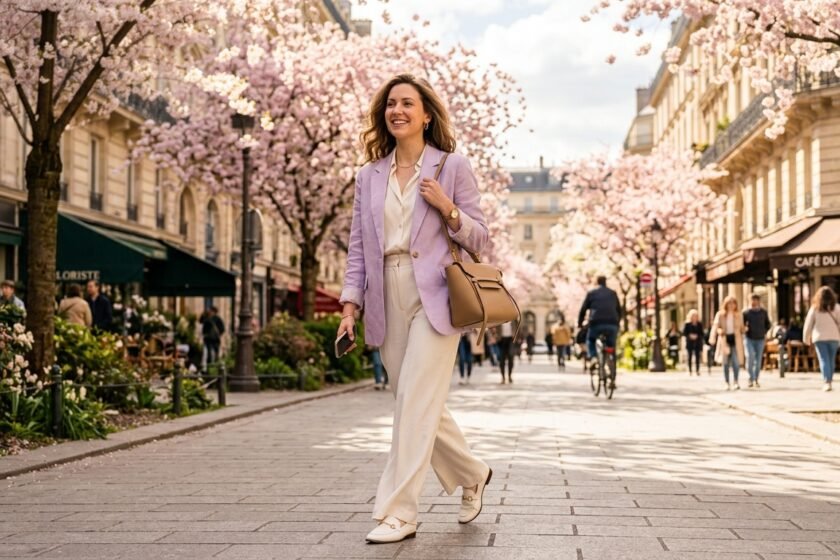
Casual work dressing should make your morning easier, not leave you wondering whether an outfit is too relaxed or too formal. The best spring work outfits balance a clear silhouette, breathable layers, comfortable shoes, and the expectations of your workplace.
This guide focuses on repeatable casual-work formulas for offices, hybrid schedules, creative workplaces, and days that move from desk to dinner. Use the ideas as a framework, then adapt the colors, lengths, and fabrics to your climate and personal style.
Start with your workplace dress code
| Work setting | Reliable starting point | Check before wearing |
|---|---|---|
| Business casual | Polished knit, trousers or dark denim, blazer, loafers | Distressing, very casual trainers, sheer layers |
| Creative office | Relaxed tailoring, print, color, interesting accessory | Too many statement pieces together |
| Client-facing | Structured jacket, refined blouse, tailored trousers or dress | Wrinkles, visible underlayers, overly casual denim |
| Hybrid or remote | Comfortable base, camera-ready top, removable layer | Whether the outfit works for in-person meetings too |
If your office has no written dress code, observe what respected colleagues wear at meetings and on ordinary days. When in doubt, add one structured element—a blazer, collared shirt, polished shoe, or tailored trouser—rather than making the whole outfit formal.
The easy casual-work formula
Build most outfits from three parts: a comfortable base, one structured piece, and one finishing detail. The base might be a fine knit, cotton shirt, simple tee, or dress. Structure can come from a blazer, vest, jacket, or tailored trouser. The finishing detail might be a watch, scarf, belt, jewelry, bag, or polished shoe.
This method prevents a wardrobe full of disconnected “outfit ideas.” It also makes it easier to repeat a successful combination with a different color or layer.
Spring casual-work outfit formulas
Linen-blend blazer with wide-leg trousers
Pair a relaxed blazer in cream, camel, navy, or sage with matching or contrasting wide-leg trousers. Keep the top simple and choose a shoe with enough visual weight to balance the hem. This outfit feels current while remaining appropriate for presentations, travel, and office days.
Fine knit with straight-leg trousers
A lightweight knit tucked into straight-leg trousers is one of the most useful spring work combinations. Add a belt and loafers for definition, or layer a cardigan when mornings are cool. Choose a neckline that works comfortably under your jacket or lanyard.
Soft blouse with a midi skirt
A satin, silk-blend, or matte crepe blouse works well with a straight or softly pleated midi skirt. Keep the top either fully tucked or intentionally loose; an in-between length can shorten the silhouette. Add flats or a low block heel for a practical finish.
Dark jeans with a blazer
When denim is permitted, choose a clean dark indigo or white straight-leg pair without heavy distressing. Add a crisp shirt, fine knit, or simple blouse and finish with a blazer and loafers. The jacket provides the polish that makes the denim feel work-ready.
Knit vest over a crisp shirt
A fine-knit vest adds interest without requiring a complicated layer. Wear it over a white or striped shirt with tailored trousers or dark jeans. Keep the vest length in proportion to the rise of the trousers so the outfit does not feel bulky.
Trench coat over a simple dress
A trench in camel, stone, navy, or black can turn a simple midi dress into a complete spring work outfit. Wear it open for a relaxed vertical line or belt it for more definition. Check that the dress remains comfortable while sitting and walking.
Monochrome neutral outfit
Use cream, taupe, gray, navy, or soft brown from head to toe. Vary the textures—knit, cotton, linen, leather, or suede—to keep the outfit from appearing flat. A contrasting bag or jewelry can provide a small point of interest.
Polished jumpsuit with a light jacket
A tailored jumpsuit can be as easy as a dress while offering a different silhouette. Choose one with a comfortable waist and a neckline that suits your workplace. Add a cropped jacket, cardigan, or blazer and shoes you can wear for the full day.
How to choose spring fabrics
Look for cotton poplin, linen blends, fine-gauge knits, smooth twill, lightweight denim, and washable crepe. These fabrics breathe better than heavy winter materials while still holding a professional shape.
Linen can wrinkle, so decide whether its relaxed texture suits your workplace. If you prefer a neater finish, choose a linen blend or keep linen to a shirt, jacket, or trouser rather than wearing it head to toe.
Build a small casual-work capsule
- One lightweight blazer.
- One cardigan, trench, or utility layer.
- One pair of tailored straight trousers.
- One pair of wide-leg or relaxed trousers.
- One clean pair of work-appropriate jeans.
- Two polished shirts or blouses.
- Two fine knits or simple tops.
- One midi skirt or dress.
- One jumpsuit or second dress if it suits your routine.
- Loafers or supportive flats.
- Clean trainers or low sandals where appropriate.
- One structured bag and one practical crossbody.
Before adding another item, check whether it works with at least three pieces you already own. A smaller wardrobe of compatible pieces is more useful than a larger wardrobe built around one-time combinations.
Fit and comfort checks
Check the sitting test
Sit at a desk, cross your legs, and reach forward. Waistbands, skirts, and jacket fronts should remain comfortable without constant adjustment.
Check the movement test
Walk quickly, raise your arms, and carry your usual bag. If a sleeve, shoulder, trouser, or shoe restricts you, the outfit may not work for your actual day.
Balance proportions
Wide trousers often work best with a shorter or tucked top. An oversized shirt can benefit from a slimmer trouser or a structured jacket. If the whole outfit is relaxed, add a defined shoe, belt, bag, or shoulder line.
Shoes and accessories
Loafers, ballet flats, low block heels, sleek trainers, and low sandals can all work depending on your office. Match the shoe to your commute and the amount of standing you do. A polished shoe that causes pain is not a practical work shoe.
Use accessories to repeat a color or add structure. A leather belt, simple watch, small hoops, scarf, or structured bag can make a familiar outfit feel finished. One strong detail is usually more effective than several competing accessories.
Outfits for common workdays
Presentation day
Try tailored trousers, a refined blouse, a structured blazer, and reliable closed-toe shoes. Keep the palette calm so the outfit supports your confidence rather than distracting you.
Commute-heavy day
Choose trousers or dark denim, a breathable knit, a removable jacket, and walkable shoes. Carry a scarf or compact layer for temperature changes.
Creative-office day
Start with simple tailoring, then add a print, colorful shoe, sculptural jewelry, or textured bag. Keep one element quiet so the outfit still has visual balance.
After-work plans
Use a midi dress, jumpsuit, or blouse-and-trouser base that can move into the evening. Swap the work tote for a smaller bag or add a lipstick, scarf, or jewelry change rather than carrying a second outfit.
Common mistakes to avoid
- Confusing comfortable with unfinished.
- Wearing overly casual pieces together without one structured element.
- Choosing a fabric that wrinkles or overheats for your commute.
- Buying a seasonal trend that does not combine with your existing clothes.
- Ignoring the shoes until the rest of the outfit is complete.
- Using too many colors, prints, or statement accessories at once.
- Keeping clothes that require constant pulling, pinning, or readjustment.
Casual-work outfit FAQs
Can jeans be part of a casual work outfit?
Often, yes, when the workplace permits denim. Choose a clean, well-fitting pair in a dark wash or restrained color, then add a polished blouse, blazer, and work-appropriate shoes.
How can I look professional without wearing a blazer?
Use another structured element such as a collared shirt, tailored trousers, knit vest, cardigan with clean shoulders, or refined dress. Shoes, bag, and fit also contribute to the overall level of polish.
Are sneakers appropriate for spring work outfits?
That depends on the workplace. In relaxed or creative settings, clean minimal sneakers may work with tailored pieces. Avoid worn athletic shoes, and check your office norms before relying on them.
How do I dress for a cold morning and warm afternoon?
Wear a breathable base with a removable cardigan, blazer, trench, or scarf. Layering gives you control without forcing you to change the entire outfit during the day.
Final checklist
Confirm the dress code, choose a comfortable base, add one structured piece, check the fabric, test the shoes, and make sure the outfit works while sitting and moving. The strongest casual work outfits for spring are polished enough for your workplace and practical enough to wear again next week.



Leave a Reply