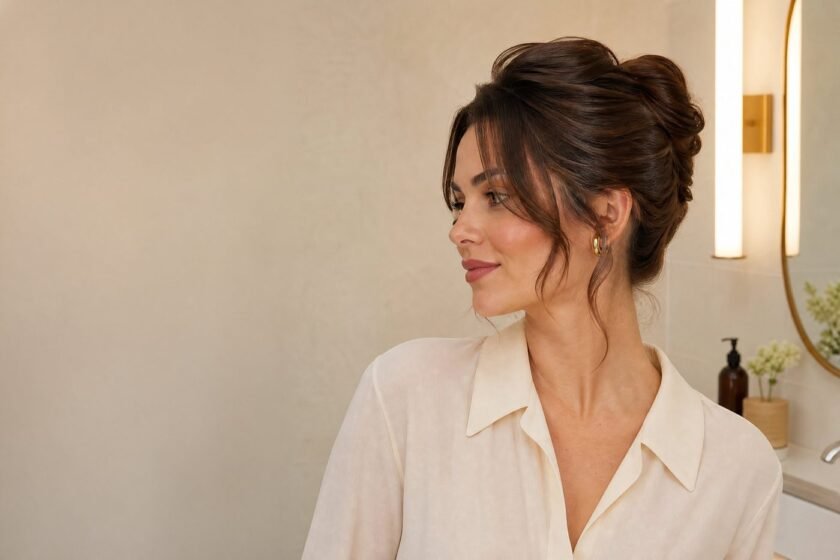
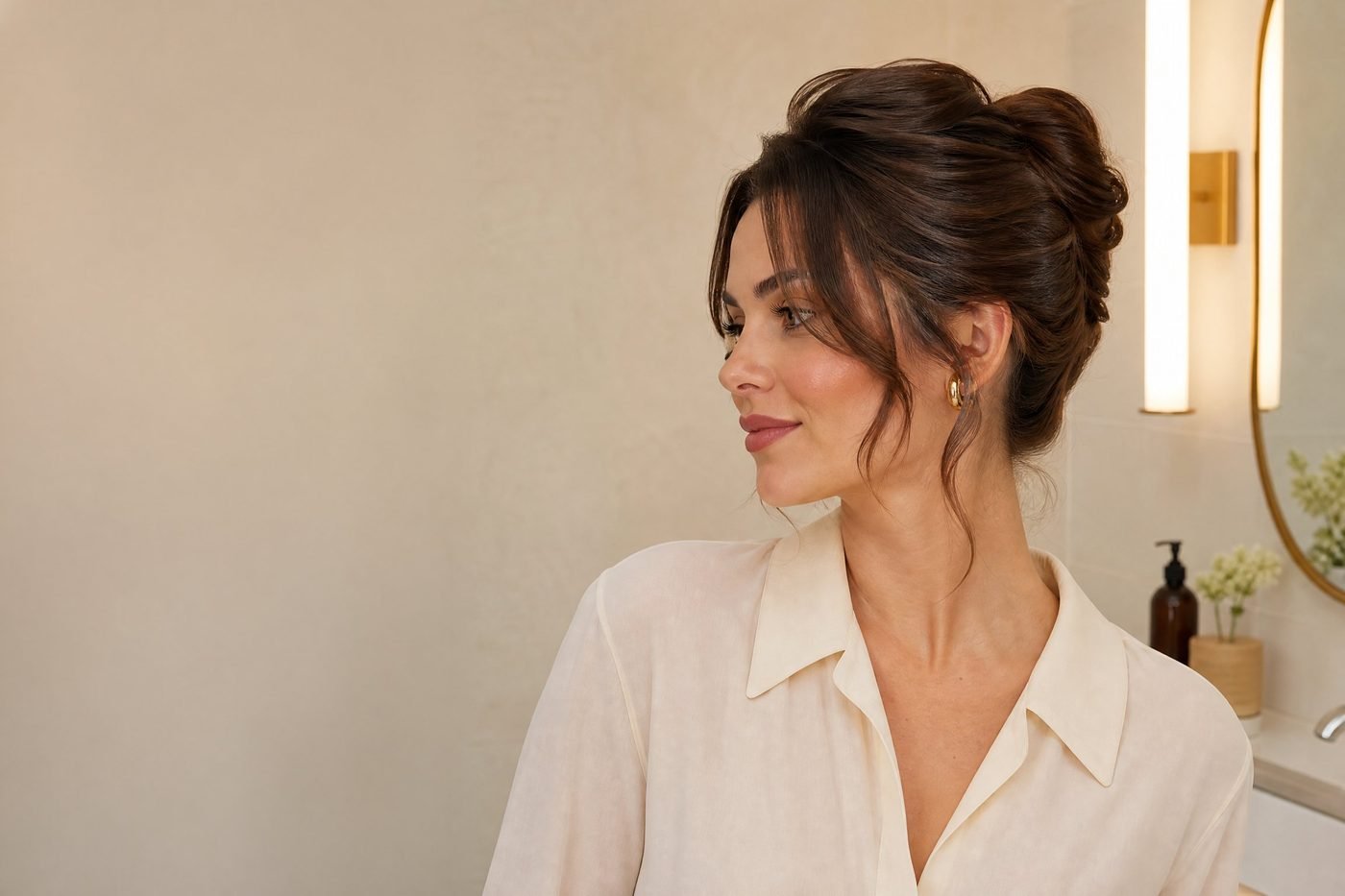
Save this vertical image as a Pinterest Pin for a quick visual summary.
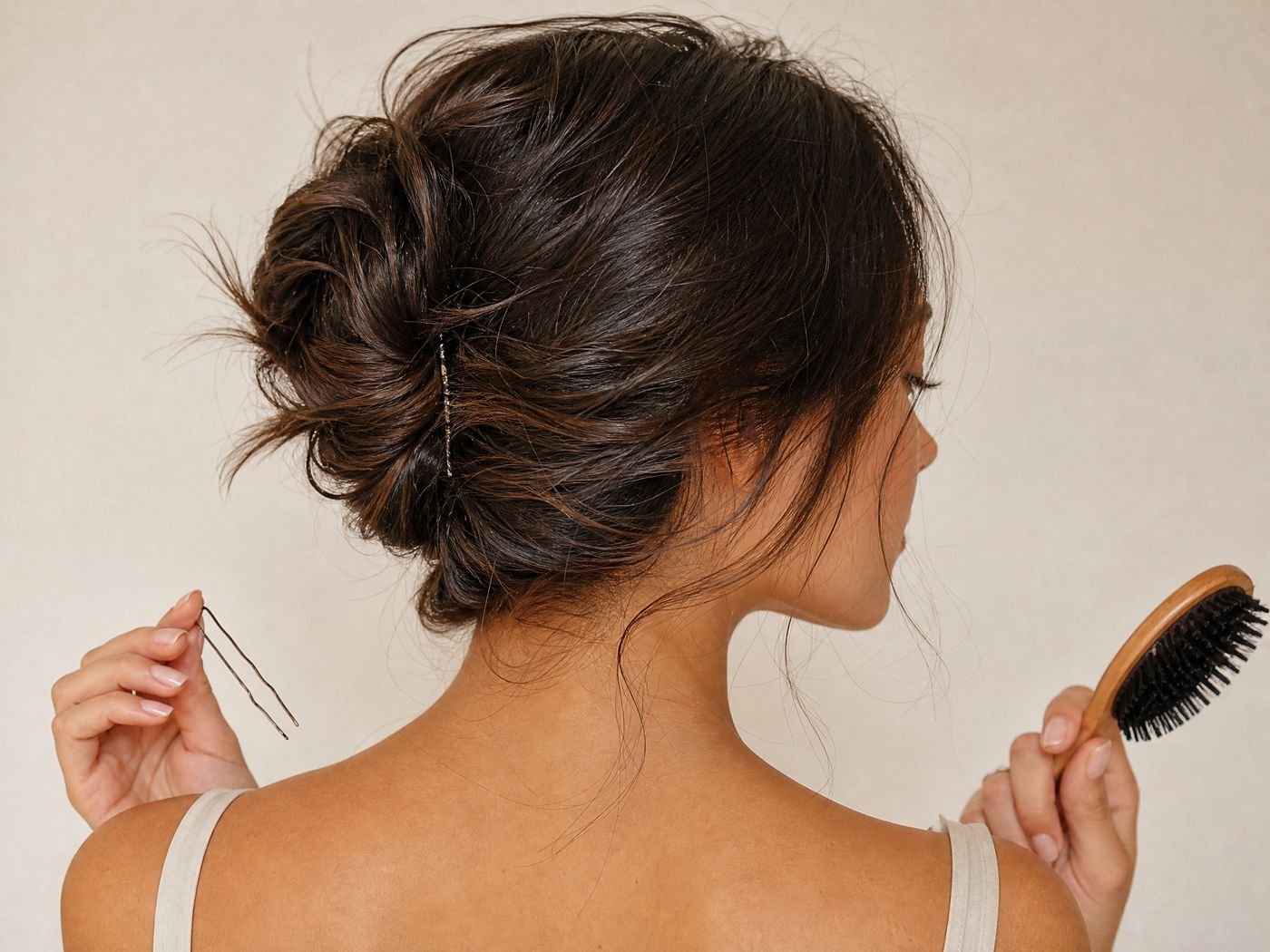
A French pin is useful when you want an updo that looks polished but not overly engineered. Unlike a claw clip, the pin can disappear into the twist, making it practical for medium and long hair. The key is creating enough texture and tension for the pin to anchor the twist against the head.
What a French pin does
A French pin is a long U-shaped tool that holds a twist by passing through the roll and catching a small amount of hair underneath. It works best when hair has some grip. Very freshly washed hair may need dry shampoo, texture spray, or a loose wave first. Compared with a claw clip, a pin creates a softer, lower-profile silhouette and suits fine to medium hair that slides out of larger clips.
Choose the right starting point
- Fine hair: use a smaller twist and add root texture.
- Thick hair: make a lower twist and choose a longer pin.
- Curly hair: preserve the pattern and secure a loose roll instead of brushing flat.
- Shoulder-length hair: try a low twist or half-up version.
How to do a basic French-pin twist
- Gather hair at the nape or just above it.
- Twist the length upward until the ends tuck beside the roll.
- Hold the roll against the head. Insert the pin upward through one side, skim along the scalp, and bring it out through the other side.
- Test the hold with a gentle head movement. If it shifts, catch a smaller section underneath.
- Finish with a flexible hairspray and a few face-framing pieces.
If the twist keeps slipping, the two most reliable fixes are adding dry shampoo at the roots before starting, and angling the pin so it runs close to the scalp instead of only through the outer layer of the roll.
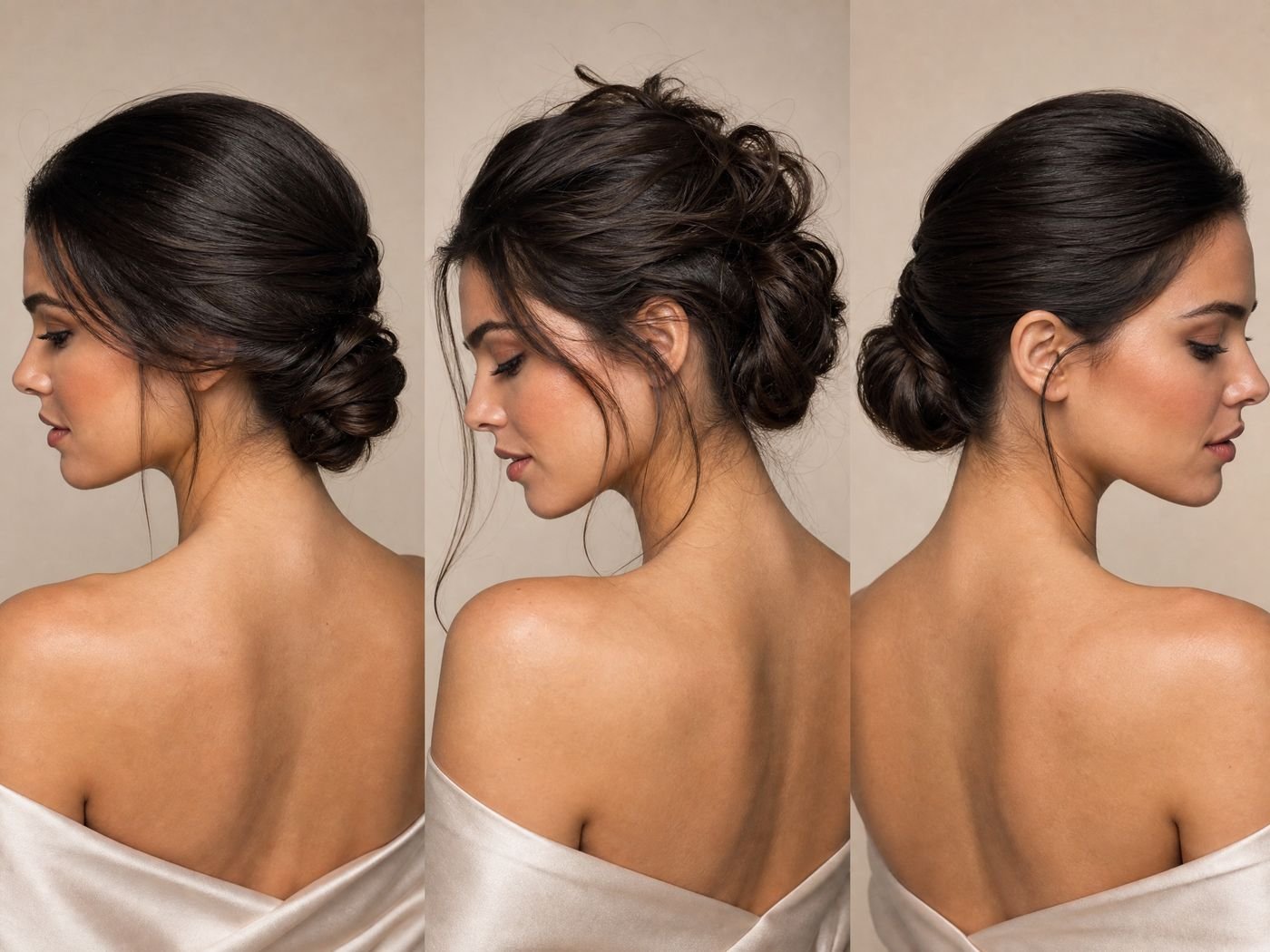
Three wearable variations
Low everyday twist
Keep it close to the nape for work, errands, and glasses. It is comfortable because it does not create pressure high on the head. Pull out one or two face-framing pieces after securing the pin for a softer finish.
Polished side-part version
Create a clean side part, smooth the front with a little cream, and place the twist slightly to the opposite side for a formal but natural finish. This version photographs well and works for weddings and evening events.
Textured weekend roll
Start with a loose wave and keep some texture visible. This suits casual dresses, denim, and outdoor events. A larger-diameter pin holds the fuller roll more comfortably.
How to make it last
Anchor the pin into hair nearest the scalp rather than only through the outer layer. Heavy hair may need two crossed pins. If the style loosens, rebuild it once rather than tightening it repeatedly. Pulling a few strands free before finishing usually makes the style look more intentional and less stiff.
When to choose another tool
Very short, freshly conditioned, or heavily layered hair may hold better with a small claw clip, hair fork, or elastic-based twist. Never force a pin through a tangled section. If you want volume at the crown that a pin cannot support, a low bun with an elastic underneath is the more reliable choice.
FAQ
Does a French pin damage hair?
Used gently and removed by reversing the twist, it should not cause unusual damage. There is no metal clamp gripping the hair, which is why many people find pins gentler than clips for daily use.
Can I sleep in it?
Remove the pin before sleeping. A loose braid is safer and more comfortable overnight. Sleeping on a pinned twist can bend the pin and pull hair at the scalp.
What pin length do I need?
For hair to the shoulders, a 3 to 4 inch pin is usually enough. Longer or thicker hair benefits from a 5 inch pin or two pins crossed in an X for extra grip.



Leave a Reply