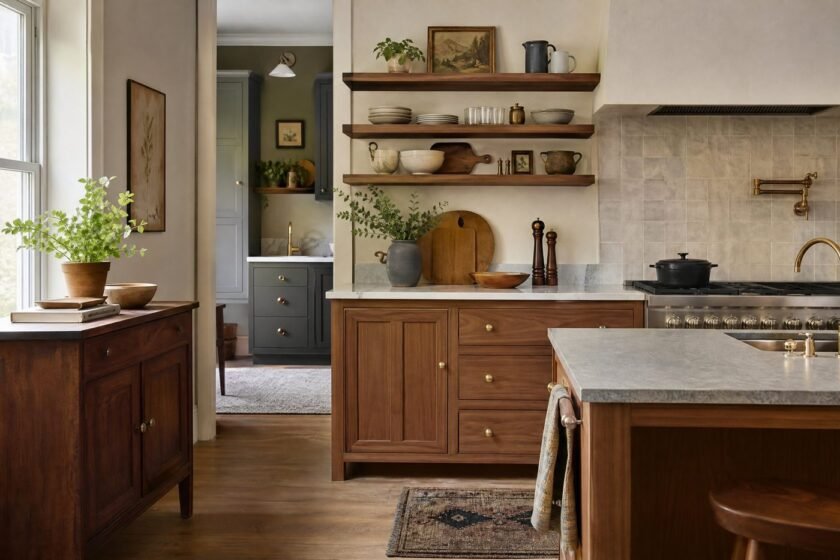
Natural wood kitchens are gaining attention because they make a working room feel warmer and more individual. You do not need to replace every cabinet to get the effect. The most successful approach is to choose one wood element, repeat its tone once or twice, and balance it with durable surfaces.
Decide how much wood you need
Use a single freestanding piece if the room already has strong cabinetry. A butcher-block island, wood hutch, or slim console can supply warmth without a full renovation. If the kitchen feels cold, add open shelves or a wood backsplash detail. Full wood cabinetry creates the strongest effect but requires careful planning around lighting, cleaning, and tone balance.
A useful way to decide is to look at what is already fixed in the room: the floor, backsplash, and countertop set the palette. If those surfaces are cool-toned, a warm oak piece will stand out deliberately; if they are already warm, choose wood with a similar undertone so the additions blend instead of clashing.
Five attainable ways to use natural wood
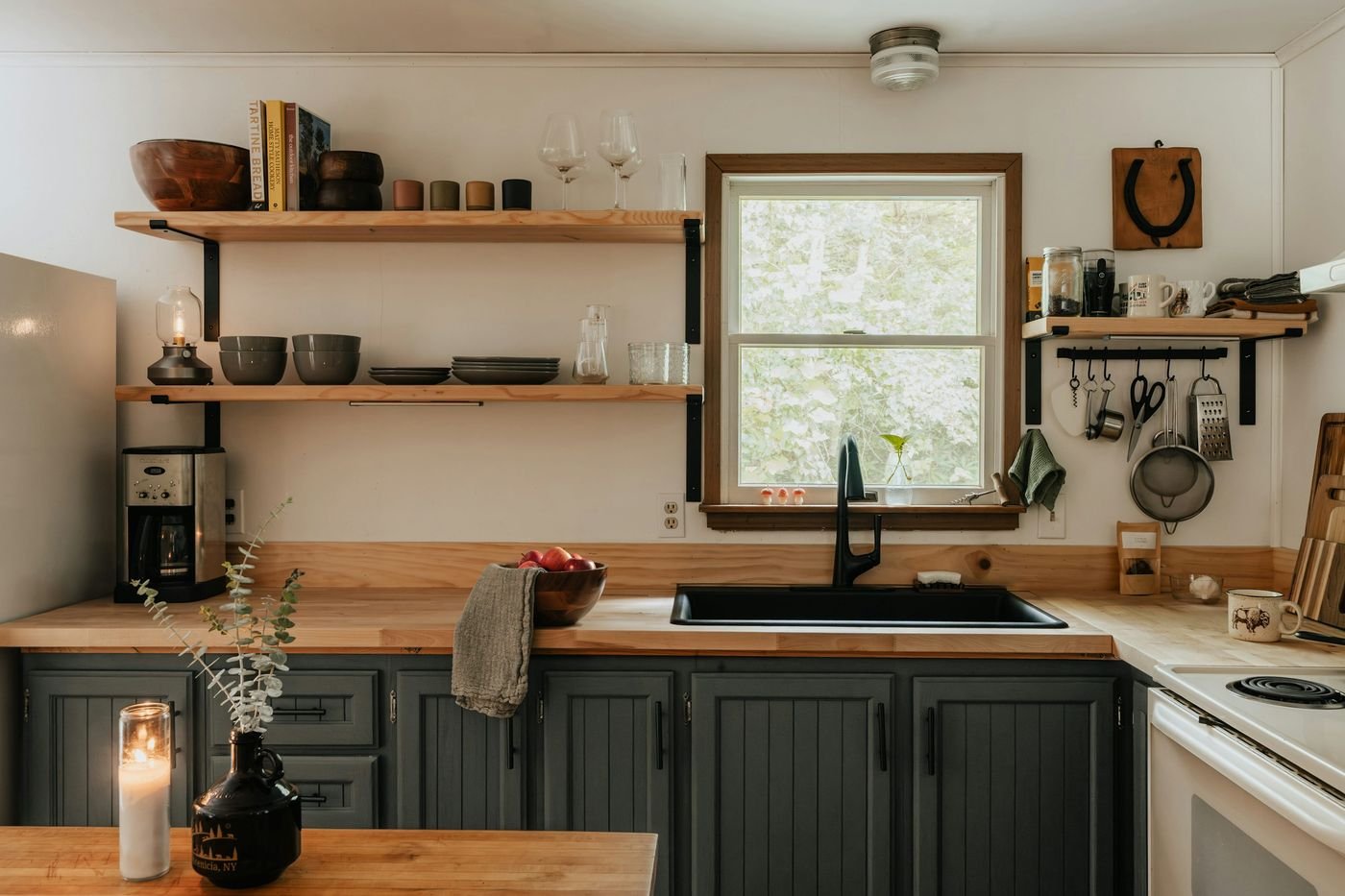
Add one furniture-style piece
A freestanding pantry, sideboard, or island makes the kitchen feel collected rather than matched. Check door swings and walking clearances before buying. In a small kitchen, a slim console against an empty wall can replace a full island.
Pair wood with stone
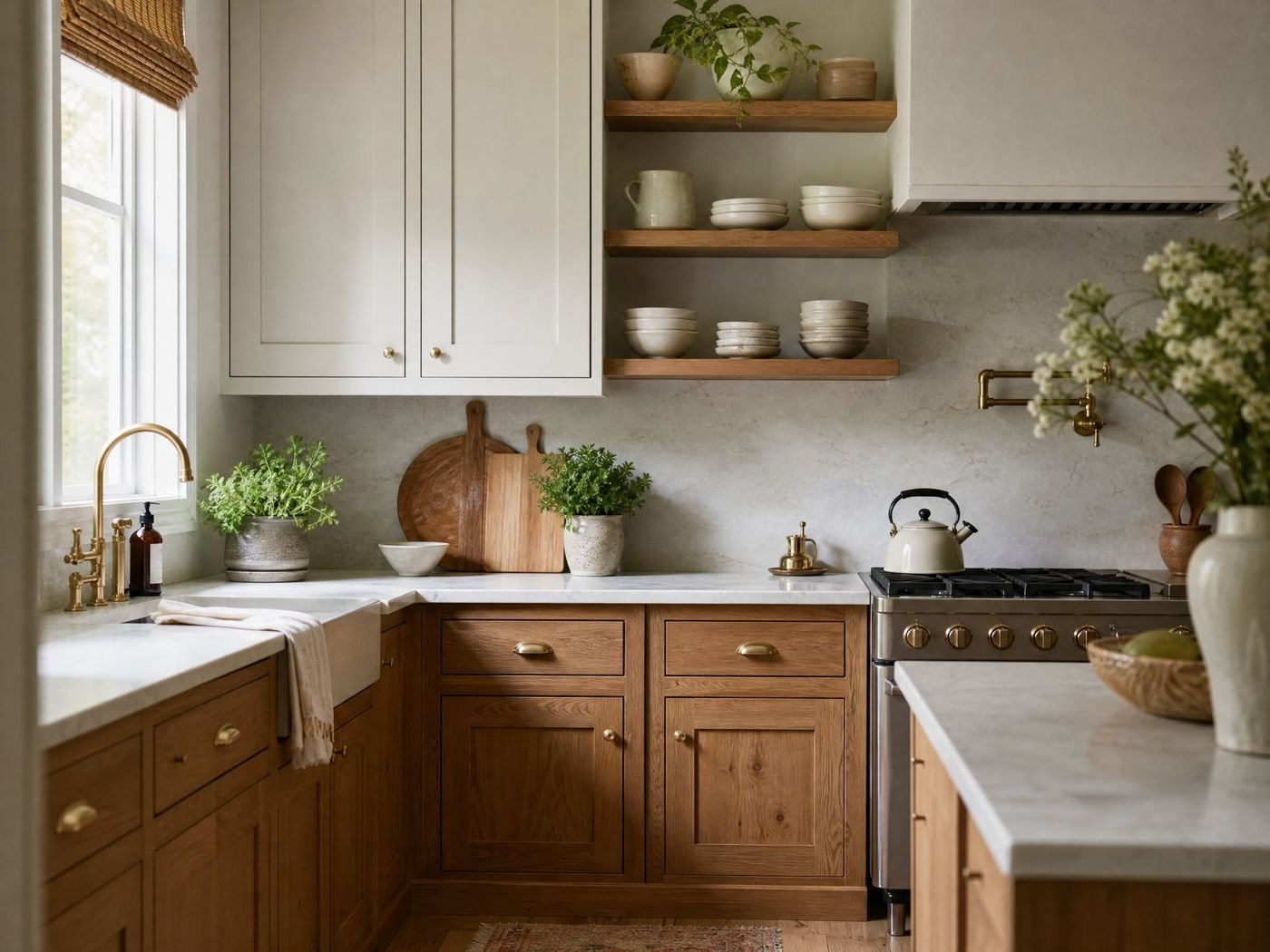
Warm walnut or oak works well with honed stone, subtle quartz, or matte tile. Keep one surface quiet so the wood remains the focal point, and test samples in your actual light. A busy stone beside a busy wood grain creates visual noise rather than warmth.
Use open shelving selectively
One or two shelves can display everyday dishes and add texture. Keep the most-used pieces within reach and leave breathing room between stacks. Open shelves look best when everyday ceramics and glassware double as the decoration.
Mix wood tones deliberately
Two tones can look intentional when they share a warm or cool undertone. Repeat each tone at least twice and connect them with hardware or a countertop. A third tone usually pushes the room from intentional toward random.
Start with small accents
Cutting boards, stools, framed art, drawer pulls, and a runner can test the direction before larger work. This is the safest route for renters.
Plan for function
- Protect high-splash areas with a durable finish.
- Choose sealed surfaces for islands and counters.
- Keep wood away from heat unless materials are designed for it.
- Measure aisle widths before adding freestanding furniture.
- Use warm-neutral lighting so the wood does not look muddy at night.
Budget tiers
Under $150: try boards, framed art, stools, or a small shelf. $150–$600: consider a mobile island or refurbished sideboard. Above $600: price installation, sealing, and hardware along with the wood itself.
Maintenance
Use the cleaner recommended for the finish, wipe standing water quickly, and avoid abrasive pads. Test samples beside the floor, backsplash, and appliances before ordering. In high-humidity kitchens, solid wood near the sink benefits from an extra coat of sealant once a year.
FAQ
Is natural wood practical in a kitchen?
Yes, when the finish and placement match the level of use. High-splash and high-heat areas need extra protection. A sealed surface near the sink is realistic; unsealed wood next to a stove is not.
Do all wood tones need to match?
No. They need a deliberate relationship through undertone, repetition, or a connecting material. Two tones repeated in the hardware, floor, and furniture read as designed.
Can renters add wood?
Yes. Use freestanding furniture, removable shelves where permitted, stools, boards, and art. Freestanding pieces also move with you when you do.



Leave a Reply