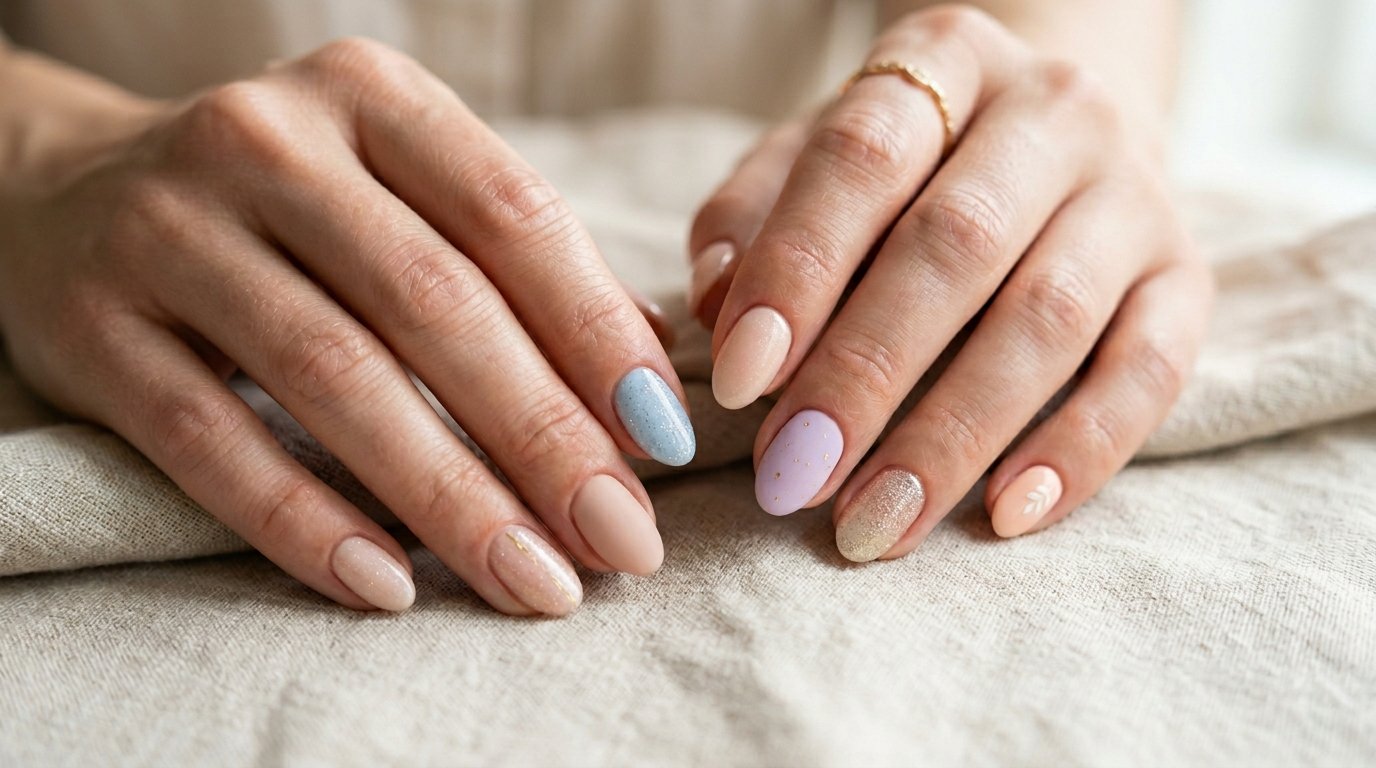
When short acrylics make sense
Short acrylics may be useful when you want a consistent shape, added strength or a polished design while keeping the free edge practical. They can also help create a more even appearance when natural nails are different lengths. A nail professional should assess the condition of your natural nails before applying any enhancement.
Acrylic is not automatically healthier or stronger for every person. The quality of preparation, product application, removal and aftercare matters. If you have pain, lifting, discoloration or irritated skin, ask a qualified professional for advice rather than covering the problem.
Short acrylics compared with natural nails and gel options
Natural nails require the least product but may have different lengths or strengths. Gel polish adds color without creating the same structure as an acrylic enhancement. Acrylic can provide a shaped overlay or extension, but it also requires professional maintenance and careful removal. The best option depends on your nail condition, lifestyle, desired durability and willingness to schedule fills.
Choosing a shape that preserves usable length
Short square
A short square shape creates a crisp edge and works well for simple graphic designs. The corners should be softened enough to reduce snagging in daily use.
Squoval
A squoval combines a straight-looking free edge with rounded corners. It is one of the most versatile choices for short nails because it looks neat without creating very sharp corners.
Short round
A round shape follows the natural curve of the fingertip and can be comfortable for active routines. It is a good choice when you want a low-profile outline.
Short oval
An oval shape gently elongates the appearance of the nail without requiring much length. It pairs well with sheer colors, soft French tips and minimalist details.
Short coffin, where appropriate
A short coffin shape can work when the nail has enough width and structure to support the taper. The result should remain practical; an overly narrow or sharply filed tip may not wear comfortably.
Design ideas that work well on short acrylics
Clean neutrals
Milky white, beige, soft pink and translucent nude finishes make the shape easy to wear and allow small details to stand out. A glossy top coat gives a polished result, while a satin finish feels more understated.
Short French variations
A thin French tip, micro-French line or colored tip can define the free edge without requiring a long nail. Keep the line proportionate to the available surface so the design does not overwhelm the nail.
Soft pinks and milky tones
A single sheer color can look intentional on a short set. Add one accent nail, a fine chrome line or a small pearl detail if you want variation without visual clutter.
Simple micro-art
Tiny dots, short swirls, a single flower or a fine checker detail can work well when the design is spaced carefully. Too many small elements can merge into visual noise on a compact nail.
Dark and glossy finishes
Deep berry, espresso, navy and black can create a strong short manicure. A glossy top coat emphasizes the shape, while a matte finish creates a quieter look. Dark colors make chips more visible, so edge care matters.
Seasonal accents
Use one seasonal color or motif rather than covering every nail with a large illustration. A small leaf, star, flower or metallic accent can communicate the season while keeping the set wearable after the event.
Choosing a design for your routine
For typing or frequent hand use, choose a compact shape with softened corners and avoid details that catch on fabric. For work, sheer neutrals, short French lines and small accents are usually easy to coordinate. For a special occasion, use contrast, chrome or a statement accent nail while keeping the base shape practical.
Durability, fills and daily care
Acrylic sets require maintenance as the natural nail grows. The timing of fills varies with growth and product application, but waiting until the enhancement is visibly lifting can increase the risk of catching or breakage. Avoid using the nails as tools, wear gloves for prolonged wet or chemical work and apply cuticle oil to the surrounding skin as recommended by your nail professional.
Do not pick at lifting product or pull the enhancement off. Improper removal can take layers from the natural nail. A professional can file and remove the product more safely, especially when several layers have built up.
Safe removal and when to see a professional
If you notice pain, redness, swelling, green or dark discoloration, persistent lifting or an unusual odor, have the set assessed. Do not seal a suspected problem under fresh product. For routine removal, follow professional guidance and avoid forcefully peeling or prying the acrylic.
Common short-acrylic mistakes
Common problems include choosing a shape that is too narrow, adding oversized art to a small surface, ignoring the natural nail’s condition, using the nails to open packages and waiting too long between maintenance appointments. A short set still needs balanced architecture and careful aftercare.
Frequently asked questions
Can acrylic be applied to very short or bitten nails?
Sometimes, but the nail professional must assess the available surface and surrounding skin. The result may need a conservative overlay or a gradual approach rather than a long extension.
How long do short acrylic nails last?
Wear time depends on growth, application quality, daily use and aftercare. Schedule maintenance according to the condition of the set rather than waiting for severe lifting or breakage.
Are short acrylic nails high maintenance?
They are generally practical, but they still require fills, careful removal and daily protection. Short length does not eliminate the need for maintenance.
What is the best shape for short acrylic nails?
Squoval, short round and short oval are versatile starting points. The best choice depends on nail width, fingertip shape, work routine and personal preference.
Can I change the color at home?
Avoid filing or soaking the enhancement unnecessarily. Ask your nail professional which products are compatible with the existing set, and never peel off the acrylic.
Final selection checklist
Choose a shape that fits your routine, keep the design proportionate to the nail surface, use a qualified professional, protect the set during wet or chemical work and arrange safe maintenance and removal. Short acrylic nails can be expressive without sacrificing comfort or usability.
The recommendations in this guide are general beauty-care information, not a diagnosis or substitute for professional assessment when pain, irritation or discoloration is present.


Leave a Reply