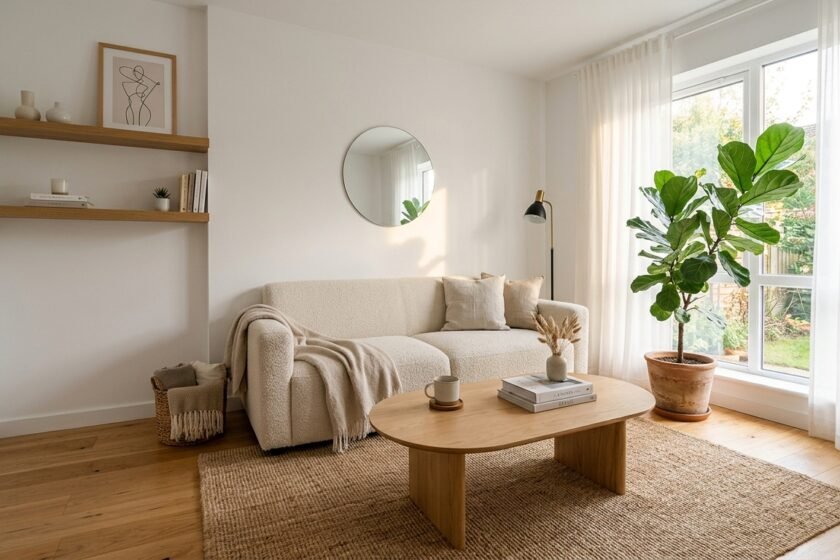
Small living rooms work best when every piece has a job: seating, storage, circulation, or atmosphere. The goal is not to squeeze miniature versions of everything into the room. It is to create a layout that leaves a clear walking route, keeps the largest furniture proportional, and gives the eye a few calm places to rest.
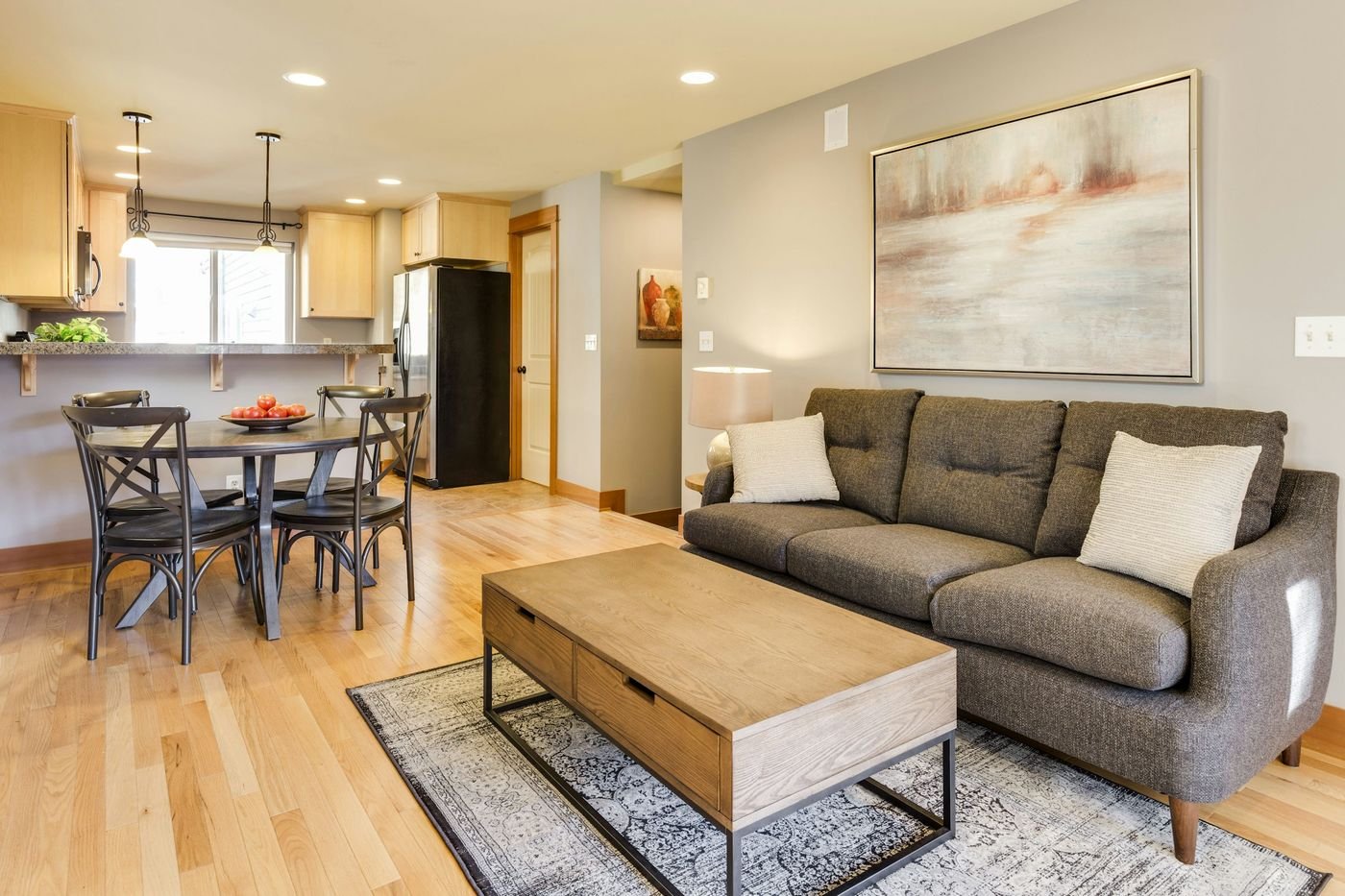
This guide focuses on practical small-space decisions rather than a gallery of looks. Use the room measurements, layout tests, furniture rules, and checklists below before buying anything.
Start with a small-room measurement plan
Measure the room wall to wall, then note doors, windows, radiators, outlets, vents, and the direction each door opens. Mark the walking route from the entrance to the most-used doorway. A beautiful sofa that blocks that route will make the room feel smaller every day.
- Keep the main walkway roughly 30 to 36 inches wide where possible.
- Measure the sofa, chairs, rug, coffee table, and media unit together—not separately.
- Use painter’s tape on the floor to test furniture footprints for a day.
- Record elevator, stair, and doorway dimensions before ordering large pieces.
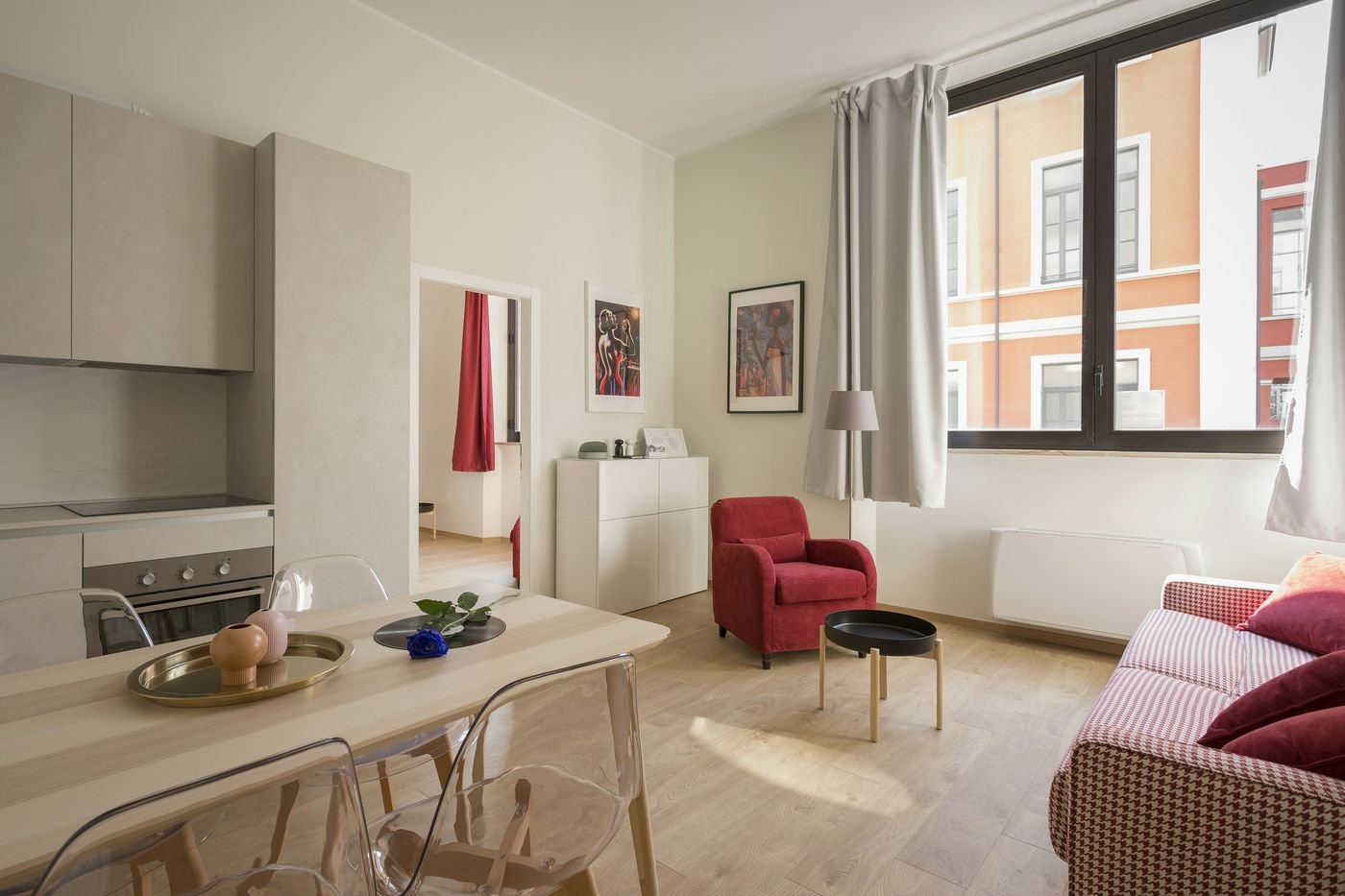
Choose the layout before the style
Sofa facing the media wall
This is the simplest arrangement for a narrow room. Choose a sofa depth that leaves space behind the seating or along the side for movement. Wall-mounting the television can free the floor, but check the viewing height and cable route before drilling.
Conversation layout
If the television is not the room’s main purpose, angle a compact sofa toward two small chairs or an ottoman. This works well for entertaining, but keep one seat light enough to move when the room needs to become a passage.
L-shaped corner layout
A compact sectional can use an awkward corner efficiently, but confirm the chaise does not trap the only walkway. In a very tight room, a sofa plus movable ottoman often gives more flexibility than a fixed sectional.
25 small-space ideas that solve real problems
1. Use a sofa with visible legs
A raised sofa exposes more floor and makes cleaning easier. Pick a frame that is comfortable without oversized arms, which can consume several inches of usable seating width.
2. Replace a bulky coffee table with nesting tables
Nesting tables provide a large surface when guests arrive and a smaller footprint on ordinary days. Choose rounded corners for a tight circulation path.
3. Use one large rug instead of several small mats
A rug that reaches under the front legs of the seating visually connects the furniture. Several undersized rugs can chop the floor into disconnected zones.
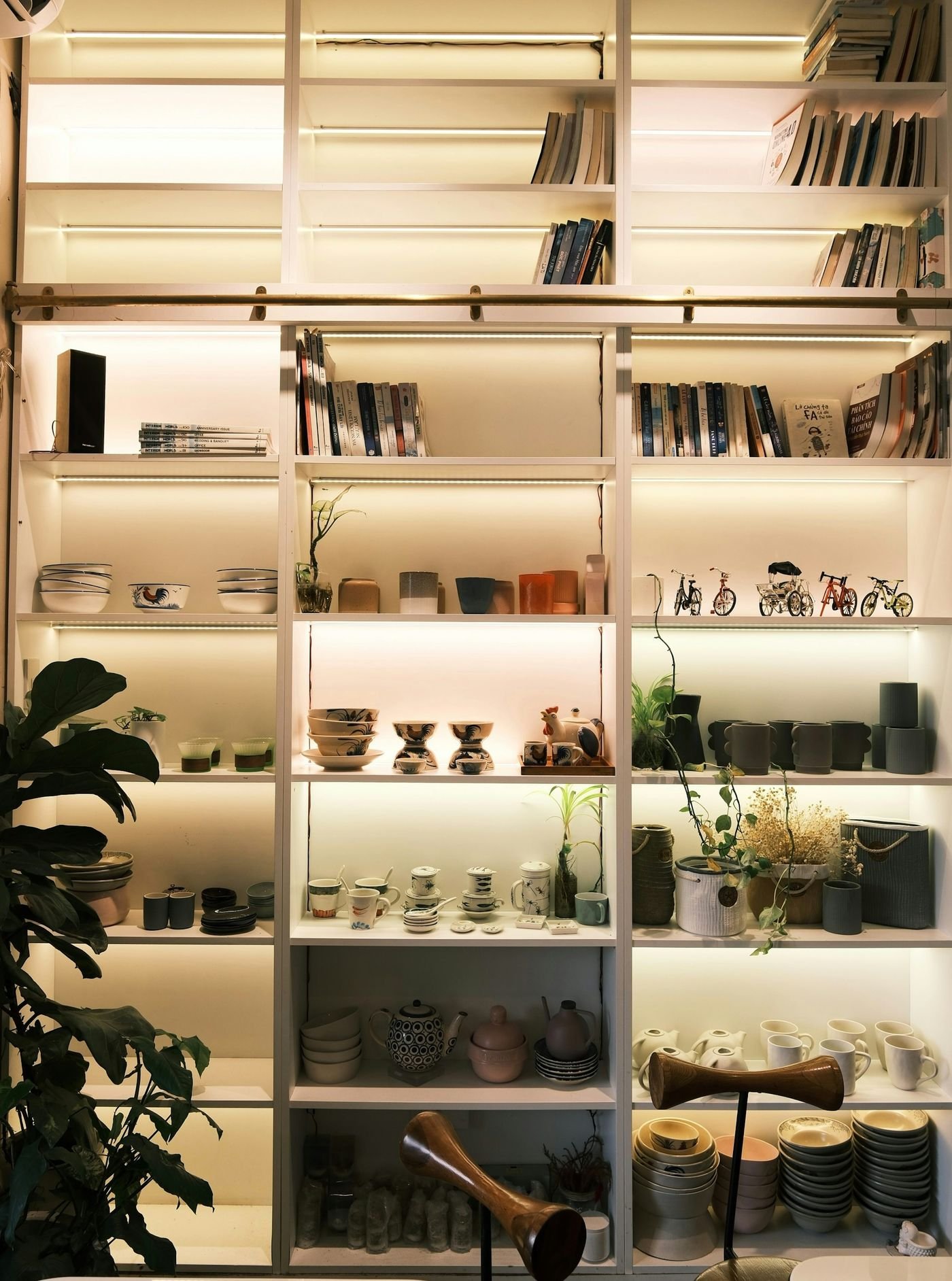
4. Add vertical storage
Use a tall, shallow cabinet or wall shelves for books and display pieces. Leave some open space so storage does not become visual clutter.
5. Choose an ottoman with hidden storage
It can serve as a footrest, occasional seat, and place for throws or games. Check the lid clearance before placing it against another piece.
6. Mount shelves above eye level only when safe
Use anchors suited to the wall type and keep heavy objects low. Floating shelves are attractive, but their brackets and load limits matter more than the photograph.
7. Select a round or oval table
Curved edges make tight paths easier to navigate. Leave enough room to pull out chairs without blocking the route.
8. Use a narrow console behind the sofa
A shallow console can hold lamps or baskets without requiring another wall. Keep its depth modest and secure it if children or pets use the room.
9. Create a layered lighting plan
Combine ceiling light, a wall or floor lamp, and a small accent source. Several warm pools of light make a compact room feel more dimensional than one bright overhead fixture.
10. Hang curtains high and wide
Mount the rod close to the ceiling and extend it beyond the window frame where possible. This makes the window feel larger without consuming floor space.
11. Use mirrors where they reflect light
Place a mirror opposite or beside a window, not automatically behind the television. The reflection should add light or depth rather than duplicate clutter.
12. Keep one dominant neutral
Use warm white, beige, soft gray, or a muted color as the visual base. Add contrast through wood, metal, textiles, and one accent shade.
13. Pick furniture that can move
Light chairs, stools, and ottomans let the room adapt from daily use to guests. Flexibility often matters more than a perfect fixed arrangement.
14. Use the corner beside the window
A slim reading chair, plant stand, or small cabinet can use a neglected corner. Avoid blocking the window opening or radiator.
15. Hide cables early
Plan cable routes before styling. Cable sleeves, a wall raceway in a matching color, or a low media cabinet can reduce visual noise.
16. Style shelves in groups of three
Mix a book stack, a small object, and something organic such as a plant. Repeat colors instead of filling every inch.
17. Use a wall-mounted drop-leaf desk
When the living room doubles as an office, a fold-down surface can disappear after work. Add a task light and a chair that can return to the seating area.
18. Choose washable, tightly woven textiles
Practical fabric lets you use pale colors without treating the room as untouchable. Check cleaning codes and cushion construction before purchase.
19. Use a slim bookcase as a divider
An open unit can separate a living zone from an entry or dining area while preserving light. Anchor tall furniture to the wall.
20. Build a calm entry landing zone
A small tray, hook rail, or basket near the entrance prevents everyday items from spreading across the room.
21. Keep the floor visible
Choose fewer, larger pieces and avoid filling every corner with accessories. Negative space is part of the design.
22. Repeat one material
Matching light wood, black metal, or woven texture across two or three pieces creates cohesion without adding decoration.
23. Use a compact swivel chair
A swivel chair can face the sofa, window, or television without being dragged across the floor.
24. Make the best wall a focal point
Use art, a painted accent, or a carefully styled shelf on one wall rather than decorating every surface equally.
25. Edit seasonally
Store heavy throws and excess accessories when the weather changes. A small room benefits from a rotating collection.
Small-space buying checklist
Before ordering, ask: Does this piece fit the taped footprint? Does it support a real activity? Can it move, store something, or serve two purposes? Is the material practical for the household? Can it enter through the building? These questions prevent attractive but unusable purchases.
Common mistakes to avoid
Do not choose a tiny rug just because the room is small, push every piece against the wall automatically, or use oversized storage to solve a clutter problem. Do not rely on a pale palette without contrast and texture, and do not mount shelves without checking wall construction and load limits.
FAQ
What is the best sofa shape for a very small living room?
A compact sofa with slim arms and visible legs is usually the most flexible choice. Add a movable ottoman if you need a chaise-like position.
How can renters make a small living room feel larger?
Use removable lighting, freestanding storage, high curtain rods, a correctly sized rug, and furniture that does not require permanent alterations.
Should a small living room use dark colors?
Yes, if the palette is controlled. A dark accent wall or deep sofa can add depth when balanced with light textiles, reflective surfaces, and layered lighting.

Leave a Reply