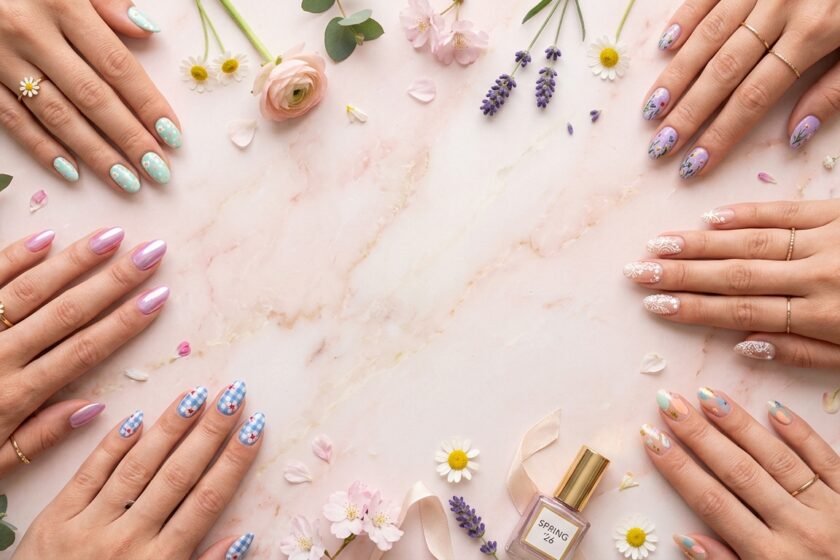
Spring nail art can be bright, delicate, minimal, playful, or surprisingly sophisticated. The strongest manicure ideas are not just attractive in a close-up photograph; they also suit the wearer’s nail length, maintenance routine, clothing palette, and the amount of detail a salon or home manicure can realistically reproduce.
This guide organizes spring nail art by color, finish, technique, and occasion. Use it to choose a direction before booking an appointment, then adapt the design to your natural nail condition and preferred upkeep.
Quick spring manicure chooser
| If you want… | Try starting with… | Keep in mind |
|---|---|---|
| Quiet everyday color | Milky pink, sheer peach, soft green, or glazed neutral | Sheer finishes show nail preparation |
| A polished statement | French variation, chrome accent, or one feature nail | Keep the base simple so the detail reads clearly |
| Playful spring energy | Pastel mix, flowers, dots, or curved color blocks | Limit the palette to maintain cohesion |
| Longer-wearing impact | Structured gel or durable salon system | Ask about removal and maintenance before application |
| A short-nail design | Micro French, tiny dots, aura color, or diagonal detail | Scale the artwork to the available nail surface |
Choose a spring color palette
Classic spring palettes include blush, lavender, butter yellow, sky blue, mint, soft coral, and fresh green. To avoid a scattered look, select one dominant shade, one supporting shade, and a neutral or metallic accent. A mixed pastel manicure feels more intentional when one color repeats on several nails.
Consider your wardrobe and undertone, but do not treat color rules as restrictions. A milky neutral can make bright clothing easier to style, while a deep green or cobalt accent can create contrast in a soft spring palette. Ask for sample swatches in the salon’s lighting before committing to a full set.
Finish matters as much as color
Sheer and jelly
Sheer and jelly colors create a light, translucent effect and work well for everyday wear. They may require careful nail preparation because ridges and unevenness remain visible. A builder or base layer may help create a smoother surface when appropriate.
Glossy cream
A glossy cream color is the easiest way to make a single shade feel polished. It suits short or long nails and can be refreshed with a simple top coat when the finish begins to lose shine.
Chrome and glazed effects
Chrome can be used across the full nail or as an accent over a pale base. Ask the nail professional how the effect is created and how it should be removed. Avoid peeling the surface when the finish begins to grow out.
Matte
A matte top coat changes the mood of pastel and floral shades. It can show fingerprints and surface marks more readily than gloss, so ask how to clean and maintain it.
Spring nail-art ideas by technique
Micro French
A very fine tip creates a refined look on short or medium nails. Use a classic white, pastel, or metallic tip, but keep the line proportional to the nail width. An uneven freehand line can be corrected by using a fine brush or requesting salon application.
Pastel color blocking
Divide the nail with curved, diagonal, or half-moon sections. Use two or three related colors and leave enough negative space so the design does not become visually heavy.
Floral details
Small daisies, petals, or abstract flowers can be placed on one or two nails rather than every finger. A neutral base lets the flowers stand out and makes the manicure easier to wear with different outfits.
Dots and bubbles
Dots are one of the most approachable home techniques. Vary the size, create a single row near the cuticle, or arrange dots as simple flowers. Let each layer dry sufficiently to keep the circles clean.
Swirls and curved lines
Pastel swirls add movement without requiring a detailed illustration. Use a fine brush, keep the line weight consistent, and repeat at least one color across the set.
Aura and diffused color
Aura-style color creates a soft center or halo effect. The look is strongest when the colors blend gradually and the base remains smooth. Ask the salon what products and curing steps are required for the effect.
Minimal metallic accents
A gold, silver, or pearl accent can elevate a simple spring base. Use it as a thin line, tiny foil detail, or one feature nail so the manicure remains wearable.
Designs for different nail lengths
Short nails
Short nails suit micro French tips, tiny flowers, diagonal lines, dots, sheer colors, and one-color gloss. Keep artwork away from the edges if the nail is very short and use contrast carefully so the design remains readable.
Medium nails
Medium length allows more room for swirls, layered French tips, color blocks, and small motifs. Choose a clear focal idea instead of placing several unrelated designs on each nail.
Long nails
Long nails can support larger flowers, gradient color, sculptural details, and more negative-space compositions. Consider how the length affects typing, exercise, and everyday tasks before selecting a high-maintenance shape.
Choose a shape that supports the design
Round and oval shapes soften graphic colors. Squoval nails are practical and versatile for everyday wear. Almond and coffin shapes provide a longer visual canvas but may require more length and maintenance. A skilled nail professional can adapt the design to the shape you already wear rather than forcing an unsuitable outline.
Spring manicure ideas for different occasions
Everyday and office-friendly
Choose a sheer base, micro French, muted pastel, or one small accent. These designs look polished without competing with clothing or accessories.
Wedding guest or bridal events
Try milky pink, pearl, soft champagne, delicate flowers, or a refined French variation. Coordinate with the outfit’s undertone and consider how the manicure will photograph under different lighting.
Vacation and festivals
Use brighter color, mixed pastel nails, playful motifs, or chrome accents. Confirm that the length and shape are comfortable for travel, swimming, and daily activities.
Minimalist style
Choose one base color and one restrained detail such as a thin line, dot, or single metallic accent. The quality of preparation and finish becomes the main feature.
Salon versus DIY planning
Simple creams, dots, stickers, and basic French lines may be achievable at home with patience and the right tools. Intricate artwork, structured gel, extensions, chrome systems, and complex 3D details are better discussed with a trained professional who can assess the nail condition and explain removal.
Before a salon appointment, save a reference showing the color, shape, length, and finish you want. Ask how long the service takes, which maintenance is required, and how the product should be removed. Do not pick or peel enhancements as they grow out.
Care and maintenance
Use cuticle oil or a suitable moisturizing product as recommended, keep nails and surrounding skin clean, and wear gloves for prolonged contact with cleaning products or water. File a snag gently instead of tearing it. Schedule maintenance according to the product system and your growth rather than waiting until lifting becomes uncomfortable.
Healthy nails are more important than preserving one manicure. If the nail or surrounding skin becomes painful, discolored, or irritated, remove the product safely and seek appropriate professional advice.
Common spring nail-art mistakes
- Choosing a design without considering the nail length and shape.
- Using too many colors without a connecting palette.
- Adding detail to every nail and losing a clear focal point.
- Skipping base preparation or allowing layers to remain uneven.
- Peeling gel or enhancements instead of arranging safe removal.
- Choosing a long or sculpted shape that does not fit the daily routine.
Spring nail-art FAQs
What nail colors feel most like spring?
Soft greens, lavender, blush, peach, butter yellow, blue, coral, and milky neutrals are common spring directions. Choose the shades that suit your wardrobe and the finish you enjoy wearing.
What spring designs work on short nails?
Micro French, dots, tiny flowers, negative-space lines, sheer color, and one accent nail work well because they scale to a smaller surface.
How can I make pastel nails look polished?
Use careful preparation, an even base, thin layers, a clean edge, and a suitable top coat. Keeping the palette limited also makes pastel designs look more intentional.
How often should a manicure be refreshed?
The timing depends on growth, product type, lifestyle, and the condition of the manicure. Follow the salon’s maintenance guidance and arrange safe removal rather than picking at the product.
Final spring manicure checklist
Choose the occasion, select a limited color palette, decide on the finish, match the design to your nail length and shape, confirm whether it is suitable for DIY or salon work, plan maintenance, and save a reference that shows the details clearly. The best spring nail art is fresh enough to feel seasonal and practical enough to enjoy every day.

Leave a Reply