Spring Porch Decor Ideas 2026: A Practical Guide to Color, Layers, and Outdoor Comfort
March 2, 2026·Olivia Nyssa·8 min read
A welcoming spring porch does not need a large budget or a complete makeover. The most useful approach is to decide what the porch needs to do first: greet guests, create a place to sit, support seasonal decorating, or make a small entry feel brighter. Once that purpose is clear, color, plants, textiles, lighting, and accessories can work together instead of becoming a collection of unrelated signs and baskets.
This guide explains how to plan spring porch decor by porch size, weather exposure, budget, and style. It focuses on ideas that are attractive but also realistic to install, maintain, store, and refresh.
Start with a spring porch plan
Porch priority
Useful starting point
Watch for
Small entry
One mat, one planter, and a vertical accent
Blocking the door swing or walkway
Covered sitting porch
Outdoor seating, washable textiles, and layered lighting
Moisture, pollen, and fabric storage
Open porch
Weather-resistant planters and minimal accessories
Wind, direct sun, and water exposure
Rental home
Freestanding decor, removable hooks, and potted plants
Wall and railing restrictions
Low-budget refresh
Clean, repaint, rearrange, and repeat one accent color
Buying too many small items
Choose a spring color palette
Spring can be represented with soft greens, pale blue, butter yellow, blush, lavender, natural wood, or crisp white. Choose one main color, one supporting color, and a neutral. Repeating the palette in the mat, planter, door accent, and textiles creates cohesion without requiring every item to match.
For a calm porch, combine a neutral base with one botanical color. For a more cheerful entrance, use a brighter accent on a cushion, pot, or door wreath while keeping the larger surfaces simple. Test colors in the porch’s actual light because a shaded entry and a sunny entry can make the same paint look very different.
Layer the entry from the ground up
Start with a clean foundation
Sweep the floor, wash the door, clean light fixtures, and remove winter debris before adding decor. A clean threshold often creates more impact than a new accessory. Check drainage, loose boards, slippery surfaces, and any areas where water collects.
Add a useful doormat
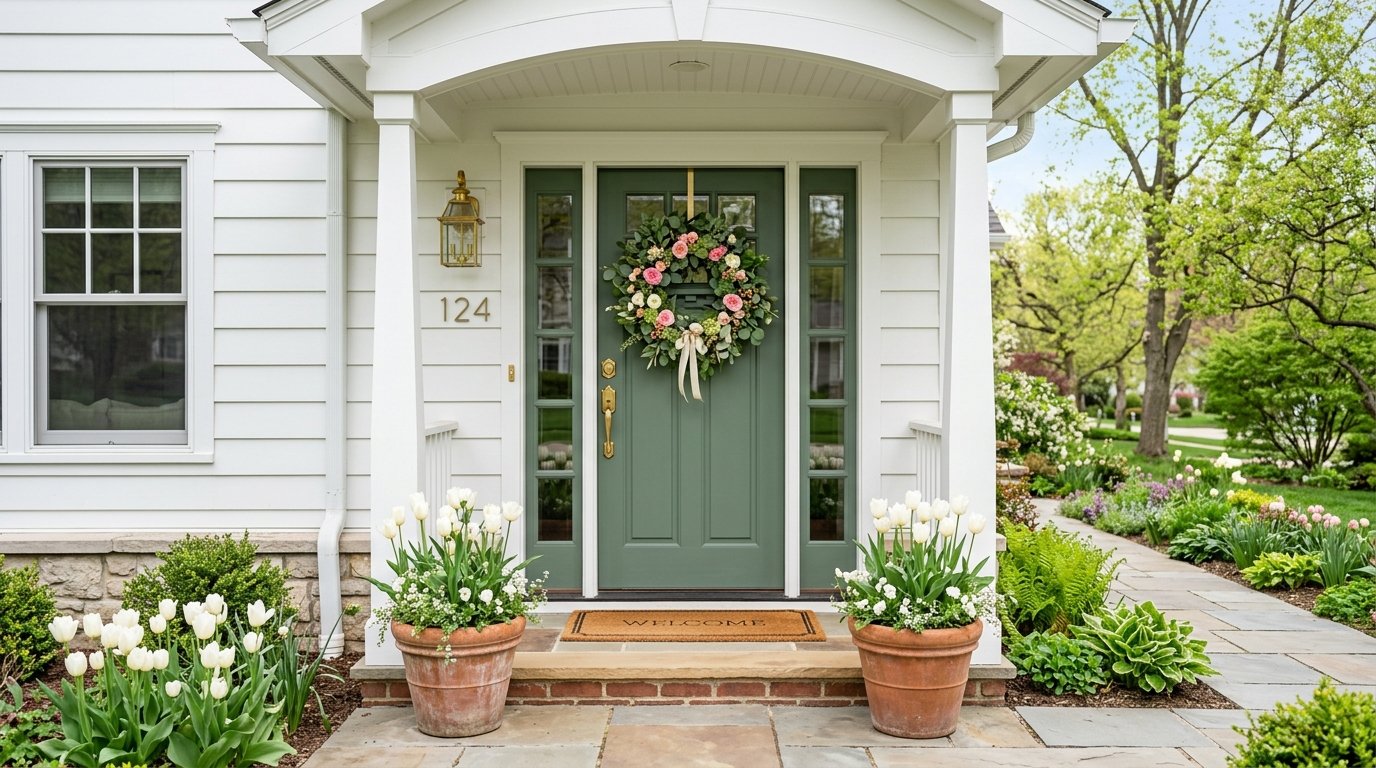
Choose a mat that fits the door width and does not interfere with the swing. Coir, rubber, and washable outdoor mats each have different maintenance needs. Use a simple design if the door, wreath, or planters already provide pattern.
Frame the doorway
A wreath, hanging basket, door color, or pair of planters can frame the entrance. Symmetry works well for a formal entry, while one larger planter or a vertical arrangement can suit a narrow or informal porch.
Bring in height
Use a tall planter, trellis, lantern, or narrow plant stand to draw the eye upward. Vertical elements are especially useful on a small porch because they add interest without spreading across the walkway.
Spring porch ideas by size
Small front step
Keep the composition compact: a properly sized mat, one seasonal planter, and a small door accent may be enough. Avoid putting a chair or oversized basket where it narrows the entry. If the wall is available, use a removable hanging element rather than adding floor pieces.
Narrow covered porch
Choose slim furniture and place it against the wall, leaving a clear path from the steps to the door. A narrow bench can provide seating and storage, while one vertical plant adds softness without consuming the floor.
Deep sitting porch
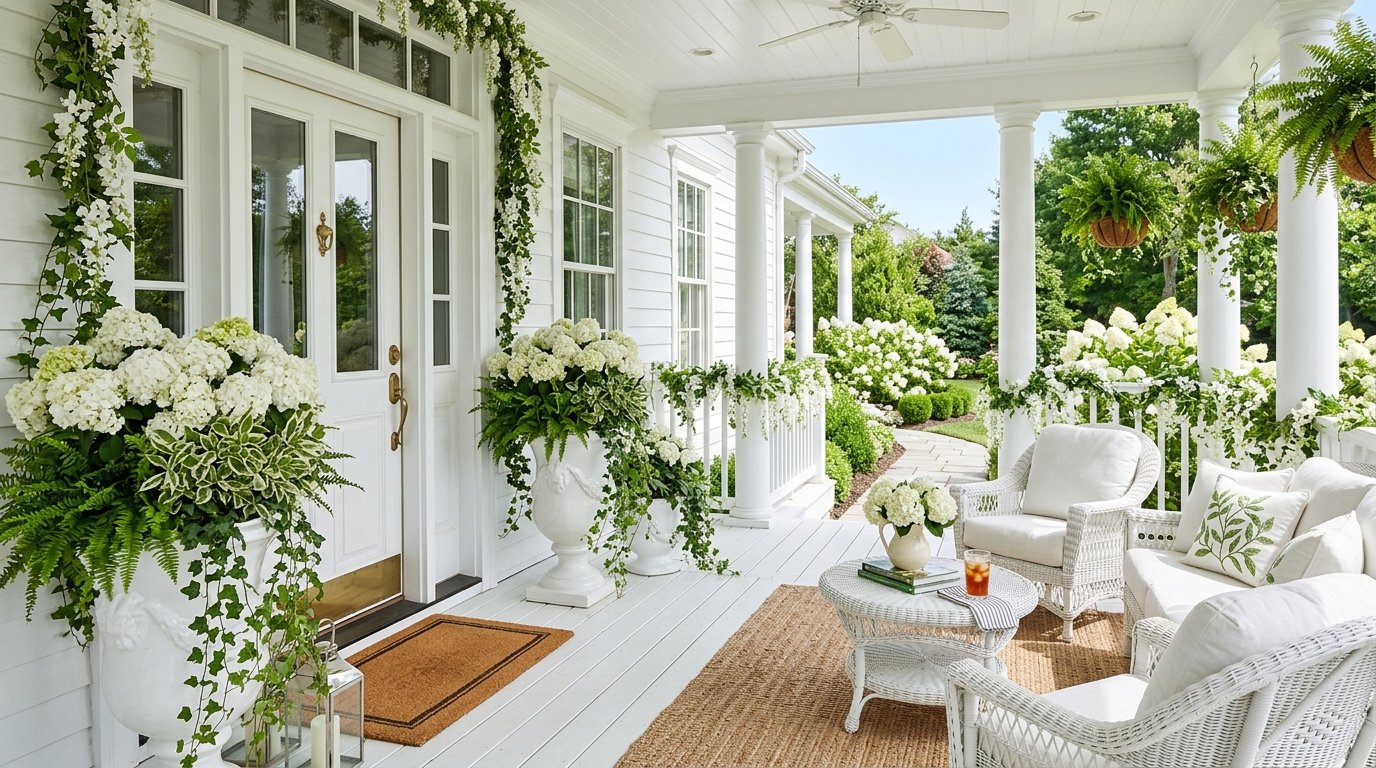
Create zones for sitting, entry, and plants. Use an outdoor rug to define the seating area, then repeat its accent color in cushions or planters. Keep high-traffic routes open and use washable or outdoor-rated materials.
Open porch
Prioritize pieces that can tolerate wind, sun, and rain. Heavy planters, low accessories, and secured baskets are safer than delicate displays. Consider storing textiles and small objects when severe weather is expected.
Plants and planters for spring
Choose plants for the porch’s actual light and temperature rather than selecting only by appearance. A sunny porch may support flowering plants or herbs, while a shaded porch may need foliage plants that to
lerate lower light. Read the care label and make sure the pot has drainage.
Vary planter height and texture, but keep the largest container where it will not obstruct the door or stairs. Use saucers or appropriate drainage solutions to protect the porch surface, and remember that wet soil makes containers heavier when moving them.
Low-maintenance planting approach
Use one reliable foliage plant, one seasonal flowering pot, and a simple trailing plant if conditions allow. This creates variety without requiring a large collection. Refresh spent flowers and rotate containers so the display continues to look intentional.
Seating, textiles, and comfort
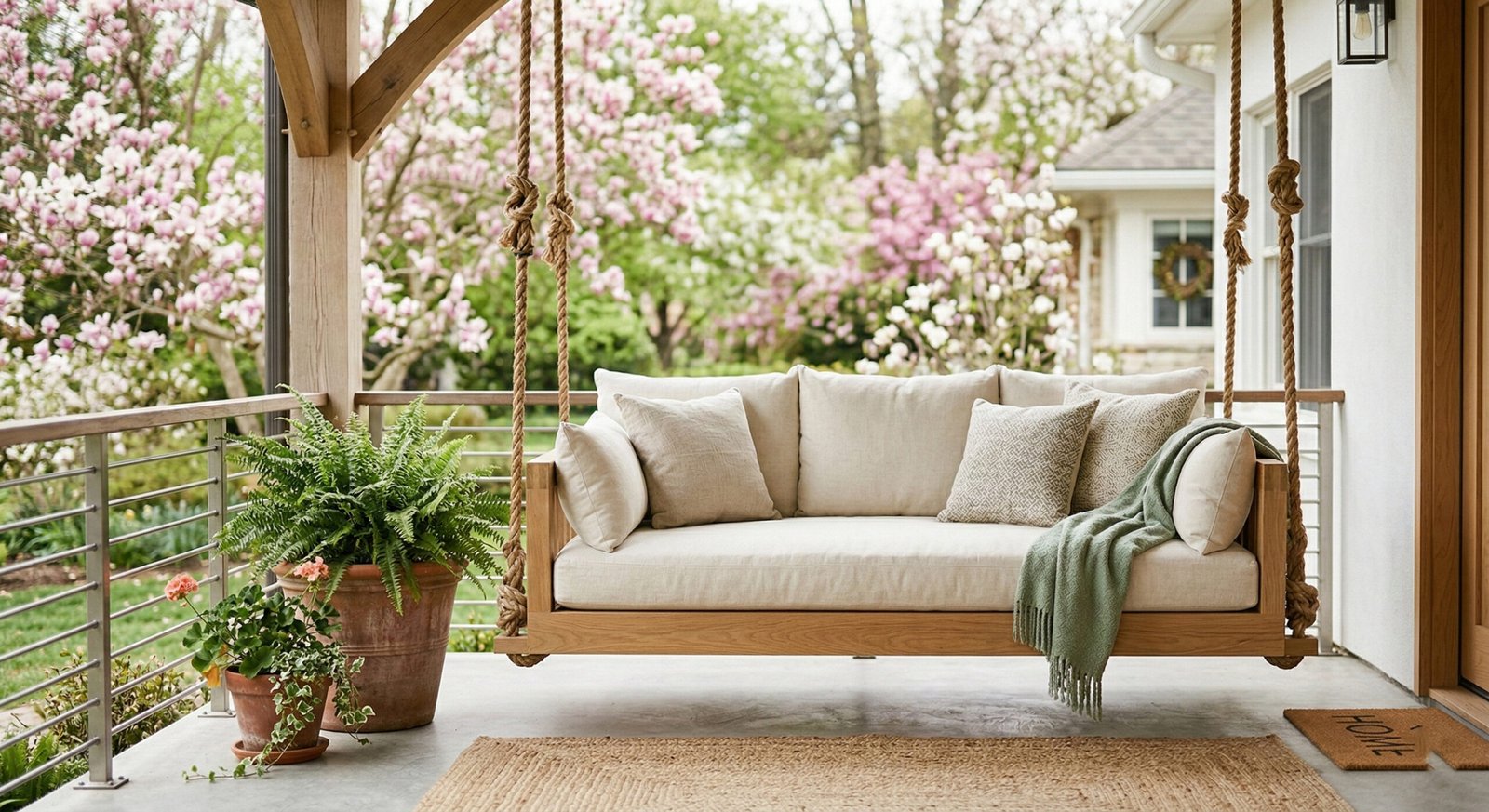
A porch becomes more useful when the seating fits the space and the way you use it. A compact bistro chair suits a small entry, a bench works well on a narrow wall, and a pair of chairs creates a conversation area on a deeper porch. Measure before buying so the furniture does not block the door or stairs.
Use cushions and throws only where they can be protected from moisture. Outdoor-rated fabric is
easier to maintain, but it still needs cleaning and storage. Choose one patterned textile and keep the other layers quiet if the plants or door already create visual interest.
Lighting for spring evenings
Layer practical lighting with softer accent light. A functioning porch fixture should illuminate the entry, while lanterns, string lights, or solar accents can add atmosphere if they are installed safely and kept away from walkways. Check outdoor ratings, weather exposure, cords, and mounting instructions before using electrical products.
Warm light generally feels welcoming, but the right brightness depends on the fixture and the porch. Avoid placing lights where they shine directly into the home or create glare on steps.
Decor by style
Modern botanical
Use simple planters, a restrained palette, clean lines, and one leafy plant as the main feature. Repeat black, wood, or stone in small amounts for structure.
Classic cottage
Combine flowering plants, a woven basket, a soft door color, and a traditional mat. Keep the number of signs limited so the porch feels like an entry rather than a display board.
Farmhouse spring
Use natural textures, galvanized or painted containers, and a small amount of checked or striped fabric. Choose authentic useful objects rather than filling every surface with themed typography.
Colorful and cheerful
Select one bright accent and repeat it in a pot, cushion, and small door detail. Keep the background neutral so the color feels intentional.
Budget-friendly ways to refresh the porch
Clean and rearrange what you already own before shopping. Paint one planter, replace a tired mat, divide an established plant, or move an indoor-rated decorative object out of the weather and replace it with a weather-safe alternative. Buying one larger, useful piece is often better than accumulating many small accessories.
Create a simple budget in three levels: essential maintenance, one focal improvement, and optional finishing touches. This makes it easier to stop when the porch already feels complete.
Weather and storage checklist
Choose outdoor-rated materials for exposed areas.
Use drainage and protect wood or painted surfaces from standing water.
Secure light items against wind and keep fragile pieces away from edges.
Store cushions, throws, and small decor when storms are expected.
Check plants after heat, frost, or heavy rain.
Keep steps, handrails, and the door swing clear.
Common spring porch mistakes
Adding decor before cleaning and repairing the entry.
Using too many colors without a repeated palette.
Blocking the walkway with oversized planters or furniture.
Choosing plants without checking light and drainage.
Using indoor textiles or electrical products outdoors.
Creating a display that looks attractive but cannot be maintained or stored.
Spring porch FAQs
How can I decorate a small porch?
Use a correctly sized mat, one planter, and one vertical or door-mounted accent. Keep the walking path and door swing clear, and let a repeated color create the seasonal feeling.
What should I put on a front porch in spring?
Start with clean surfaces, a useful mat, weather-appropriate plants, and a restrained door accent. Add seating or lighting only when the space and safety conditions support it.
How do I protect porch decor from rain?
Choose outdoor-rated materials, use drainage, secure lightweight pieces, and store textiles or fragile objects during bad weather. Covered does not always mean weatherproof.
How many planters should go by the front door?
There is no required number. One well-sized planter can work on a small entry, while two or three can frame a larger porch. Keep the arrangement proportional and avoid narrowing the path.
Final spring porch checklist
Clean the entry, define the purpose, choose a three-part palette, measure the walkway, select plants for the available conditions, add one focal feature, layer safe lighting, and store anything that cannot withstand the weather. A useful spring porch should feel welcoming, easy to maintain, and appropriate to the home—not crowded with seasonal objects.




Leave a Reply