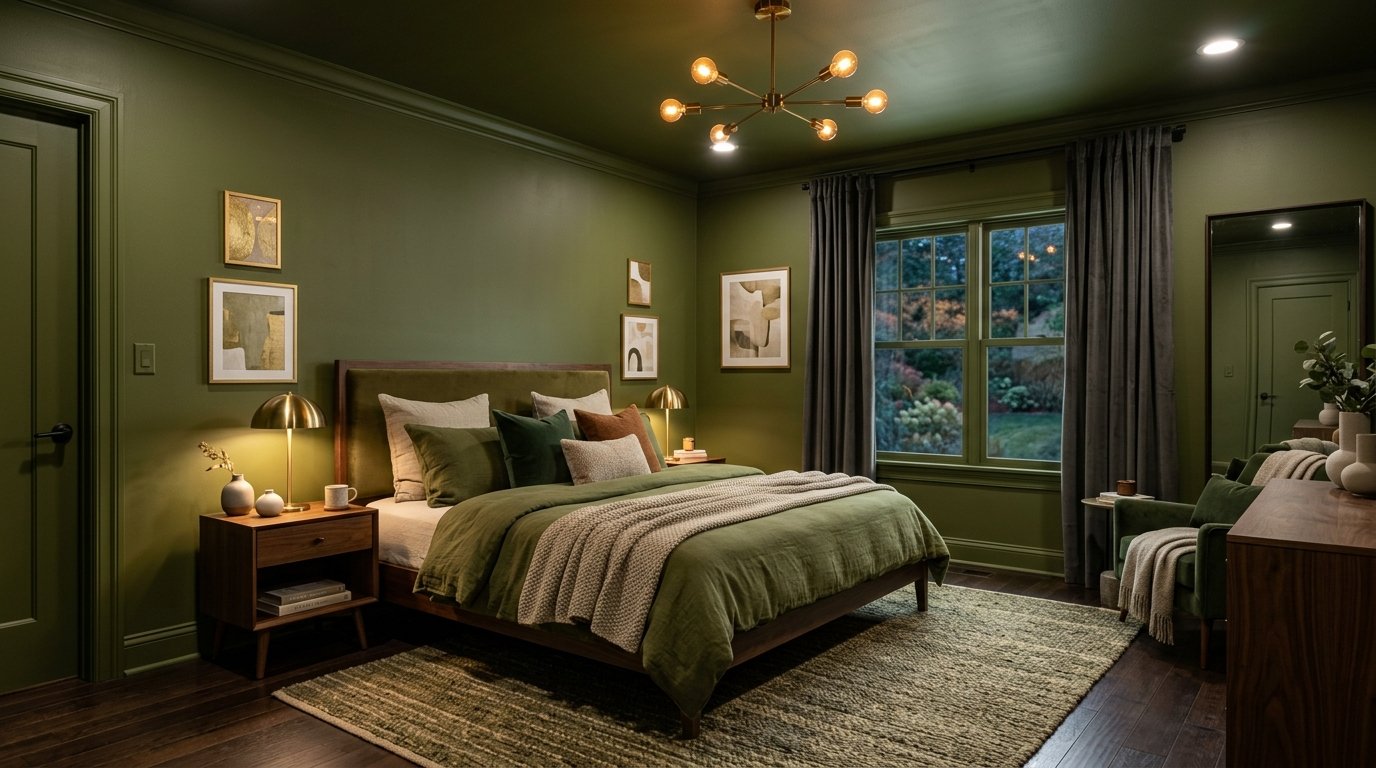
This guide explains how to design a bedroom that feels calm, polished and personal. Start with the practical decisions first, then add color, texture and character in layers.
What makes a bedroom feel calm and luxurious?
A calm bedroom has visual breathing room. The bed is easy to reach, storage has a purpose, lighting is not limited to one harsh ceiling fixture and the palette does not compete with itself. Luxury is less about the price of individual objects and more about proportion, consistency and comfort.
Before buying anything, decide what you want the room to do. A primary bedroom may need a restful sleeping area, a reading corner, generous clothing storage and a place to get ready. A smaller room may need to prioritize circulation and concealed storage. The best design begins with those needs rather than with a trend label.
1. Start with the layout and the room’s focal point
Place the bed where it can be seen from the doorway without blocking the main walking route. Ideally, both sides should have enough clearance for daily use, although a compact room may require one side to sit closer to a wall. Measure the room, door swing, windows, radiators and built-in storage before choosing furniture.
The bed wall is often the natural focal point. You can define it with a painted finish, a textile headboard, symmetrical bedside tables or a single large artwork. Avoid filling every wall. One deliberate focal point usually looks more refined than several competing features.
For a narrow bedroom, keep the longest walking route visually clear. Choose shallow bedside tables, use wall-mounted lighting and avoid placing a bulky bench where it interrupts the path from the door to the bed.
2. Choose a restrained color palette
Begin with one quiet base color for the walls or largest surfaces. Warm white, soft beige, muted gray-green, dusty blue and gentle taupe can all create a restful foundation when their undertones work with the natural light in the room.
Add one secondary color through bedding, curtains, an accent chair or artwork. Then choose a small accent color for details such as a cushion, ceramic piece or lamp. Repeating the same accent in two or three places creates cohesion without making the room feel staged.
If the room receives little daylight, test samples in the morning and evening. A color that looks balanced in bright daylight may appear much cooler or darker after sunset. Use the room’s existing flooring and furniture as part of the palette rather than treating them as separate decisions.
3. Build comfort through bedding and texture
Layering texture is one of the simplest ways to make a bedroom feel finished. Combine smooth and tactile surfaces instead of buying every item in the same fabric. A woven coverlet, soft duvet, washed cotton sheets, a textured lumbar cushion and a rug beside the bed can create depth without clutter.
Choose bedding that is easy to maintain and suited to the room’s temperature. If you prefer a minimal look, use fewer pillows but vary their scale. If you like a fuller bed, keep the colors related so the arrangement remains calm.
A rug should either extend beyond the sides of the bed or be placed as two smaller runners beside it. A rug that is too small to anchor anything can make the room feel visually disconnected.
4. Use layered lighting
A single ceiling light rarely creates a relaxing bedroom. Plan three layers:
- Ambient lighting for general visibility, such as a ceiling fixture or recessed lights.
- Task lighting for reading and getting ready, such as bedside lamps or adjustable sconces.
- Accent lighting for atmosphere, such as a softly lit cabinet, picture light or concealed strip behind a headboard.
Place bedside lighting so it can be reached from the bed. If two people use the room differently, separate controls are more useful than one shared switch. Use shades that soften glare and keep the light source from shining directly into your eyes.
Mirrors can help distribute daylight, but avoid positioning one where it reflects clutter or creates an uncomfortable visual distraction from the bed.
5. Select furniture that adds function
A luxurious bedroom still needs to work on an ordinary morning. Choose bedside tables with enough surface area for the objects you actually use, and include at least one drawer or shelf for items that would otherwise remain visible.
Use a bench, stool or chair only if there is room for it to be used comfortably. In a smaller bedroom, a slim upholstered stool or wall-mounted hook rail may be more useful than a decorative chair that becomes an obstacle.
For storage, combine closed pieces with a limited amount of open display. Closed storage keeps the room visually quiet. Open shelves should hold only items that contribute to the room’s identity or daily function.
6. Add personality without visual clutter
Personal decor is what prevents a bedroom from looking like a showroom. Display a small collection of meaningful objects, a framed photograph, artwork from a place you value or books that you genuinely read. Group related items instead of scattering small objects across every surface.
Use the rule that every visible item should be useful, beautiful or personally meaningful. If an object does not meet any of those tests, it may be contributing to visual noise.
Plants can add softness, but select them based on the room’s light and your ability to care for them. A plant that struggles in a dark corner will not create the calm effect you want.
7. Consider the bedroom door and privacy
The door is part of the room’s visual composition, but it should support the overall design rather than become a separate trend project. In a compact room, a sliding or pocket door can improve circulation if the structure allows it. In a traditional room, a simple painted panel door may look more considered than an elaborate replacement.
Pay attention to hardware, privacy and sound. A beautiful door that swings into the main walkway or fails to close comfortably is not a successful design choice. Coordinate the door finish with the trim, flooring or furniture instead of introducing another unrelated material.
8. Create a luxurious look on a realistic budget
Spend first on the elements that affect daily comfort: a supportive mattress, useful storage, good curtains, appropriate lighting and bedding that feels pleasant. Decorative upgrades can follow.
A budget-friendly sequence might be:
- Remove unused items and correct the layout.
- Improve the light sources and add bedside control.
- Replace worn bedding or add one substantial textile layer.
- Repaint or refresh the focal wall if the palette is fighting the room.
- Add one artwork or personal feature with enough scale to matter.
This order creates a visible improvement without requiring every item to be replaced at once.
9. Four calm bedroom directions
A warm minimalist room uses a limited palette, natural texture and concealed storage. A modern room can use clean lines, one strong artwork and carefully repeated metal or wood finishes. A traditional room benefits from symmetry, upholstered details and layered textiles. An adult retreat can combine deeper colors, softer lighting and comfortable seating without becoming visually heavy.
These are starting points rather than strict styles. Choose the elements that support your habits and the architecture of the room.
10. Common bedroom design mistakes
The most common mistake is buying attractive objects before solving the layout. Other problems include using a rug that is too small, relying on one overhead light, choosing furniture that blocks drawers or doors, mixing too many unrelated finishes and leaving every surface filled with decor.
Another frequent issue is designing only for photographs. A room may look beautiful from one angle but be difficult to clean, difficult to move through or uncomfortable to use. Test the design against a normal morning and evening routine.
Frequently asked questions
How can I make a bedroom feel luxurious without spending a lot?
Improve the layout, lighting and textile layers first. A coordinated palette, clear surfaces and one well-scaled focal feature often create more impact than many inexpensive decorations.
Which colors are best for a restful bedroom?
The best color depends on the room’s natural light and your preferences. Muted, low-contrast palettes are generally easier to live with, but a deeper color can work well when balanced with suitable lighting and lighter textiles.
How do I make a small bedroom feel larger?
Keep circulation clear, choose furniture that matches the room’s scale, use vertical storage and avoid filling every wall. Wall-mounted bedside lighting can free valuable surface space.
Should bedroom furniture match?
It does not need to match exactly. Repeating one or two finishes is usually enough to make different pieces feel intentional.
Final checklist
A calm, luxurious bedroom should be comfortable to use, easy to move through and visually coherent. Confirm that the bed placement works, the lighting has more than one level, storage supports daily routines, textiles add comfort and decor reflects the person who lives there. Once those foundations are right, the room will feel considered even if the budget is modest.

Leave a Reply