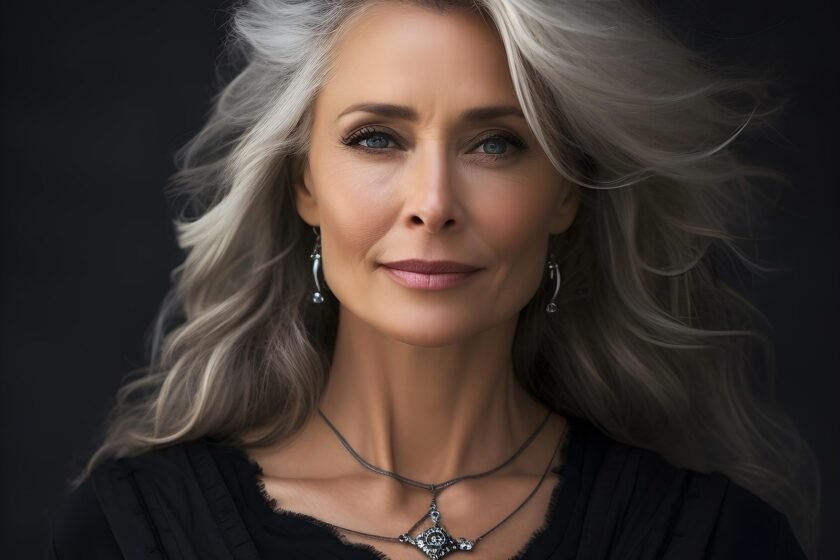
Gray Hair Is a Style Decision, Not a Defeat
More women over 50 are letting their natural gray come through than at any point in recent memory, and the conversation has shifted from “covering it up” to “wearing it well.” Gray and silver hair, properly cut and cared for, reads as striking, modern, and intentional. Short hair, in particular, gives gray hair its best chance to shine, because shorter cuts reduce the weight that pulls coarse gray strands flat and let the natural silver texture become the feature rather than the problem.
This guide covers the best short styles for gray and silver hair, the transition strategies for women still mid-way, the purple-shampoo routine that keeps silver bright instead of yellow, and the skincare-and-color coordination that makes the whole look hang together.
New to short hair? Start with our complete guide to short hairstyles for women over 50.

The First Decision: How Much Gray Do You Show?
Before choosing a cut, decide how much gray you want visible. Some women embrace full silver at once, while others prefer a gradual reveal over one or two years. Your answer shapes the cut: full silver suits bold, defined shapes like stacked bobs and tapered pixies that make the color the statement, while a partial transition pairs better with softer, more blended styles like textured bobs and layered crops that absorb the contrast between colored and white strands. Neither path is better; the mismatch between ambition and cut is what produces a look that feels unfinished.
Short Styles That Make Silver Shine
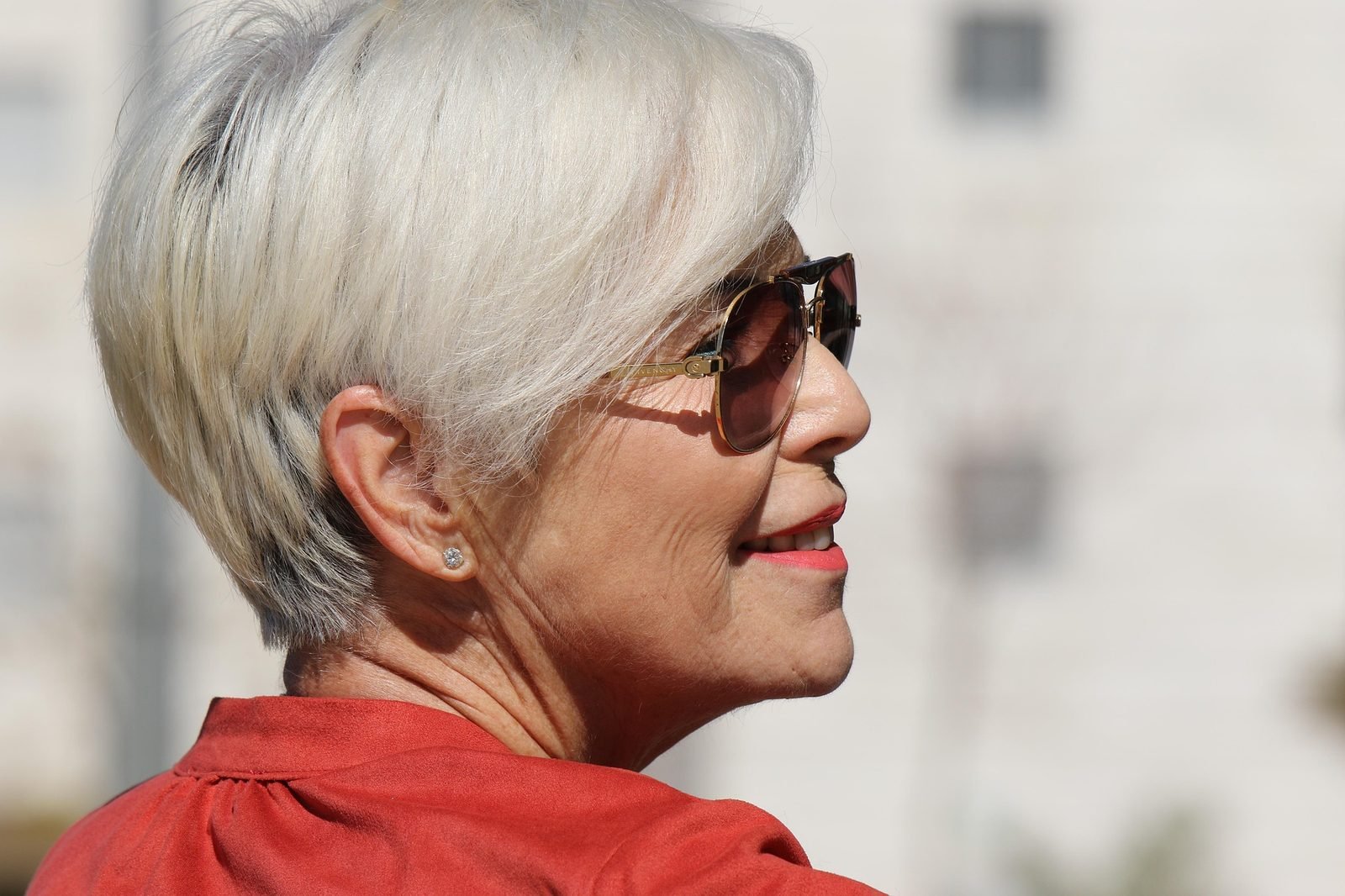
Coarse, dry gray hair responds best to cuts with internal movement. A tapered pixie with textured layers gives silver hair lift and shape, while a stacked bob concentrates volume at the nape where gray hair often lies flattest. A chin-length textured bob with a soft fringe is the most universally flattering option, and a short shag or layered crop suits women who want a relaxed, low-effort look that grows out forgivingly.
Coloring and Silvering: Hybrid Options Worth Knowing
Going gray does not have to be all or nothing. Many women over 50 choose a hybrid approach: lowlights in cool taupe or pewter woven through silver add depth that flat silver can lack, and a subtle silver gloss treatment boosts shine and smooths the contrast between white and remaining pigmented strands. If you keep some color, toning it cooler, toward ash or mushroom tones, harmonizes with silver roots far better than warm golds and caramels do. These middle paths let you control the intensity of the transition instead of surrendering to it, and they are all achievable on short hair without the long processing times that gray coverage on long hair requires.
The Transition: Three Ways to Get There
| Method | How It Works | Best For | Timeline |
|---|---|---|---|
| Stop and grow | Simply stop coloring and grow the natural roots through | Pixie and short bob owners; fast results | 3 to 9 months |
| Chunking | Stylist weaves gray-painted highlights to blend the line | Long hair; softer blend | 6 to 12 months |
| Big chop | Cut all colored hair off at once | Women ready for an immediate reset | Immediate |
Most women over 50 find that combining a shorter cut with the grow-out solves the hardest part of the transition: the visible demarcation line. Once hair is short, the line of demarcation simply grows out and gets cut away within months.
What the Salon Visit Should Cover
Book a consultation before committing to the full transition cut if you can, and bring photos of your own hair at different lengths rather than only celebrity references. During the consultation, ask three specific questions: how your hair’s texture will change as more gray grows in, which cut will flatter your face once the color contrast settles, and what the salon recommends between appointments, toning treatments, glosses, or trims. A stylist who answers all three clearly has worked with transitioning clients before; one who glosses over them may not be the right chair for this journey.
Keeping Silver Bright: The Purple Routine
Gray hair yellows because environmental exposure and product residue stain the porous, oil-poor strands. A purple shampoo used once or twice a week neutralizes yellow tones; overuse, however, can leave a violet cast on very light silver. Wash on a two-to-three-day schedule with a moisturizing shampoo, follow with a hydrating mask weekly, and finish with a leave-in conditioner, because gray hair’s biggest texture complaint is dryness, and no amount of toning fixes that.
Brows, Makeup, and Wardrobe After Going Gray
The moment you stop coloring your hair, your brows become the frame for your whole face. Brows that are still dyed a deep color against silver hair often look harsh; softening them one to two shades usually restores balance. On the makeup side, silver hair pairs naturally with berry, rose, and mauve tones, while bronzes and peaches can clash with the cooler undertone. In your wardrobe, jewel tones, crisp white, and deep navy photograph beautifully against gray hair, while beige and camel often wash it out.
When Short Silver Needs Extra Shape
Because gray strands are coarser and hold shape stubbornly, the cut matters even more than it does for pigmented hair. A blunt cut on gray hair can look heavy and dated within weeks, while textured, piecey ends keep the style reading as modern. Ask your stylist to point-cut the ends rather than cut a hard line, and to leave the fringe soft enough that it moves with the wind instead of sitting like a helmet. For women whose gray hair is particularly unruly at the front, a slightly longer fringe that can be tucked behind the ears on bad days is worth building into the cut from day one.
Dealing with Coarseness and Flyaways
Individual gray hairs are typically thicker and more wiry because the follicle produces less pigment and less oil. Anti-frizz serums applied to damp hair, a wide-tooth comb instead of brushing, and sleeping on a silk pillowcase all reduce the flyaway halo. For stubborn wiry strands at the hairline, a light-hold cream brushed over the top after styling keeps the shape tidy without adding grease.

Frequently Asked Questions
Will short gray hair make me look older?
Unstyled short gray hair can, but a well-cut, well-toned silver style usually reads as modern and intentional. The difference is shape, shine, and maintenance, not the gray itself.
How do I fix yellow patches?
A single purple-shampoo wash typically corrects yellowing within minutes. If yellowing persists, check for hard water, which deposits minerals that tint hair; a chelating shampoo monthly resolves most cases.
Can I go back to color later?
Yes, at any point. Many women alternate seasons of silver with seasons of color. Going back is simply a return to your normal coloring routine.
Does gray hair need different products?
It needs more moisture and less heat. Swap a daily heat-styling routine for air-drying plus a leave-in, and prioritize hydration masks over volumizing sprays, which often contain drying alcohols.
The Bottom Line
Silver short hair after 50 is less about giving up color than about trading one kind of upkeep for another that many women find more freeing. Choose a cut with texture, keep the silver bright with a simple purple routine, soften the brows, and let the color become your signature instead of something you manage. For most women who try it, going gray at 50 or later is the style decision they wish they had made sooner.



Leave a Reply