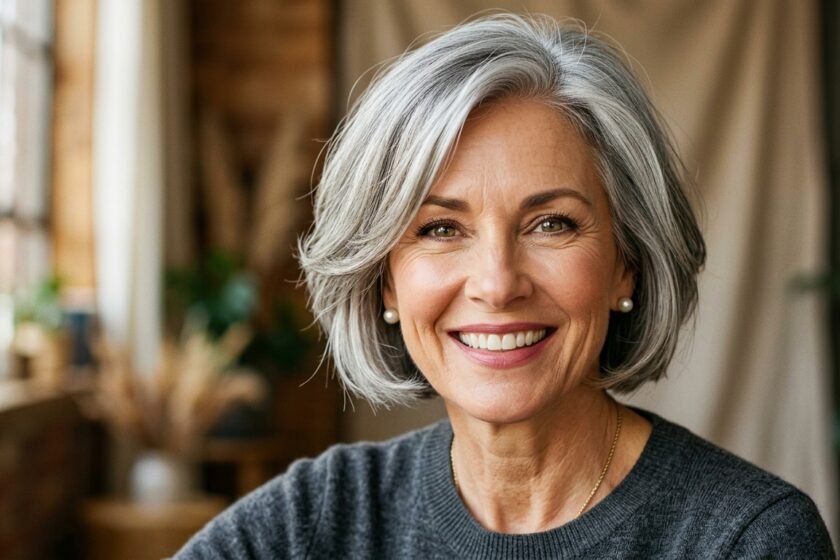
Choosing short hair after 50 is less about following an age-based rule and more about finding a shape that works with your texture, density, lifestyle, and personal style. Hair may feel finer, drier, curlier, or less predictable than it did years ago, so a successful cut needs to work with those changes rather than fight them.
This guide helps you compare bobs, pixies, crops, shags, and short styles with bangs. It also explains what to tell a stylist, how to plan maintenance, and how to choose a cut that looks polished on ordinary days—not only after a salon blowout.
Start with your real priorities
| If you want… | Consider starting with… | Ask about… |
|---|---|---|
| More visible fullness | Blunt or softly graduated bob | Where the perimeter and weight will remain |
| Very little styling | Long pixie, tapered crop, or texture-friendly bob | How the cut air-dries |
| Movement and softness | Layered bob, bixie, or short shag | How layers will behave with your density |
| To show natural gray | Clean bob, silver crop, or textured pixie | Color transition and shine maintenance |
| Some tie-back flexibility | Lob or longer bob | How the ends sit at the shoulders |
Why short hair can be practical after 50
A shorter shape can remove damaged ends, make daily washing or drying easier, and give fine or changing texture a clearer outline. It can also make natural gray, silver, or salt-and-pepper color look deliberate because the cut provides structure.
Short hair is not automatically low-maintenance. A precise neckline, close sides, or strong fringe may need regular shaping, while a softer lob may be easier to stretch between appointments. The right question is not whether the style is short; it is whether the maintenance matches your routine.
Bob haircuts for women over 50
Chin-length bob
A chin-length bob creates a clean frame around the face and can look polished with very little decoration. A blunt edge may make fine ends appear denser, while light internal movement can prevent thicker hair from feeling heavy. Ask whether the perimeter should sit at the chin, jaw, or just below it.
Graduated or stacked bob
A graduated bob is shorter at the back and becomes longer toward the front. It can create structure and lift around the nape, but the profile matters as much as the front. Ask how the shape will grow out and which area will need refreshing first.
French bob
A compact bob with a clean edge and optional fringe can feel modern and intentional. It often suits people who like a defined silhouette, but it may require more frequent reshaping than a softer layered bob. Discuss how the fringe will behave on non-styling days.
Rounded or layered bob
Soft layers can add movement and help a bob avoid a solid, heavy shape. They should be placed carefully in fine hair so the ends do not look sparse. In thicker hair, internal shaping can reduce bulk while preserving a full outline.
Asymmetrical bob
A longer front on one side adds direction and visual interest without requiring a complicated styling routine. It works best when the asymmetry is intentional and the stylist explains how to maintain the angle as it grows.
Gray and silver short hairstyles
Natural gray can look elegant with a cut that gives it shape and movement. A silver textured bob, tapered crop, or softly layered lob can make the color feel purposeful. Ask about shine, dryness, and whether your current color transition needs a gradual shape rather than a dramatic chop.
If you use toning or color products, include that information in the consultation. Gray hair may need moisture and gentle handling, while the best product routine depends on porosity, density, and whether the hair is natural or chemically treated.
Pixies, crops, and bixies
Textured pixie with side sweep
A longer top and side-swept fringe provide styling flexibility while the nape and sides remain neat. This can work well when you want a short cut without a completely exposed forehead or a very close crop.
Soft tapered pixie
A tapered pixie gradually becomes shorter toward the nape and sides. It can feel light and tidy, but the neckline may need regular attention. Ask whether the cut will be soft, graphic, or deliberately piecey.
Bixie
The bixie sits between a pixie and a bob. It leaves more length around the ears and jaw, making it useful for someone who wants a short style with a little movement and a gentler grow-out.
Feathered or wispy crop
Light layers around the face can create softness and movement. Fine hair may benefit from controlled feathering, but over-texturizing can remove the density you want to keep.
Shags and layered short cuts
A short shag can enhance waves and create a relaxed, modern finish. Its success depends on where the layers are placed. Ask the stylist to preserve enough weight at the perimeter and explain whether you want an air-dried texture or a smooth finish.
A layered crop can add lift and movement, but it should be adapted to your density. Thick hair may need strategic weight removal, while fine hair often looks better with fewer, more deliberate layers.
Short hair with bangs
Side-swept bangs
Side-swept bangs blend into a bob or pixie and can be moved away from the face. They are a practical starting point if you want framing without committing to a strong straight fringe.
Wispy fringe
A light fringe creates softness and can be adjusted as it grows. It still needs a plan for humidity, glasses, and the days when you do not want to style it.
Blunt fringe
A blunt fringe creates a clear, deliberate line. It can look striking with a bob or pixie, but it shows growth quickly and requires more precise maintenance. Ask how it will look when separated or air-dried.
Choose by texture and density
Fine hair
Fine hair often benefits from a clean perimeter, moderate layering, and lightweight products. Ask the stylist where the cut will retain fullness and avoid requesting extensive thinning without a clear reason.
Thick hair
Thick hair may need internal shaping so it does not expand too widely. Discuss where bulk will be reduced and whether the ends will remain crisp, softened, or textured.
Wavy or curly hair
Show the stylist how your hair behaves on a normal day and ask how much it will shrink when dry. A rounded bob, curly crop, or layered shape can all work when the cut follows the curl pattern instead of being designed only when wet.
Dry or chemically treated hair
Prioritize condition, moisture, and a shape that does not depend on aggressive heat. A shorter perimeter can remove fragile ends, but the cut should still leave enough flexibility for your preferred styling method.
What to tell your stylist
Bring front, side, and back references with a similar texture and density. Explain how long you want to spend styling, whether you air-dry, how often you can book trims, and what you want to highlight or soften. Mention glasses, hats, cowlicks, neck sensitivity, color transition, and any chemical treatment.
Ask: Where will the weight remain? How will this look dry? What will the first grow-out stage look like? Which product is essential? Can I recreate the finish without a round brush? These questions help turn inspiration into a realistic plan.
Maintenance and grow-out planning
Short hair changes visibly as it grows because small amounts of length alter the balance around the fringe, ears, and neckline. Precision pixies and blunt bobs may need more regular reshaping. Soft lobs, bixies, and layered crops can offer a longer transition.
If you are growing out a very short cut, plan the intermediate stages. A longer fringe, softened side, or transitional bob can make the process feel intentional instead of waiting for every section to match.
A simple styling toolkit
Choose products by purpose: a lightweight mousse for lift, a cream for curl definition, a paste for piecey texture, a smoothing product for polished finishes, and flexible spray for hold. Start with a small amount and apply it where the hair needs control rather than coating the whole head.
Common mistakes to avoid
- Choosing a reference with a different texture or density.
- Assuming every short style is automatically low-maintenance.
- Over-thinning fine hair and losing the visual weight at the ends.
- Ignoring the back and neckline during the consultation.
- Starting a major chop without discussing grow-out.
- Using heavy products that flatten fine hair or dry out textured hair.
FAQs
What is the easiest short haircut to maintain after 50?
The easiest cut is usually one that follows your natural texture and matches your preferred styling time. A longer pixie, soft crop, or texture-friendly bob may be practical, but the best choice depends on how your hair dries.
Can short hair make fine hair look fuller?
A clear perimeter and controlled layers can create the appearance of fullness. Excessive thinning often has the opposite effect, so discuss weight placement before cutting.
How often should short hair be trimmed?
The timing depends on the precision of the shape and your growth rate. Close sides, blunt fringes, and sharp necklines usually show change sooner than softer, longer cuts.
Should women over 50 avoid long hair?
No. Length is a personal choice. Short hair can be practical or expressive, but the right style is the one that supports your texture, condition, lifestyle, and preferences.
Final selection checklist
Choose the cut family, identify your texture and density, decide how much styling time you have, select a face-framing detail, discuss maintenance, and agree on the grow-out plan. A modern short haircut should feel like a useful expression of your style—not a rule about your age.
Face shape and features
Bone structure changes how a short cut reads, so factor in your face shape before you commit to a length or a fringe.
Round faces
Add height or controlled volume at the crown and keep some length around the face. Avoid ending the cut exactly at the widest point of the cheek, which can emphasize roundness.
Square or strong jawlines
Soften the jaw area with layers, a side-swept fringe, or an asymmetrical line. A deep side part can shift visual focus away from a strong jaw.
Longer faces
A fringe or extra width at the sides can visually shorten a longer face. Avoid too much height on top, which can make the face look even longer.
Glasses and accessories
Choose bangs that clear your frames, and bring your glasses to the appointment so the stylist can check how they interact with the cut. If clippers irritate your neck, ask for scissor work at the nape instead.
What length should your bob be?
Small differences in length change the whole character of a bob. Use these landmarks when you discuss the cut with your stylist.
Chin-grazing bob
The most face-framing option, with a strong outline and a clear shape. It looks sharp but shows growth quickly, so plan for more frequent trims.
Jaw-skimming bob
A versatile middle ground that suits most textures. It keeps a defined shape while being easier to grow out than a chin-length cut.
Shoulder-touching lob
The most forgiving choice. It can be tied back on busy days and stretches the time between trims further than any shorter bob.
Styling without a full routine
A good short cut should look intentional even when you do almost nothing to it. Ask for these qualities at your appointment.
Air-dry friendly choices
Choose a cut that follows your natural texture: soft layers for waves, a clean perimeter for straight hair. The right shape should work without heat on most days.
A 5-minute polish routine
Explore short hair by topic:
- Low Maintenance Short Hairstyles for Women Over 50: 5-Minute Air-Dry Cuts
- Gray Short Hairstyles for Women Over 50: Silver Styles, Transition & Care
- Short Hairstyles for Thinning Fine Hair Over 50: Volume Cuts That Work
- Short Bobs for Women Over 50: Which Bob Suits Your Hair & Face Shape
- Pixie Cuts for Women Over 50: Best Styles, Face Shape Guide & Maintenance
Refresh the fringe, smooth the crown with a brush or your fingers, and add a small amount of product only where the hair needs control rather than coating the whole head.



Leave a Reply