
If you’ve ever finished styling your hair only to watch it go flat by lunchtime, you already know the struggle. Thin hair isn’t about how much hair you have — it’s about the width of each individual strand, and that changes everything about how you need to treat it.
The good news? You don’t need extensions, and you don’t need to chop it all off either. With the right cut, the right products, and a few styling habits, thin hair can look noticeably fuller in about ten minutes. Here’s exactly how to do it.
First, Know the Difference Between Thin Hair and Fine Hair
A lot of people use these words like they mean the same thing, but they don’t. Thin hair means you have fewer strands overall, while fine hair means each strand is narrow. You can actually have thick, fine hair or thin, coarse hair — and plenty of people have both thin and fine hair at once, which is when volume feels hardest to fake.
Knowing which one (or both) you’re dealing with matters because it changes your product choices. Fine hair, for example, gets weighed down fast, so heavy creams are the enemy. Thin hair, on the other hand, is mostly about creating the illusion of density through cut and styling.
Step 1: Get a Cut That Works With You, Not Against You
Before any product touches your hair, the cut itself does a lot of the heavy lifting. A blunt, one-length cut is one of the worst choices for thin hair since it makes every strand fall flat in the same direction with nothing to break it up.
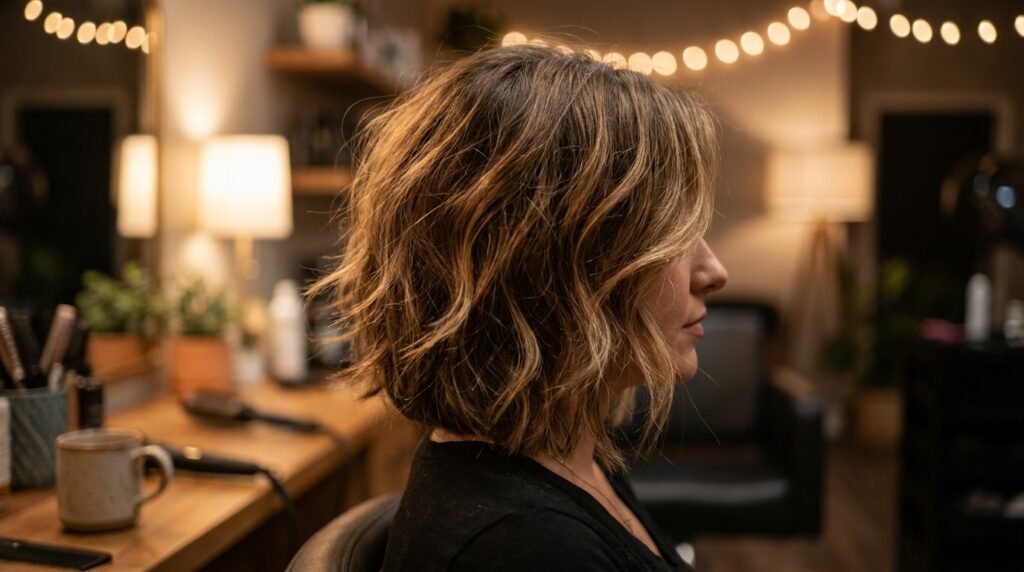
Ask your stylist for long layers instead of short, choppy ones. Short layers can actually make thin hair look wispy and sparse, especially near the crown. Long layers, however, add movement without removing the density you already have.
A few cuts that tend to work well:
- Soft layers starting at the chin or below — builds shape without thinning it further
- A blunt bob just above the shoulders — the shorter length makes hair appear denser per inch
- Curtain bangs — they frame the face and add visual volume around the crown, which is usually where thinning shows first
Step 2: Wash Smarter, Not More Often
Overwashing strips natural oils and can actually trigger your scalp to overproduce oil in response, which then weighs hair down faster. Most people with thin hair do best washing every two to three days, using a volumizing shampoo that’s specifically formulated to coat the strand without adding heaviness.
Look for shampoos with the word “volumizing” or “thickening” on the label, and avoid anything labeled “smoothing” or “moisturizing” unless your hair is also very dry — those formulas tend to add weight that flattens fine strands.
Conditioner matters too, but the placement is everything. Apply it from mid-shaft to ends only, never at the roots. Root conditioner is one of the most common reasons thin hair looks limp by noon.
Step 3: Use the Right Products (and Skip the Wrong Ones)
This is where most of the transformation actually happens. A few product categories to build your routine around:
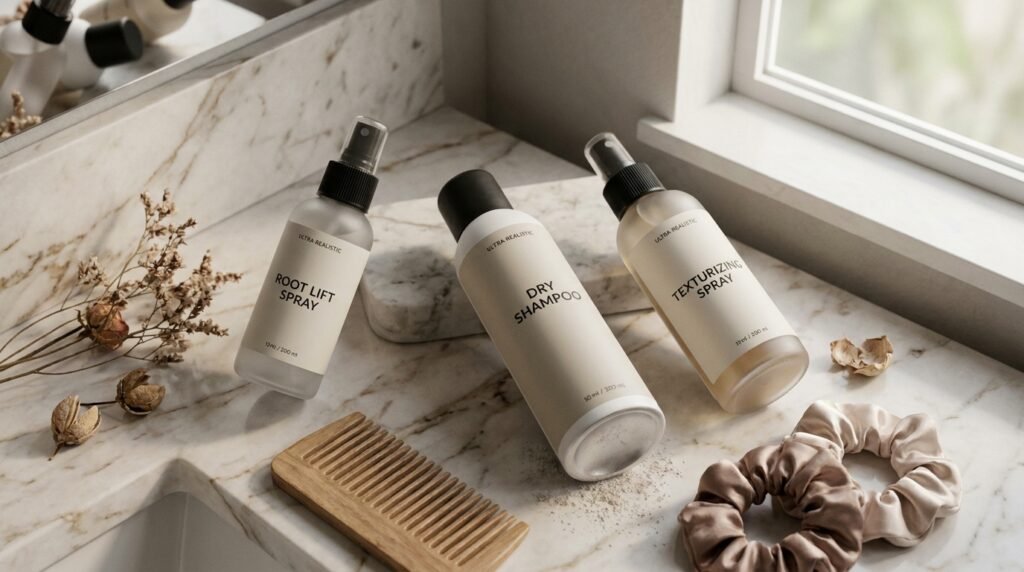
Root-lifting spray or mousse. Applied at the roots on damp hair before blow-drying, this is arguably the single most effective volumizing step you can take. Flip your head upside down, spray at the roots, and blow-dry in that position for maximum lift.
Texturizing spray. Once hair is dry, a light mist of texturizing spray adds grip so strands hold their shape instead of sliding flat. This is especially useful on second-day hair.
Dry shampoo — even on clean hair. It’s not just for greasy roots. A light dusting of dry shampoo on freshly washed hair absorbs just enough oil to create texture that pure clean hair doesn’t have.
What to avoid: heavy oils, thick leave-in creams, and anything labeled “anti-frizz” if your main concern is volume rather than frizz. These products work by weighing hair down and smoothing the cuticle, which is the opposite of what creates the appearance of thickness.
Step 4: Blow-Dry With Volume in Mind
How you dry your hair matters just as much as what you put in it. Always dry roots first and upside down if you can manage it — this is where most of your perceived volume comes from, since it lifts hair away from the scalp before it has a chance to dry flat.
Once roots are set, switch to a round brush and work in sections, pulling hair up and away from the head at the roots. A cool shot at the end of each section helps set the shape so it doesn’t collapse the moment you put the brush down.
Then, that’s when texture spray becomes your best friend. Working it through mid-lengths after drying, especially before adding waves or curls, helps hold the style through the day instead of falling flat within the hour.
Step 5: Add Movement With Waves, Not Sleek Straight Styles
Pin-straight hair is one of the most unforgiving styles for thin hair since every strand lies in the same direction and shows every bit of scalp underneath. Loose waves, on the other hand, break up that uniform line and create the illusion of extra strands.
A one-inch curling iron, used on alternating sections in different directions, creates the most natural-looking volume. Curl away from your face on some sections and toward it on others — this randomness is what makes waves look full instead of like a single uniform curl pattern.
Brush waves out gently with your fingers rather than a brush once they’ve cooled. Brushing too soon collapses the curl pattern and undoes a lot of the volume you just built.
Step 6: Consider a Root Touch-Up Between Colorings
If you color your hair, letting roots grow out too long before a touch-up can make thinning at the part line more obvious, since the contrast between root and length draws the eye straight to it. Keeping color fresh, particularly around the part, is a small trick that makes a noticeable visual difference.
Similarly, a scalp-toned root spray or powder — even if you don’t color your hair — can fill in visible scalp along the part for an instant, no-effort thickness boost.
Real Talk: What Won’t Work
It’s worth saying clearly: no shampoo or spray will physically add more hair to your head. What these products and techniques do is create the visual effect of thickness through lift, texture, and light diffraction. That’s a completely legitimate goal, and it works, but it’s also why consistency matters more than any single “magic” product.
If you’re also noticing actual hair loss, not just thinness you’ve always had, that’s worth mentioning to a dermatologist rather than just a hairstylist, since the two are treated very differently.
FAQ
Does cutting hair shorter make it look thicker? Yes, generally. Shorter hair means more strands are packed into a smaller visible length, which naturally reads as denser than the same amount of hair spread across a longer length.
Should I use conditioner on thin hair every wash? You can, but only apply it from mid-shaft to ends. Skipping the roots entirely prevents the weighed-down, flat look that root conditioner tends to cause.
Is dry shampoo bad for thin hair? Not at all — used correctly, it’s actually one of the better tools for thin hair, since it adds texture and grip that clean strands often lack.
What haircut is worst for thin hair? A one-length, blunt cut with no layers tends to be the least flattering, since it removes any natural texture that could otherwise create the illusion of volume.
Can I make thin hair look thicker without heat styling? Yes. Root-lifting mousse applied to damp hair, followed by air-drying with your head tipped forward for a few minutes, can create noticeable lift without any heat tools at all.
How often should I wash thin hair for the most volume? Every two to three days tends to work best for most people, since natural oils that build up over a day or two actually add slight texture and grip that fresh-washed hair lacks.
Final Thoughts
Thin hair isn’t something to fix — it’s just a texture that responds better to certain techniques than others. Once you find the combination of cut, product, and styling habit that works for your specific hair, the difference really is dramatic, and most people land on their routine within a few weeks of experimenting.
Start with the cut, since that’s your foundation, and layer the styling tricks on top from there. Small changes, done consistently, add up to a noticeably fuller look every single day.



Leave a Reply