Short Hair Styles for Women: How to Choose a Cut That Fits Your Texture and Routine
February 10, 2026·Olivia Nyssa·10 min read
Short hair can be easy to live with, expressive, and surprisingly versatile when the cut is chosen for the way your hair actually behaves. The best short hairstyle is not simply the most popular photo online. It is a shape that works with your texture, density, growth pattern, face-framing preference, and the amount of time you want to spend styling each morning.
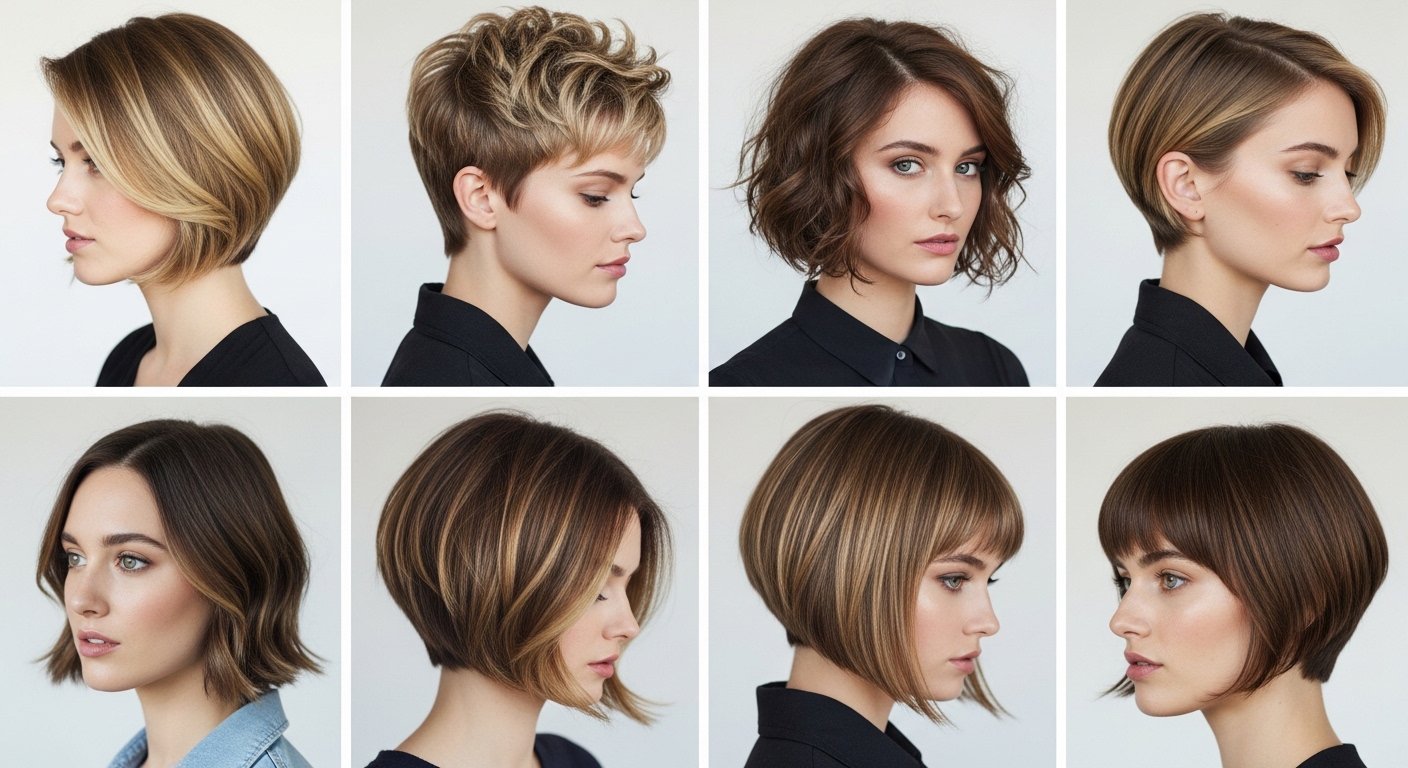
This guide is a starting point for choosing among pixies, bixies, crops, bobs, shags, and textured short cuts. Use it to narrow the shape you want before taking reference photos to a stylist. The dedicated bob guide and the over-50 guide can provide narrower follow-up advice once you know which family of cut suits your routine.
Quick chooser by length and maintenance
Cut family
Typical feel
Usually suits
Consider first
Pixie
Light, close, expressive
People who enjoy visible shape and regular refinement
Cowlicks, neckline, and grow-out plan
Bixie or long pixie
Short but flexible
Anyone transitioning between a pixie and bob
Where the weight remains around ears and nape
Short bob
Polished, versatile
Those who want length near the jaw or chin
Perimeter, density, and styling time
Short shag
Soft, textured, undone
Wavy or naturally full hair
Layer placement and frizz control
Curly or coily crop
Defined, shaped, individual
Natural textures with a clear curl pattern
Shrinkage, dry shape, and moisture routine
The main short-hair families
Pixie and long pixie
A pixie keeps the sides and back close while allowing the top or fringe to create personality. A longer pixie offers more styling options around the forehead and crown. Ask the stylist how the cut will look from the side and back, because a pixie’s balance depends on more than the front view.
Bixie and tapered crop
A bixie sits between a pixie and bob, giving you movement around the ears and jaw while keeping a shorter shape at the nape. A tapered crop can feel neat and lightweight, especially when the neckline and sideburn area are intentionally shaped. These cuts are useful when you want short hair without committing to the closest possible crop.
Short bob
A short bob usually keeps a stronger perimeter near the chin or jaw. It can be blunt, graduated, layered, curly, or softly textured. The cut’s success depends on where the weight sits, so discuss whether you want a crisp outline or more movement before the scissors begin.
Short shag and layered crop
Short shags use layers and texture to create a relaxed, piecey result. They often work best when the hair has natural movement, but a stylist can adapt the idea to straighter hair with the right product and styling method. Too many short layers can make fine hair feel thinner, so ask where the fullness will remain.
Curly and coily short cuts
Curly and coily hair should be shaped with shrinkage and the dry pattern in mind. A cut that looks balanced when wet may become shorter or fuller as it dries. Bring examples with a similar texture and ask how the stylist plans to preserve definition while creating the intended silhouette.
Choose by texture and density
Straight hair
Straight hair shows the outline of a cut clearly. Blunt bobs, precise crops, and clean side parts can look polished, while internal texture can prevent the shape from appearing heavy. If your hair is very fine, ask whether a strong perimeter will create more visible fullness than extensive layering.
Wavy hair
Wavy hair can make a short cut feel soft and dimensional. Discuss whether you want to enhance the wave or smooth it regularly. Layers should support the wave pattern rather than create uneven bulk, and the dry shape should be considered during the consultation.
Curly hair
Curly hair benefits from a plan for curl definition, moisture, and shrinkage. Ask how much length will remain when the curls are dry and whether the cut is intended to be rounded, tapered, or softly layered. A small amount of asymmetry can be beautiful, but it should be deliberate.
Coily hair
Coily textures can be shaped into crops, tapered cuts, rounded silhouettes, or sculpted short styles. Protect the hair’s condition during styling, and discuss how often the neckline and sides will need refreshing. The most useful reference images show texture and density similar to yours.
Fine or low-density hair
Fine hair often benefits from a clear shape and controlled layering. Too much thinning or too many disconnected layers may remove the visual weight you want to preserve. Lightweight products and a clean perimeter can create fullness without making the hair stiff.
Thick or high-density hair
Thick hair may need strategic weight removal, but thinning should be purposeful. Ask where the stylist will reduce bulk and how the shape will settle as it grows. A short cut that is too dense at the sides can expand outward, while one that is over-thinned may become difficult to control.
Choose by styling effort
Wash-and-wear
Look for a shape that already follows your natural pattern. A good wash-and-wear cut still benefits from a suitable cleanser, conditioner, and a small amount of styling product, but it should not depend on daily heat or complex pinning.
Five-minute styling
Ask for a cut that can be refreshed with a quick blow-dry, a little texture product, or a few passes with a brush. Make sure the stylist explains which sections matter most, such as the fringe, crown, or nape, so you do not spend time styling areas nobody sees.
Polished heat styling
A smooth bob, precise crop, or defined wave can look formal with heat styling. Use heat protection and discuss how often you realistically want to style. A cut that only looks right after a long blowout may not be practical for your routine.
Piecey texture
Short textured cuts can be shaped with a small amount of paste, cream, or spray. Begin with less product than you think you need, warm it between your hands, and apply it to the ends or selected sections rather than coating the roots.
Face-framing and proportion choices
Face-framing is personal, but a few choices can help you communicate with a stylist. A side part can create an angled front, a fringe can draw attention toward the eyes, and longer pieces near the cheekbones can soften a short perimeter. Crown volume changes the silhouette, while a close nape makes the cut feel lighter.
Use these as design options rather than fixed rules about face shape. Bring photographs taken from several angles and explain which parts you like: the length, the fringe, the texture, the outline, or the styling finish. The more specific your explanation, the easier it is to adapt the reference to your hair.
Short hair for different lifestyles
Active routines
If you exercise frequently or wear hats, consider how the cut behaves when compressed, damp, or pulled away from the face. A manageable fringe and a clean neckline may be more useful than a highly sculpted shape that needs constant resetting.
Professional settings
Short hair can look professional in many forms. A smooth finish, controlled texture, or neat side part may suit a formal environment, while a more expressive cut can still look polished when the outline is maintained. Discuss your workplace and the amount of flexibility you want.
Humid climates
Work with the hair’s natural movement instead of choosing a style that requires perfect smoothness every day. Products for definition or light control may be more reliable than heavy layers of smoothing product, and a stylist can help place the weight where humidity is least disruptive.
Growing the cut out
If you may want a bob later, tell the stylist before choosing a very short shape. A planned grow-out can preserve useful length at the top, ears, or nape and reduce the number of awkward transition stages.
How to communicate with a stylist
Bring front, side, and back references, but do not rely on a single photograph. Explain your natural texture, how much time you style, which tools you own, and whether you want a cut that can air-dry. Mention cowlicks, sensitive areas, glasses, hats, and any history of chemical treatment.
Useful questions include: Where will the weight remain? How will this look when air-dried? What should I do on a second-day style? How often will the shape need refreshing? Which part of the reference is realistic for my texture? These questions turn a vague inspiration photo into a practical haircut plan.
Maintenance and grow-out planning
Short shapes change visibly as they grow because small amounts of length alter the balance around the ears, nape, and fringe. Ask which appointment can be delayed and which area will make the cut look untidy first. Between visits, use gentle styling and avoid making major self-corrections around the neckline unless you are confident with the result.
When growing out a pixie or crop, plan intermediate shapes rather than waiting for every section to become the same length. A longer fringe, softened side, or transitional bob can make the process feel intentional.
Simple styling toolkit
Choose products by purpose: a light mousse or spray for volume, a cream for curl definition, a paste for piecey texture, a smoothing product for polished finishes, and a flexible spray for hold. Fine hair often prefers lightweight layers, while thick or curly hair may need more moisture and controlled application. Your stylist can recommend a routine based on the finished cut.
Common mistakes to avoid
Choosing a reference with a completely different texture or density.
Only checking the front view and ignoring the shape at the sides and back.
Requesting heavy layers without explaining how much fullness you want to keep.
Ignoring the time required to recreate the reference at home.
Using too much product and losing movement in short strands.
Starting a short cut without discussing the grow-out plan.
Short hairstyle FAQs
What is the easiest short haircut to maintain?
The easiest cut is usually one that follows your natural texture and fits your preferred styling effort. A simple crop, longer pixie, or softly shaped bob may be practical, but the best option depends on how your hair dries.
Can short hair work for thick or thin hair?
Yes. Thick hair may need strategic weight control, while fine hair may benefit from a clear perimeter and fewer layers. The cut should be designed around density rather than copied from a generic image.
How often does short hair need shaping?
It depends on the cut’s precision and how quickly your hair grows. Close sides, sharp fringes, and sculpted necklines usually show change sooner than a softer, longer shape.
How do I avoid flat short hair?
Ask where the cut will retain weight, use a lightweight product at the roots if appropriate, and avoid applying heavy creams throughout fine hair. Texture and lift should be created selectively.
Final selection checklist
Choose the short-hair family, identify your texture and density, decide how much styling time you have, select a face-framing detail, discuss maintenance, and agree on the grow-out plan. A short haircut feels most successful when it looks good in the real routine—not only in the reference photograph.




Leave a Reply